
Skip to content

HVAC Restoration in Austin: The HVAC Side of Mold Remediation

A musty smell when the AC kicks on, or black specks around the registers? That usually means mold inside the system: on the coil, in the drain pan or in the ducts. Gold Eagle Services is a licensed Texas mold remediation company that handles HVAC mold. We restore the coil, air handler, drain and ducts, fix the moisture problem behind the growth, and work with an independent mold assessor (we can refer you to one). Licensed TACLA119235 (air conditioning) and RCO1783 (mold remediation).

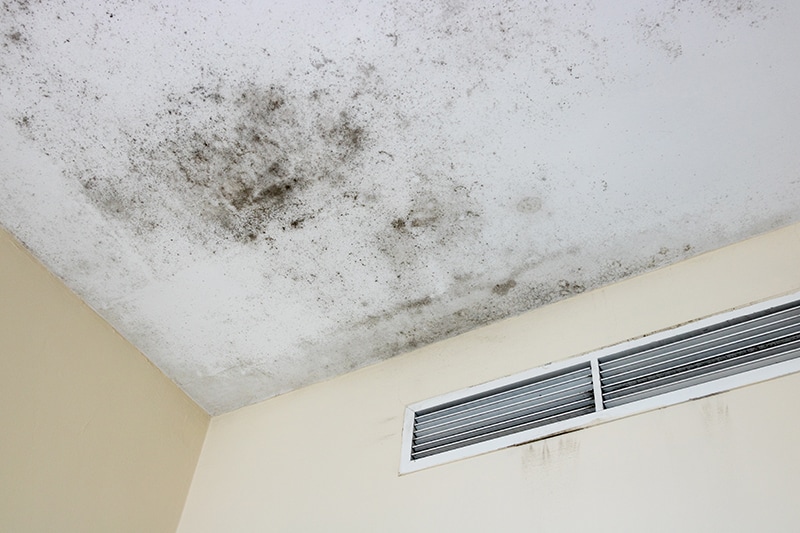
Dark spots spread across a pale ceiling beside a beige wall, above a long rectangular air vent with horizontal slats.

What Is HVAC Restoration?

HVAC restoration is mold remediation inside the heating and cooling system: cleaning or replacing the parts where mold is growing, following the independent assessor’s protocol, and fixing the conditions that let it grow. Most people find it by searching “mold in AC unit,” “mold in air ducts” or “HVAC mold remediation.”

In Central Texas, air handlers usually sit in attics or closets, ducts run through attic air that climbs well over 120 degrees in summer, and systems run nearly nonstop from May to October. That adds up to a cold coil, a steady stream of condensation and a lot of humid air around it. When a drain backs up, a duct sweats or an oversized unit shuts off before it pulls the moisture out, mold takes hold inside the system and rides the airflow into every room.

Each part of a mold job has a clear owner:

  • An independent, licensed mold assessor evaluates the home, writes the remediation protocol and performs clearance.
  • Gold Eagle Services handles the mold inside the HVAC system: coil, air handler, drain pan, plenums and ducts. We’re a licensed mold remediation company and an HVAC contractor, so we also correct the moisture problem that fed it.
  • A general mold remediation company handles mold anywhere else: walls, attics, roof decks or belongings. On those jobs it runs containment in the house, and we do the HVAC work inside it.
Why Does HVAC Mold Need Two Licenses?

Most HVAC companies aren’t set up for mold work, and most mold remediation companies don’t repair or replace air conditioning equipment. Mold in the system sits across both trades: opening, repairing, modifying or replacing AC equipment and ductwork is licensed air conditioning work, and mold remediation is regulated separately by the Texas Department of Licensing and Regulation (TDLR). Gold Eagle Services holds both licenses:

  • TACLA119235: Texas Air Conditioning Contractor License
  • RCO1783: Texas Mold Remediation Company License

With both, we can legally clean and treat mold inside the system and do the mechanical repair that goes with it, and we know how that work fits with containment, the protocol and clearance. HVAC has been our daily work as a family-run Austin company since 2017, so the drain, duct and humidity problems that caused the mold get fixed in the same job.

Before you hire anyone for HVAC mold work, ask for both license numbers and check them at tdlr.texas.gov.

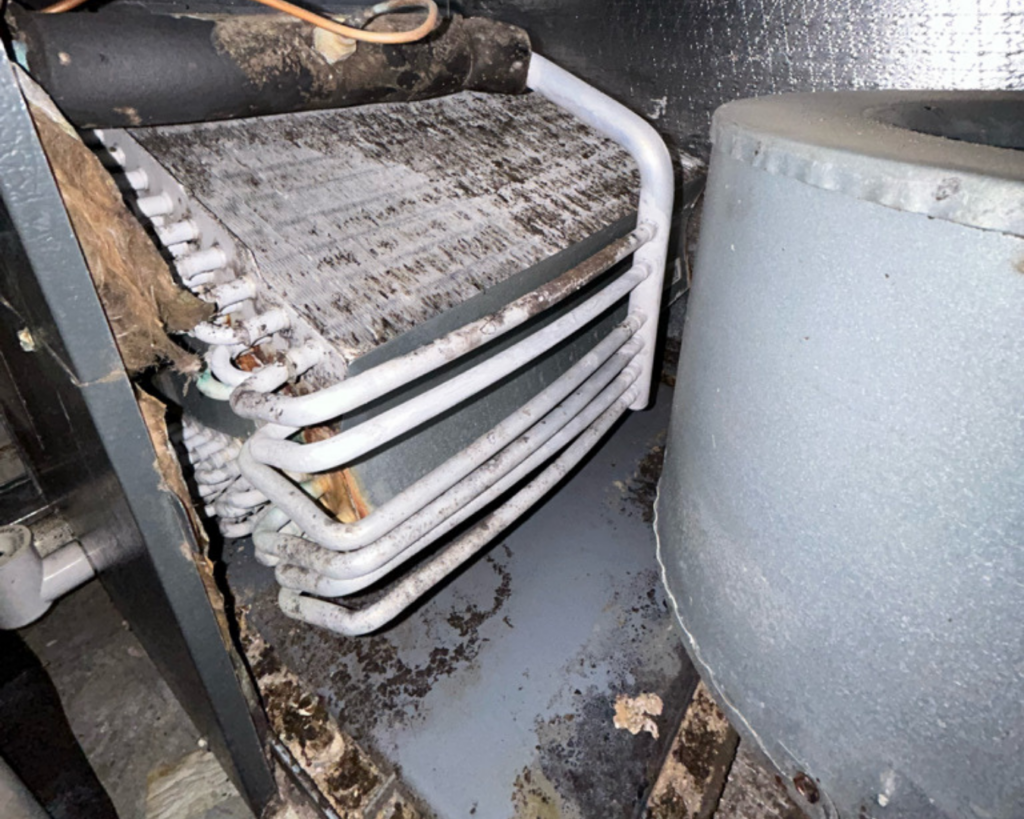
An opened HVAC unit shows dark speckling across its exposed evaporator coil, with white refrigerant lines looping over the metal fins.

Signs You May Have Mold in Your HVAC System

Mold in the system usually announces itself by smell or specks long before anyone opens the cabinet and sees the coil. Watch for:

  • A musty or dirty-sock smell when the AC kicks on
  • Black or dark specks on vents, registers or the ceiling around them
  • Water in the drain pan, a tripped float switch or a leaking air handler
  • Sweating ducts, damp insulation or stains near supply registers
  • Indoor humidity that stays above 60% while the AC is running

See our full guide to the signs of mold in your HVAC system.

Call 512-489-4653

How Does an HVAC Mold Job Work?

Texas mold rules and good practice set the same order of work:

  1. Independent assessment. A licensed mold assessor, independent of whoever does the remediation, evaluates the home. We coordinate with independent assessors and can refer you to one.
  2. Protocol. The assessor writes the remediation protocol: what’s affected, what must be cleaned or removed, who does which part and how the work will be checked.
  3. Who does what. Mold only in the HVAC system is our job. If it’s also in walls, the attic or belongings, a general mold remediation company handles that part and sets up containment in the house. We can refer you to independent ones.
  4. Gold Eagle does the HVAC work. We clean or replace the coil, clean the air handler cabinet and blower, replace or re-level the drain pan, clean or replace plenums and ducts, and fix the moisture source (drains, duct sweating, sizing and humidity) as the protocol assigns. On shared jobs we work inside the other company’s containment and schedule.
  5. Independent clearance. The independent assessor performs the post-remediation assessment.
  6. Certificate. When a regulated project passes, the licensed remediation company issues the Certificate of Mold Damage Remediation, and we document the HVAC work for the project records.
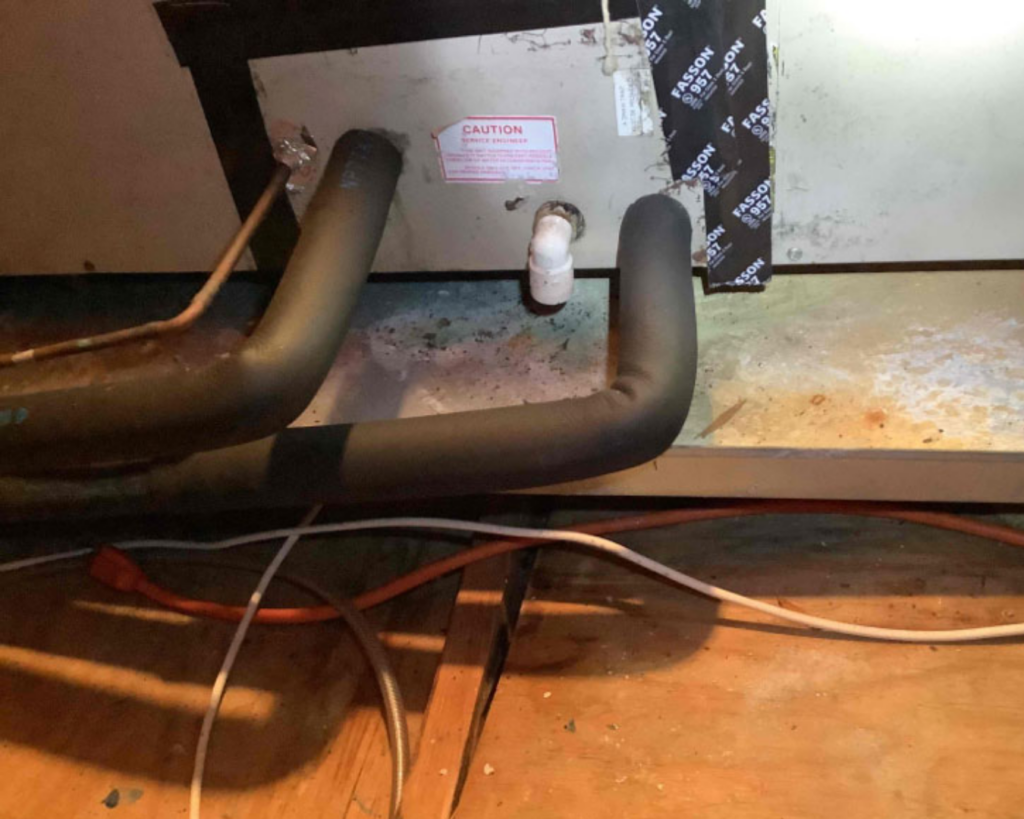
Large insulated HVAC pipes and smaller utility lines run through a tight attic space, with a caution label visible on the panel above.

Fixing the Moisture Problem That Caused It

Cleaning mold without fixing the water is how homeowners end up paying twice. In Austin-area homes we most often find clogged or poorly sloped condensate drains, rusted or cracked drain pans, attic ducts sweating where insulation is thin or torn, return leaks pulling humid attic air into the system, and systems too big for the house that shut off before they pull the moisture out.

Because we’re an HVAC company first, those fixes are part of our job: rework the drain, replace duct runs, correct airflow, right-size the equipment or add a whole-home dehumidifier. For most homes, aim for indoor humidity between about 40% and 50%.

Call 512-489-4653

What Drives the Cost of HVAC Mold Work?

We price the HVAC work from the protocol and what we find once the system is open. The assessor, and any general remediation company on the job, price their own work. The biggest factors in our part:

  • How much of the system is affected: coil and air handler only, or ducts and plenums too
  • Whether ducts can be cleaned or need to be replaced (flex duct and duct board often need replacement)
  • Access: attic air handlers, tight closets and long duct runs take more time
  • What it takes to fix the moisture cause: a drain repair, duct sealing, a dehumidifier or equipment changes
  • Scheduling around another remediation company’s containment and work plan, when one is on the job

Call 512-489-4653 for a quote. If you already have the assessor’s protocol, send it and we’ll quote the HVAC work it describes.

HVAC Restoration Services

Each part of the work has its own page:

Cities We Serve

We handle HVAC mold work across the greater Austin area, including Austin, Round Rock, Cedar Park, Pflugerville, Buda, Kyle, Bee Cave, West Lake Hills, Rollingwood, Sunset Valley, Manchaca, Driftwood.

In Austin itself we regularly work in neighborhoods like Circle C Ranch, Shady Hollow, Travis Country, Onion Creek, Zilker, Travis Heights, Hyde Park, McNeil. Not sure if you’re in our area? Call 512-489-4653.

Frequently Asked Questions

It's mold remediation inside the heating and cooling system: cleaning or replacing the coil, air handler, drain pan, plenums and ducts as the independent assessor's protocol assigns, and fixing the moisture problem that caused the growth. Gold Eagle Services does this work as a licensed Texas mold remediation company that handles HVAC mold.

Mold in Your AC or Ductwork? Call Gold Eagle Services.

Call 512-489-4653

Have a Protocol, a Smell or a Question? Send It Over.

Tell us what you're seeing or smelling, or what the assessor wrote, and our team will get back to you as soon as possible.

Contact Us
This field is for validation purposes and should be left unchanged.
Name(Required)
Same-day service
BookTextCall 512-489-4653Call