Skip to content

Mold After Water Damage & Insurance Claims in Austin

A burst pipe, roof leak, overflowing AC drain or flood can lead to mold within days, and often the HVAC system is involved. Here's what Austin homeowners should know about mold after water damage, how the HVAC system fits in, and how to approach an insurance claim.

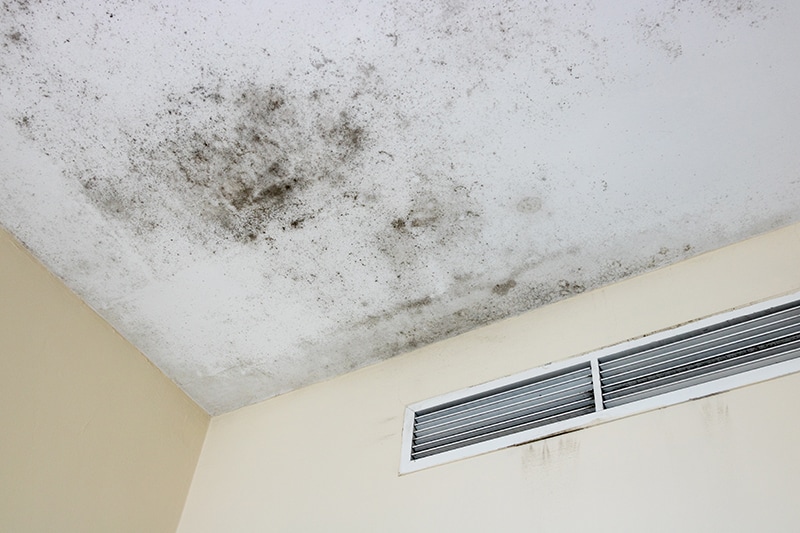
Dark spots spread across a pale ceiling beside a beige wall, above a long rectangular air vent with horizontal slats.

How Fast Can Mold Grow After Water Damage?

Mold can begin growing within a day or two when materials stay wet, especially in warm conditions like a Central Texas summer. That’s why the first priority after any water loss is stopping the water and drying the home quickly. Drywall, insulation, carpet pad and duct insulation that stay wet are the most likely to grow mold and the most likely to need replacement.

In Austin-area homes, some of the most common water losses start at the HVAC system itself: an attic air handler drain pan overflows, a float switch fails, or a drain line clogs and water runs into the ceiling below.

What to Do Right After Water Damage

  1. Stop the source if you can: shut off the water, or turn off the AC if the air handler is overflowing
  2. Take photos and video of the damage before anything is moved or removed
  3. Contact your insurance company promptly to report the loss and ask how they want you to proceed
  4. Start drying: a water damage restoration company can bring in dehumidifiers and air movers
  5. Keep damaged materials or photos of them until your adjuster says otherwise
  6. Have the HVAC system checked before running it for long periods if water reached the air handler or ducts
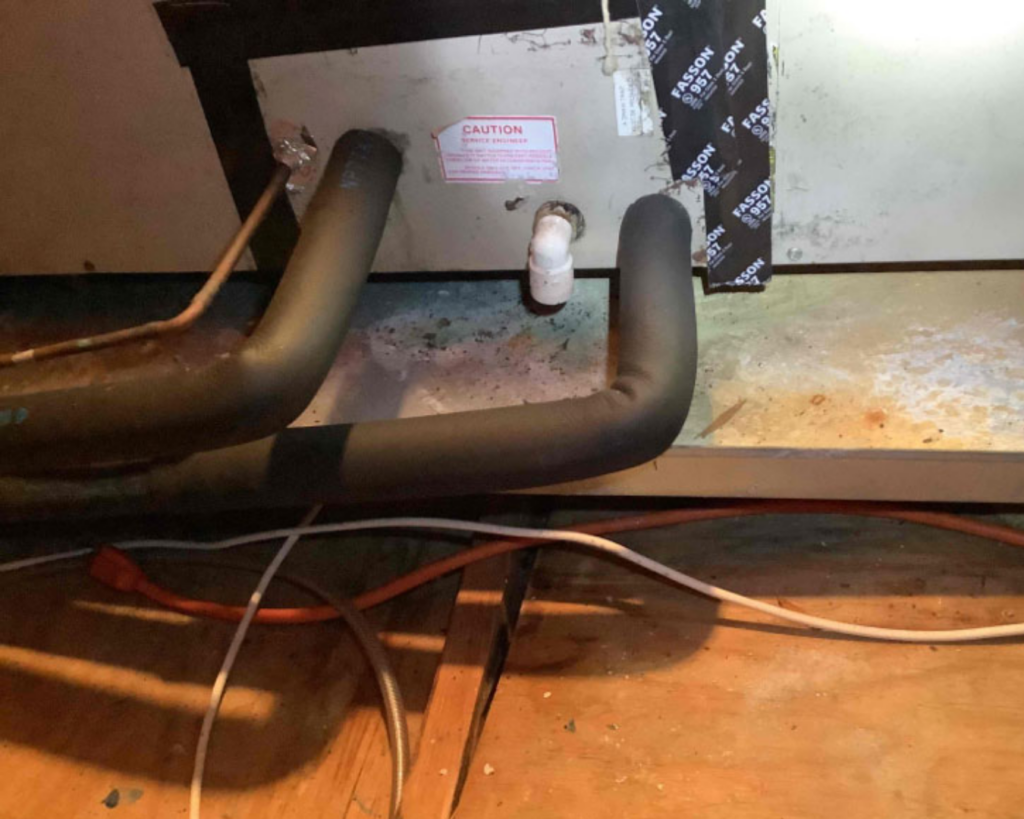
Large insulated HVAC pipes and smaller utility lines run through a tight attic space, with a caution label visible on the panel above.

Why the HVAC System Matters After a Water Loss

Water damage and the HVAC system are closely linked. If the air handler, drain pan or ducts got wet, they can grow mold and spread spores and odor through the house once the system runs. Running the system during drying can also move dust and debris from damaged areas into the ducts.

As an HVAC contractor that understands mold (licensed TACLA119235 and RCO1783), we can evaluate the HVAC side, fix drains and pans, and clean or replace affected ducts and components as the HVAC part of an HVAC restoration project, working alongside the licensed mold remediation contractor. See duct mold removal for how we decide between cleaning and replacing.

Call 512-489-4653

Mold and Insurance Claims: What to Know

Every policy is different, and coverage decisions are made by your insurance company, not by contractors. In general terms:

  • Many homeowner policies treat sudden, accidental water damage differently from long-term leaks, maintenance issues or high humidity
  • Some policies limit or exclude mold coverage, or cap it at a set amount
  • How quickly the loss was reported and addressed can matter
  • Documentation, such as photos, reports, invoices and the assessor’s protocol, helps the adjuster understand the scope

On a mold project, documentation comes from each party: the independent assessor documents the conditions and writes the protocol, the licensed mold remediation contractor handles the remediation documentation, and Gold Eagle documents the HVAC scope and the work we perform.

Talk with your adjuster early about what your policy covers, what documentation they need and whether they want an independent mold assessment before work begins. Coverage is always your insurer’s decision. We can’t promise or predict it, but we can provide a clear written scope and documentation of the HVAC work to share with your adjuster.

How a Mold Project Works After a Water Loss

If mold is found or suspected, an independent, licensed mold assessor evaluates the home and writes a protocol. A licensed mold remediation contractor leads the remediation of the house. Gold Eagle works alongside them as the HVAC contractor, restoring the coil, air handler and ducts as the protocol assigns and fixing the HVAC-side moisture cause. The assessor performs clearance, and on regulated projects the remediation contractor issues the Certificate of Mold Damage Remediation. If you don’t have an assessor or remediation contractor, we can refer you to independent ones. See how an HVAC mold project works.

Once the structure is dry and repaired, some homeowners add a supplemental whole-home dry fog treatment from our sister company, Pure Maintenance of Central Texas. It isn’t a substitute for required remediation.

Related HVAC Restoration Services

Related pages:

Frequently Asked Questions

It depends entirely on your policy and the cause of the damage. Coverage is your insurer's decision. Talk with your adjuster about what's covered before work begins.

Learn More From Our Resource Center

Want to understand your options before you call? Our homeowner guides on water damage and mold are written by our team for Central Texas homes.

Browse all homeowner guides in the Gold Eagle Resource Center

Water Damage and Mold Concerns? Call Gold Eagle.

Call 512-489-4653

Questions About Mold in Your HVAC? Let's Talk.

Tell us what you need, and our team will get back to you as soon as possible. No pressure, no obligation. Just honest advice and fast service.

Contact Us
This field is for validation purposes and should be left unchanged.
Name(Required)
Same-day service
BookTextCall 512-489-4653Call