
Skip to content

Mold in Your AC Unit? Coil & Air Handler Mold Removal in Austin

Found mold in your AC unit, on the evaporator coil or inside the air handler? It's one of the most common places mold grows in Central Texas homes. If mold is in your AC unit, the HVAC side needs a contractor who understands mold. Gold Eagle Services works with your mold remediation contractor and independent assessor (or can refer you to independent ones), restores the coil and air handler, and fixes the moisture problem behind it. Licensed TACLA119235 and RCO1783.

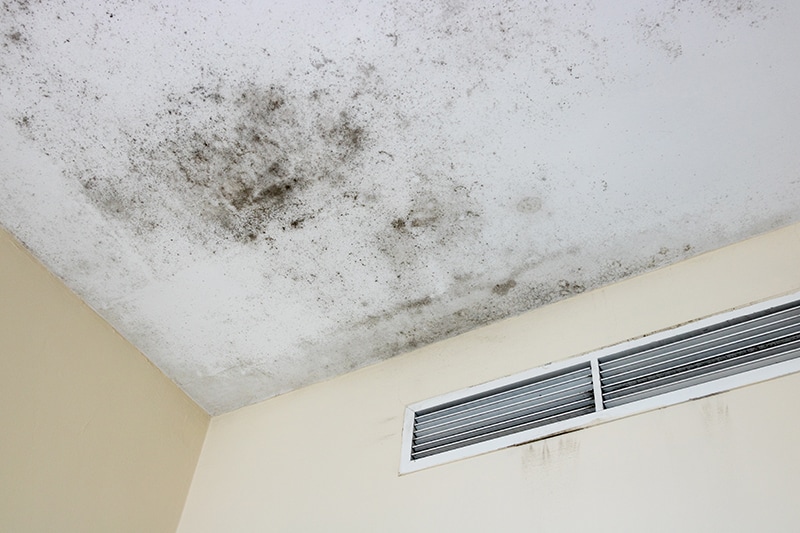
Dark spots spread across a pale ceiling beside a beige wall, above a long rectangular air vent with horizontal slats.

Why Does Mold Grow Inside an AC Unit?

Your air conditioner cools the air by pulling heat and moisture out of it. That moisture condenses on the evaporator coil, drips into a drain pan and leaves the house through a condensate drain line. When everything works, the water is gone in minutes. When it doesn’t, the inside of the air handler becomes a dark, damp box full of dust, which is exactly what mold needs.

Central Texas makes this worse. Our AC systems run hard from late spring through fall, often in attic air handlers that sit in 120-degree heat. The most common causes we find are:

  • A condensate drain line clogged with algae or sludge, leaving standing water in the pan
  • A rusted, cracked or poorly sloped drain pan that never fully drains
  • Dirty coils and filters that hold moisture and feed growth
  • Oversized systems that short-cycle and never run long enough to dry the air
  • Air leaks in the cabinet or return that pull humid attic or garage air into the unit
  • Systems left off or set very high in a vacant home during a humid stretch
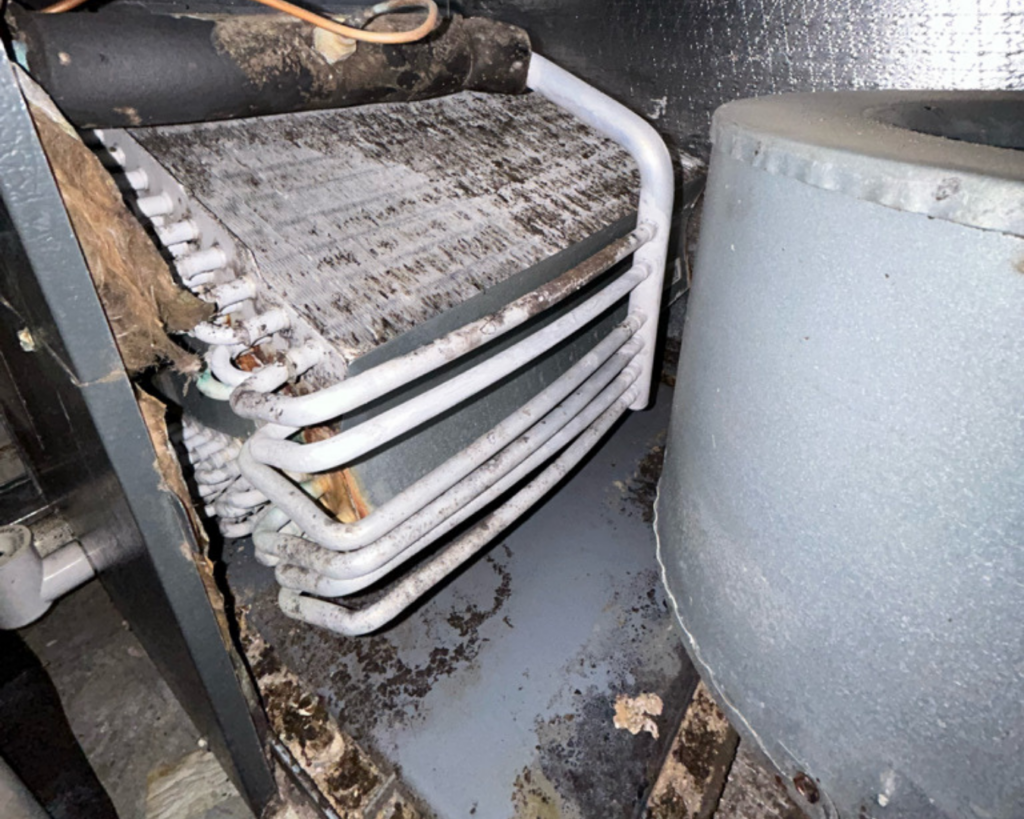
An opened HVAC unit shows dark speckling across its exposed evaporator coil, with white refrigerant lines looping over the metal fins.

What Mold on the Coil and Air Handler Looks Like

Growth usually starts where water sits or air slows down: the drain pan, the coil face and fins, the blower wheel and housing, and the insulation lining the cabinet. You might see dark spotting, fuzzy patches or slimy buildup, or you might see nothing at all and just smell it when the system starts up.

  • Musty odor when the AC turns on
  • Dark buildup on the coil, blower wheel or cabinet liner
  • Standing water or sludge in the drain pan
  • Black specks on nearby supply registers
Call 512-489-4653

How We Restore a Moldy Coil and Air Handler

Because the air handler feeds every room, it’s usually the center of the HVAC scope on a mold project. When mold is suspected, an independent, licensed mold assessor evaluates the home and writes the protocol, and a licensed mold remediation contractor leads the remediation. We work alongside them as the HVAC contractor and carry out the HVAC work the protocol assigns to us. A typical coil and air handler scope includes:

  1. Working within the remediation contractor’s containment and protecting the home from dust and debris
  2. Opening the cabinet and HEPA vacuuming loose debris
  3. Cleaning the evaporator coil and fins with coil-safe methods, or replacing the coil when it’s badly corroded or can’t be cleaned effectively
  4. Cleaning or replacing the blower wheel and treating the cabinet surfaces
  5. Removing and replacing contaminated internal insulation, which is porous and usually can’t be cleaned
  6. Replacing or re-leveling the drain pan and clearing, re-sloping or re-routing the condensate drain
  7. Checking the float switch, filter rack and cabinet seals so humid air and water stay where they belong

Most of this is mechanical work that requires an air conditioning license, and cleaning and treating mold in the system is remediation work. We hold both licenses, so we can legally perform the HVAC-side work the protocol assigns to us while the remediation contractor handles the rest of the project. If the ducts are affected too, see duct mold removal and replacement.

When Is Replacing the Air Handler the Better Choice?

Sometimes cleaning an old unit isn’t the best use of your money. Replacement is worth discussing when the coil is leaking refrigerant or heavily corroded, the cabinet insulation and blower are badly contaminated, the system is near the end of its life, or it’s the wrong size for the house and keeps causing humidity problems. A right-sized system with proper airflow removes moisture better and makes a repeat problem less likely.

We’ll show you what we found and lay out both options. Learn more about AC repair and installation.

How to Keep Mold From Coming Back

  • Change filters on schedule, usually every 1 to 3 months
  • Keep the condensate drain clear, and have it flushed during annual maintenance
  • Keep indoor humidity between about 40% and 50%; if your AC can’t, consider a whole-home dehumidifier
  • Don’t shut the AC off in summer when you travel; set it a few degrees higher instead
  • Seal leaks in the return and cabinet so the system isn’t pulling in attic air

Related HVAC Restoration Services

Mold in the AC unit is usually one part of a bigger picture:

Frequently Asked Questions

Dust and some discoloration are common, but active mold growth on the coil, blower or cabinet isn't something to ignore. It usually points to a drainage or humidity problem that should be fixed.

Learn More From Our Resource Center

Want to understand your options before you call? Our homeowner guides on mold and your HVAC system are written by our team for Central Texas homes.

Browse all homeowner guides in the Gold Eagle Resource Center

Mold in Your AC Unit? We Can Help.

Call 512-489-4653

Questions About Mold in Your HVAC? Let's Talk.

Tell us what you need, and our team will get back to you as soon as possible. No pressure, no obligation. Just honest advice and fast service.

Contact Us
This field is for validation purposes and should be left unchanged.
Name(Required)
Same-day service
BookTextCall 512-489-4653Call