Skip to content

Signs of Mold in Your HVAC System: Musty Smells, Black Specks & More

A musty smell from the vents, black specks around the registers or water near the air handler can all point to mold in your HVAC system. Here's what to look for in a Central Texas home, what it can mean and what to do next.

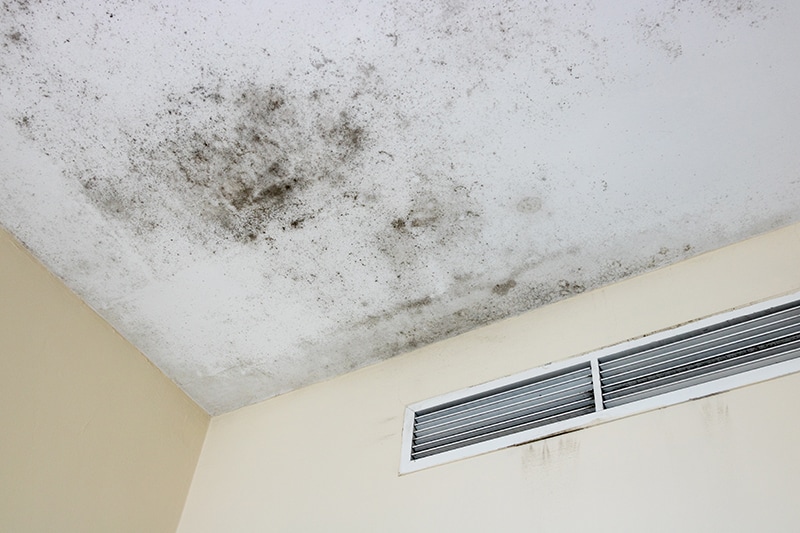
Dark spots spread across a pale ceiling beside a beige wall, above a long rectangular air vent with horizontal slats.

Why HVAC Systems Are Prone to Mold in Central Texas

Your air conditioner removes moisture from the air every time it runs. In Austin, that’s a lot of water: systems run most of the day for five or six months a year, and many air handlers and ducts sit in attics that get extremely hot. Any place that water doesn’t drain, or where cold ducts meet humid air, can grow mold. Once it’s in the system, the blower can carry spores and odor to every room.

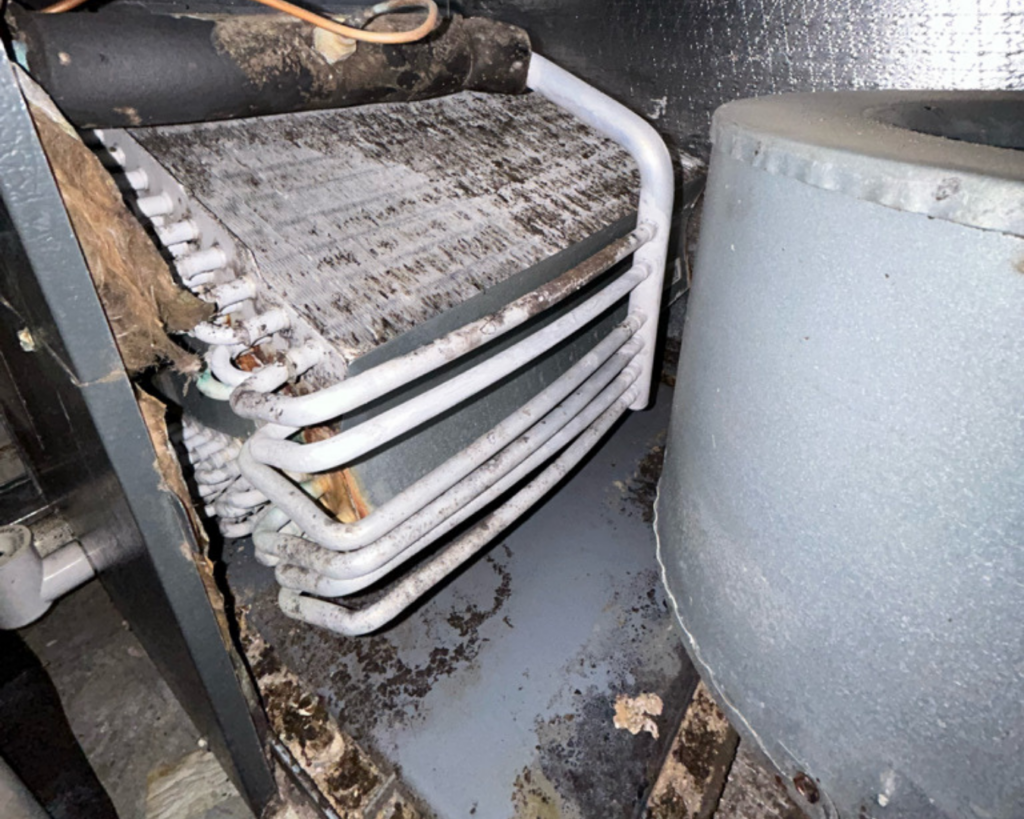
An opened HVAC unit shows dark speckling across its exposed evaporator coil, with white refrigerant lines looping over the metal fins.

The Most Common Warning Signs

  • A musty, earthy or dirty-sock smell when the AC starts
  • Black or dark specks on supply registers, grilles or the ceiling around them
  • Water in the drain pan, a tripped float switch or water stains below the air handler
  • Ducts or registers that sweat or drip
  • Visible growth on the coil, blower or inside the air handler cabinet
  • Indoor humidity above 60% even with the AC running

One sign alone doesn’t prove there’s mold, but two or three together are worth a closer look.

Call 512-489-4653

Musty Smell From the Vents

A musty odor that shows up when the system turns on and fades after a few minutes is one of the most common signs. It often comes from a wet drain pan, a dirty coil, contaminated cabinet insulation or damp ducts. A smell that lingers all the time may point to a problem in the house itself, such as a leak inside a wall, with the HVAC system spreading it around.

Black Specks or Black Mold in Vents

Dark spots on registers are often caused by condensation: cold supply air meets humid room air and the grille sweats, collecting dust that can grow mold. Spots can also be dust or soot. If specks come back soon after you clean them, or they appear on many registers at once, the source may be inside the ducts or air handler. See our page on mold in air ducts.

Water Around the Air Handler

Standing water in the drain pan, rust, a drain line that never drips outside, or ceiling stains below an attic unit all mean water isn’t leaving the system properly. That’s one of the fastest routes to mold in your AC unit. A clogged drain can often be cleared in a single service visit; the key is catching it before water sits for weeks. Learn more about coil and air handler restoration.

What to Do If You Notice These Signs

  1. Replace the air filter and check that the condensate drain is flowing
  2. Check indoor humidity with an inexpensive hygrometer; aim for about 40% to 50%
  3. Don’t spray household cleaners or bleach into the vents or air handler
  4. Call us to check the HVAC side: drain, coil, airflow, ducts and humidity
  5. If mold is suspected, have an independent, licensed mold assessor evaluate the home and write a protocol; a licensed mold remediation contractor leads the remediation

We don’t offer mold testing or mold inspections. We coordinate with independent, licensed mold assessors and work alongside your mold remediation contractor as the HVAC contractor, restoring the system and fixing the moisture problem. If you don’t have an assessor or remediation contractor, we can refer you to independent ones. If anyone in your home has health concerns, talk with a medical professional.

Related HVAC Restoration Services

Next steps and related services:

Frequently Asked Questions

A musty smell at startup often means moisture is sitting somewhere in the system: the drain pan, coil, cabinet insulation or ducts. It's worth having the system checked, especially if the smell is new or getting stronger.

Learn More From Our Resource Center

Noticing a Musty Smell or Black Specks? Let’s Take a Look.

Call 512-489-4653

Questions About Mold in Your HVAC? Let's Talk.

Tell us what you need, and our team will get back to you as soon as possible. No pressure, no obligation. Just honest advice and fast service.

Contact Us
This field is for validation purposes and should be left unchanged.
Name(Required)
Same-day service
BookTextCall 512-489-4653Call