
Skip to content

Mold in Air Ducts: Duct Mold Removal & Replacement in Austin

Black specks on the vents, a musty smell from the registers or sweating ducts in the attic? Mold in air ducts is a common Austin problem, and the right fix depends on what your ducts are made of. As the HVAC contractor on mold projects, Gold Eagle Services cleans, treats and replaces ductwork following the independent assessor's protocol, working alongside your licensed mold remediation contractor.

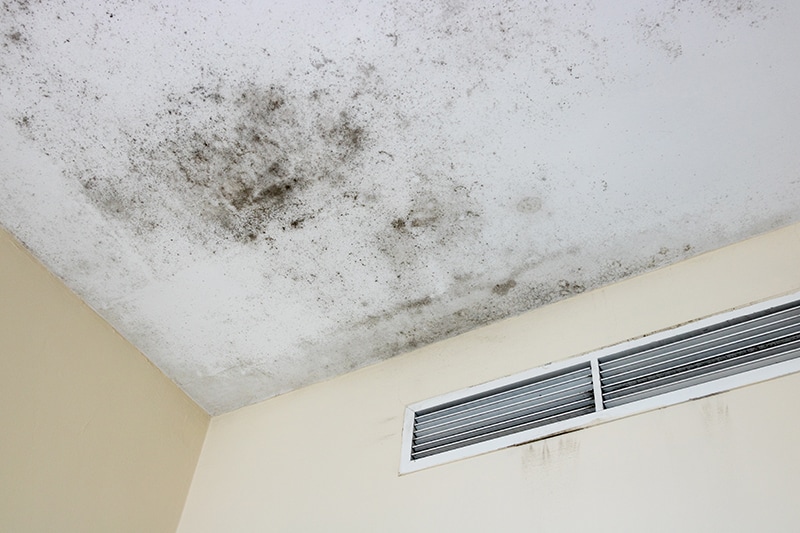
Dark spots spread across a pale ceiling beside a beige wall, above a long rectangular air vent with horizontal slats.

How Does Mold Get Into Air Ducts?

Ducts carry cold air through hot, humid spaces. In most Central Texas homes, that means an attic that can top 120 degrees in summer. Where the duct surface drops below the dew point of the air around it, water condenses. Add dust and you have mold food and moisture in the same place.

The usual culprits are:

  • Thin, torn or missing duct insulation that lets the outside of the duct sweat
  • Leaky connections that pull humid attic air into the return side
  • Mold growth in the air handler that spreads into the supply plenum and ducts
  • Undersized or crushed ducts that slow airflow and let moisture linger
  • Supply registers in bathrooms or near exterior doors that collect condensation
  • Water from a roof leak or a drain overflow that soaked duct insulation
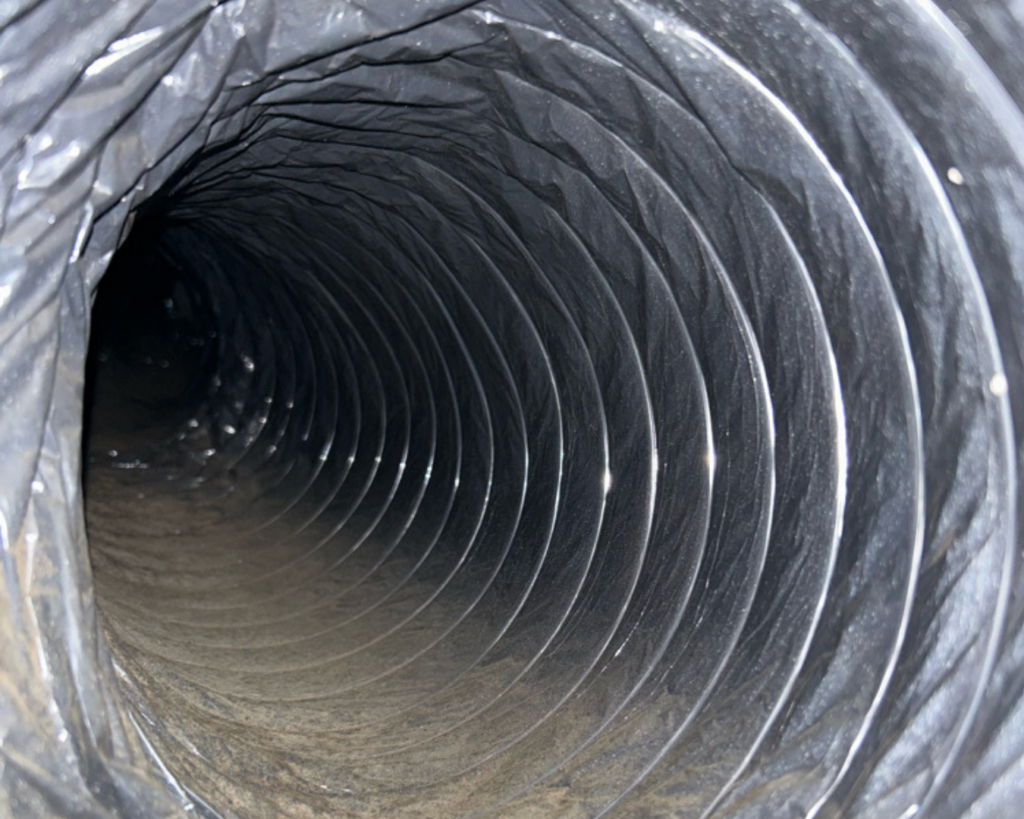
A close view inside a dark, ribbed HVAC duct shows dust and light-colored residue along the lower surface and inner folds.

Cleaning vs. Replacing Ducts: What Decides It?

Not all ductwork can be cleaned. The material matters most:

  • Sheet metal ducts and plenums: usually cleanable with HEPA vacuuming and surface cleaning
  • Flex duct: the inner liner is hard to clean without damage and is often replaced when it has growth
  • Fiberglass duct board: porous, and usually replaced when it's contaminated
  • Wet or damaged duct insulation: replaced, not dried in place

The independent assessor’s protocol sets the scope, and we’ll tell you what we see once the system is opened up.

Call 512-489-4653

Our Duct Mold Removal Process

Duct work is part of the HVAC scope on a mold project, so it’s coordinated with the remediation contractor, the air handler work and the moisture fix:

  1. An independent, licensed mold assessor evaluates the home and writes the protocol. We coordinate with independent assessors and never assess our own projects.
  2. The licensed mold remediation contractor leads the remediation and sets up containment. We work within it, isolating and protecting the HVAC system.
  3. We HEPA vacuum and clean sheet metal plenums and boots where a home has them, and clean or replace registers and grilles.
  4. We remove and replace contaminated flex duct, duct board and insulation, sized and sealed correctly.
  5. We fix the HVAC-side cause: insulation, sealing, airflow, drain problems and humidity.
  6. An independent assessor performs clearance, and on regulated projects the remediation contractor issues the Certificate of Mold Damage Remediation. We document our HVAC work for the project records.

Why Duct Replacement Is Sometimes the Smarter Fix

Many older Austin homes have ductwork that’s poorly sealed and was never sized for the house. If ducts are contaminated and also leaky, crushed or undersized, replacing them solves more than one problem. New, properly sized and sealed ducts with the right insulation are much less likely to sweat, and they help the system control humidity.

Our ductwork team designs and installs duct systems, so replacement is done to proper sizing, not just swapped piece for piece.

Duct Cleaning Isn't the Same as Duct Mold Remediation

Routine duct cleaning removes dust and debris. It’s useful after a renovation or when there’s heavy buildup. Mold in ducts is a different job: it needs a protocol, containment where required, removal of materials that can’t be cleaned and a fix for the moisture problem. If you’re seeing mold, not just dust, the ducts should be handled as part of a mold project with a protocol, not a standard duct cleaning.

Want a whole-home treatment of the air and surfaces after the physical work is done? Our sister company offers Pure Maintenance dry fog treatment.

Related HVAC Restoration Services

Duct mold is usually connected to other parts of the system:

Frequently Asked Questions

Common signs are a musty smell when the system runs, black specks on or around supply registers, and sweating or stained ducts in the attic. An independent, licensed mold assessor can confirm what it is and how far it has spread.

Seeing Mold at Your Vents? Call Gold Eagle.

Call 512-489-4653

Questions About Mold in Your HVAC? Let's Talk.

Tell us what you need, and our team will get back to you as soon as possible. No pressure, no obligation. Just honest advice and fast service.

Contact Us
This field is for validation purposes and should be left unchanged.
Name(Required)
Same-day service
BookTextCall 512-489-4653Call