Skip to content

AC Replacement in Austin, TX

A new air conditioner sized for your house, not the old nameplate, and installed by Gold Eagle's licensed, family-run team. See your options and pricing online with Build Your System, or call 512-489-4653.

4.8 on Google from 400+ reviewsOpen Mon to Sat, 7am to 7pm✓ BBB A+ Rated✓ Nextdoor Neighborhood Favorite✓ Licensed & Insured

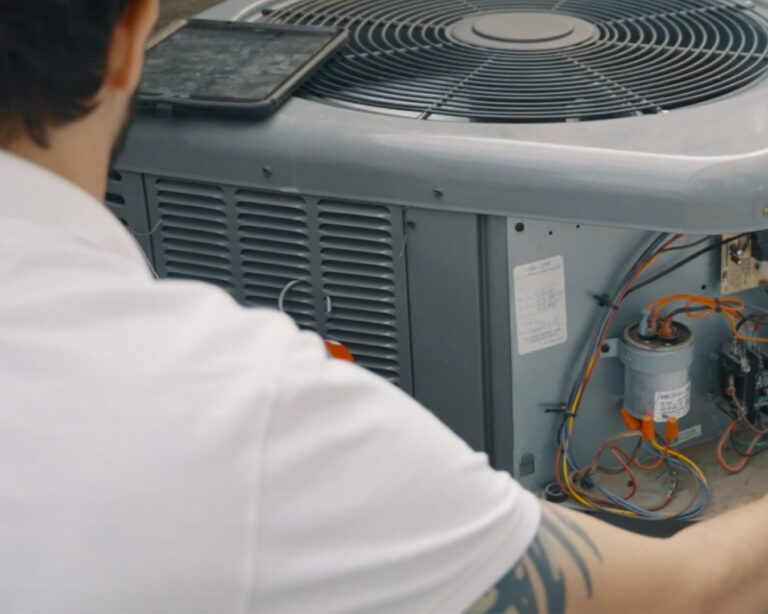
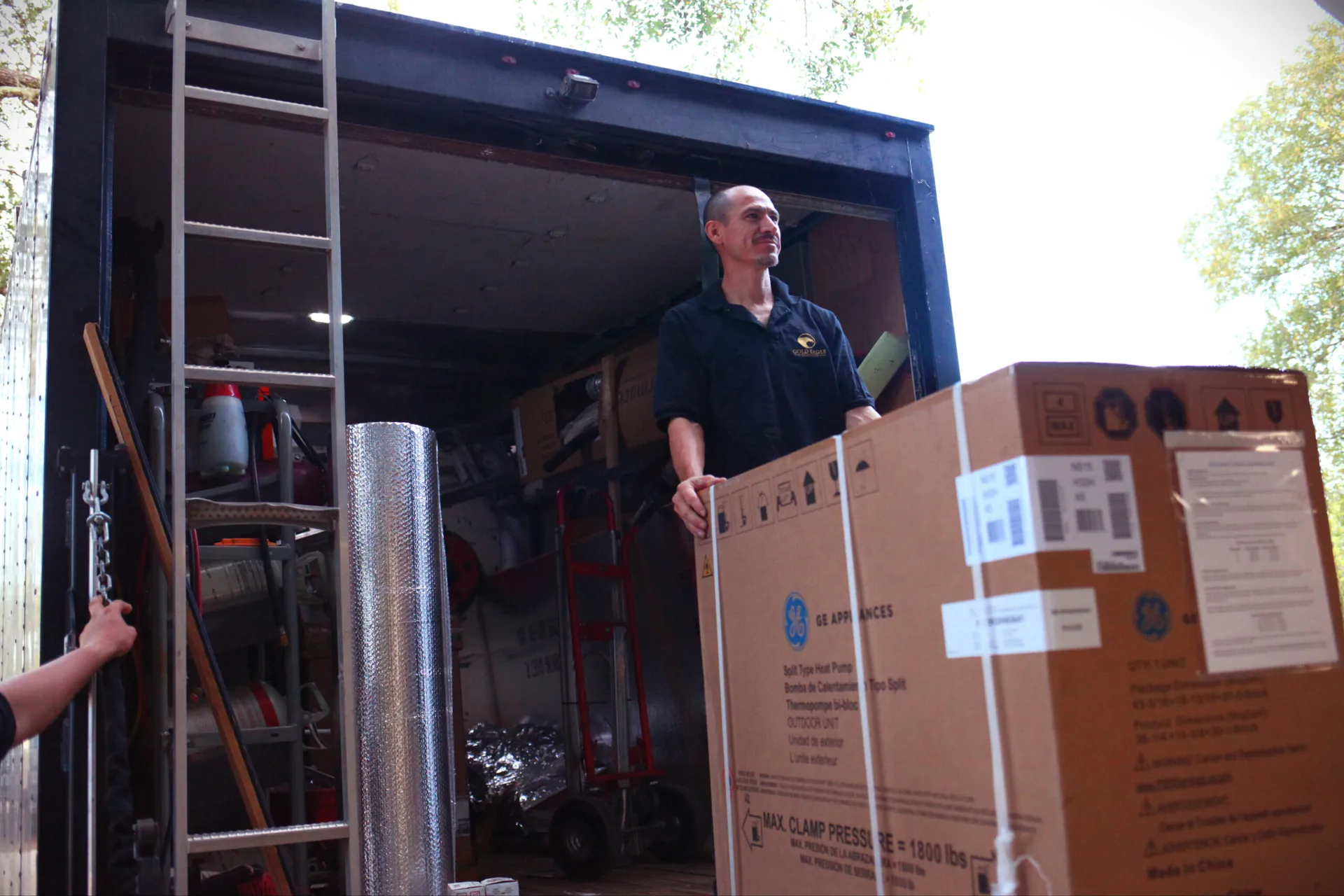
Gold Eagle Services HVAC installer loading an air handler

AC Replacement Built Around Your Central Texas Home

A new air conditioner is one of the bigger checks a homeowner writes, and in Austin it has a hard job. It has to cool the house from May well into October and pull gallons of water out of humid air every day, often from an attic that can pass 130°F in August. The equipment matters. How it is sized, matched to your ductwork and installed matters just as much.

Gold Eagle Services is a family-run Austin HVAC company serving Central Texas since 2017. We start with your house, not a brochure.

  • Licensed HVAC contractor (TACLA119235)
  • Rated 4.8 stars on Google by Austin-area homeowners
  • Manual J load calculation to size your new system
  • GE Elite Dealer, authorized American Standard dealer and Mitsubishi Electric Diamond Contractor
  • Financing available through Wisetack
  • Hours: Monday to Saturday, 7am to 7pm

See your options and pricing in a few minutes with Build Your System, call 512-489-4653, or book online.
Build Your System
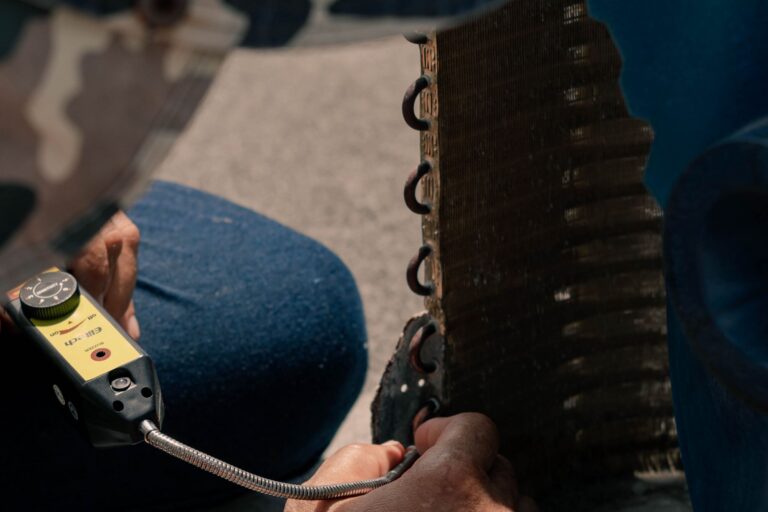
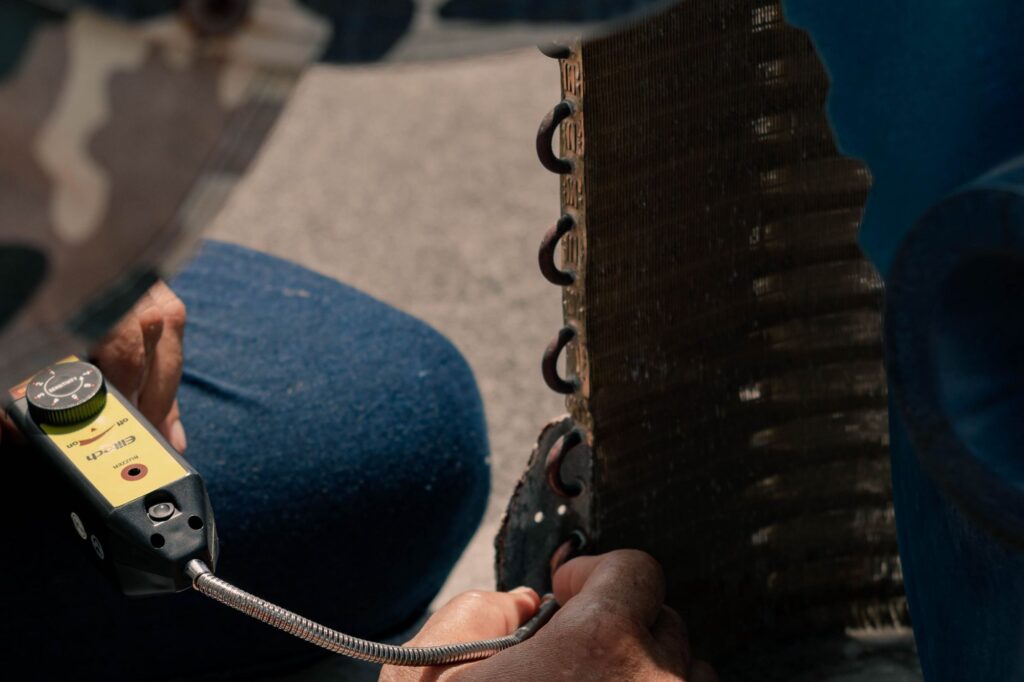
Technician checking an outdoor AC coil with a handheld leak detector

Should You Repair or Replace Your AC?

Repair usually makes sense when the system is younger and one part has failed. Replacement is usually the better value when the system is past about 10 years old and the repairs are adding up, or when it can no longer keep the house comfortable. Most central air conditioners around Austin last about 10 to 15 years, and long cooling seasons push many toward the shorter end.

Replacement deserves a real conversation when you see:

  • A system 10 to 15 years old or older that needs a major repair, such as a compressor or a leaking coil
  • R-22 refrigerant, which is no longer produced for servicing older systems
  • Refrigerant leaks that keep coming back, especially in the indoor coil
  • A repair call every summer, often for the same kind of failure
  • Rooms that never cool down, or a house that feels clammy even when the thermostat is satisfied
  • Electric bills that climb year after year with no change in how you live

A good repair on a sound system is often the right call, and our AC repair team will tell you when it is. For the full decision, read Repair or Replace? Deciding What’s Best for Your HVAC System and How Long Does an AC Last in Central Texas?

How Should a New AC Be Sized in Austin?

With an ACCA Manual J load calculation for your house, not by copying the old unit’s tonnage or using a square-foot rule of thumb. Manual J looks at square footage, insulation, windows and their orientation, air leakage, duct location and local design temperatures to find how much cooling the house actually needs.

Why bigger isn’t better in Texas humidity. An air conditioner removes two things: heat and moisture. Moisture only comes off the indoor coil after the system has run long enough for the coil to get cold and start dripping into the drain pan. An oversized AC reaches the thermostat setting fast, shuts off and leaves the moisture behind. You get a house that is cold but clammy, uneven rooms and a compressor that starts and stops far more than it should.

Why the old nameplate is a poor guide. Many homes have had new windows, more insulation or a remodel since the last system went in, and many original systems were oversized to begin with. Copying the old label repeats the old mistake.

Sizing also has to match the ducts. Manual D covers duct design and Manual S covers equipment selection, and a correctly sized AC on undersized ducts or a small return still struggles. Learn more in Why a Bigger AC Isn’t Better in Texas Heat and Smart HVAC Design: Manual J, D and S Explained.

What SEER2 Rating Should You Choose?

Every new central AC meets the federal minimum, so the real question is how far above it to go. Higher SEER2 means lower electric bills for the same cooling, and two-stage or variable-speed equipment adds better humidity control. The right level depends on how long you plan to stay and what you spend on electricity.

SEER2 is the cooling efficiency rating under the Department of Energy test rules that took effect January 1, 2023. The newer test is tougher than the old SEER test, so the same equipment shows a lower number, and you cannot compare a SEER rating to a SEER2 rating directly. In southern states, including Texas, new split-system central air conditioners must be rated at least 14.3 SEER2 for most home-size systems, or 13.8 SEER2 for larger ones.

Efficiency is only part of the story:

  • Single-stage systems run at full capacity or not at all.
  • Two-stage systems run on a lower setting most of the time and step up on the hottest afternoons.
  • Variable-speed (inverter) systems adjust in small steps and spend long stretches at low speed, which keeps temperatures even and pulls more moisture out of the air through a long Austin summer.

These systems cost more up front. We’ll show you the trade-off instead of pushing the top model.

New systems also use newer refrigerants, such as R-454B or R-32, as R-410A is phased down under federal rules. That is one more reason the outdoor unit and indoor coil are replaced as a matched pair. Read What Do SEER and SEER2 Mean? and Should You Replace Your AC to Get a SEER2 System?

Heat Pump or AC and Furnace?

If your home is all-electric, a heat pump is usually the natural replacement for an AC with electric heat strips. If you have natural gas, you can keep a gas furnace, switch to a heat pump, or pair the two in a dual fuel system.

A heat pump is an air conditioner that can run in reverse, so one outdoor unit handles summer cooling and winter heating. It heats far more efficiently than heat strips alone, though it still needs backup heat for hard freezes.

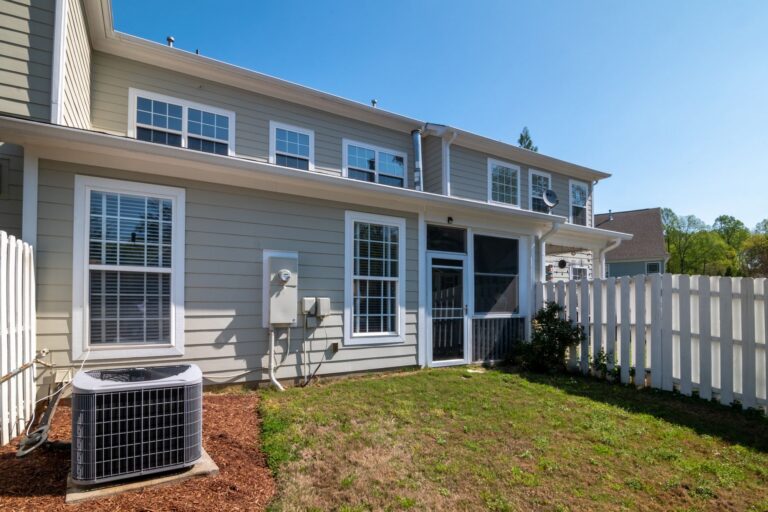
Homes with gas usually have an AC outside and a gas furnace in the attic with the AC coil sitting on top of it. When the AC fails, the furnace matters too, because in most Austin homes the furnace blower moves the air for the AC all summer. If both are older, replacing them together is usually the better job. A dual fuel heat pump system runs the heat pump most of the year and switches to gas on the coldest nights.

Compare all three in Heat Pump vs. Gas Furnace vs. Dual Fuel in Central Texas, or see our heat pump and furnace replacement pages.

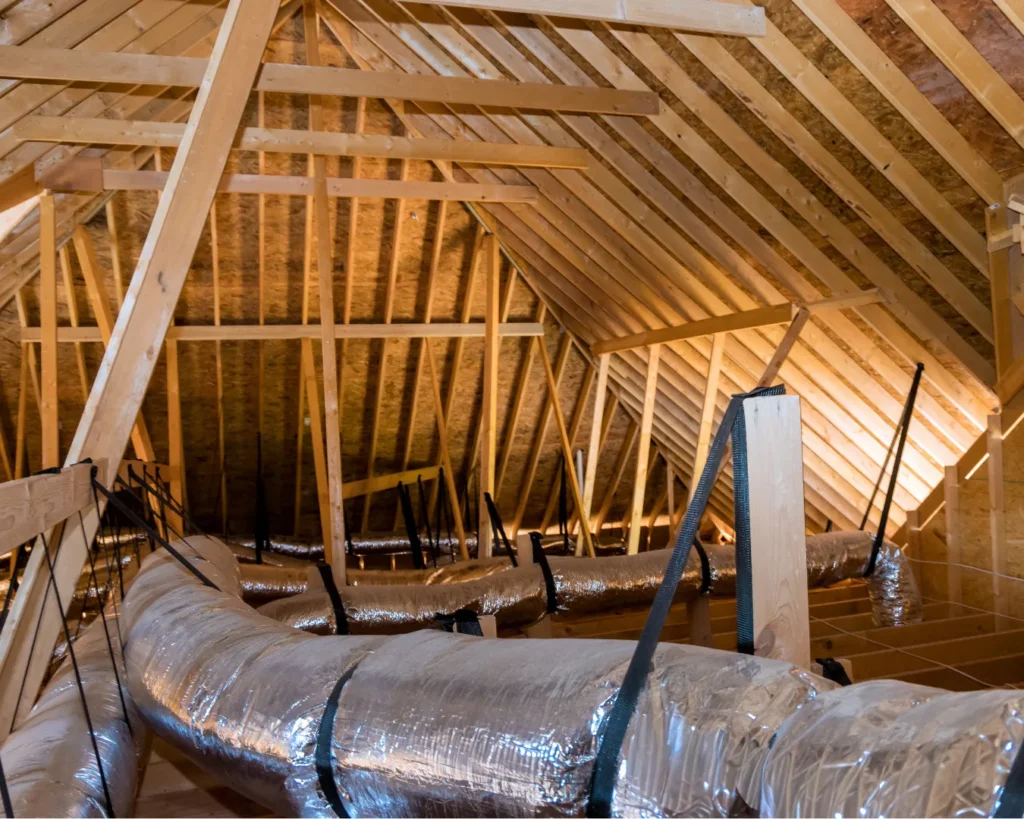
Silver insulated HVAC ducts run beneath exposed wooden attic rafters, secured by dark straps across the ventilation system.

Your Ductwork Matters as Much as the New AC

A new air conditioner cannot fix leaky, crushed or undersized ducts, so we look at the duct system before we recommend equipment.

In most Central Texas homes the air handler or furnace sits in the attic. The supply and return plenums, the boxes attached to the equipment, are almost always fiberglass ductboard, with flexible duct running from there to each room. It works well when it is built right. The problems we see most:

  • Flex runs that are kinked, crushed, sagging or much longer than they need to be
  • Ductboard plenums with failing tape, gaps or open seams that pull in hot attic air
  • Disconnected or torn runs dumping cooled air into the attic
  • Return air that is too small for the system, which starves a new AC of airflow

Depending on what we find, the fix might be sealing and repairs, a new plenum, new flex runs, added return air or full duct replacement. Read Leaky Ducts: How They Pull Attic Air and Dust Into Your Home and How Your Home’s Duct System Works.

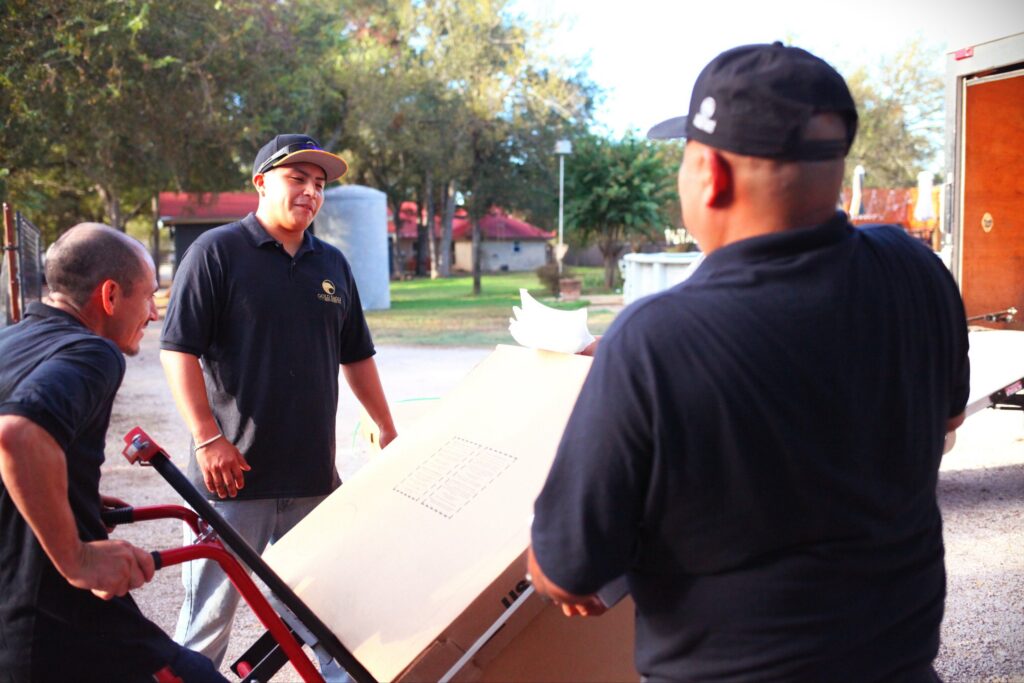
Gold Eagle service manager and installers moving new equipment on a hand truck at a job site

What Happens on Installation Day

Most straightforward AC replacements take about a day. A heat pump conversion, a new furnace, duct work or electrical changes can add time, and we’ll tell you what to expect before we start.

  • Recover the old refrigerant. It is recovered with a machine, as federal rules require, never vented.
  • Remove the old equipment. The outdoor unit, the indoor coil or air handler and any parts being replaced come out.
  • Set the new system. The condenser goes on a level pad, and the indoor coil or air handler goes in with the drain safeties its location calls for.
  • Connect and seal. Refrigerant lines are brazed, the plenums are connected and sealed, and the condensate drain, electrical and thermostat wiring are connected.
  • Pressure test and evacuate. The new refrigerant lines are leak tested and cleared of air and moisture before the system is charged.
  • Start up and test. We check refrigerant charge, airflow, temperature split and drainage, and set up the thermostat.
  • Walk you through it. You’ll know where the filter goes and how the thermostat works before we leave.
Schedule Online

Do You Need a Permit to Replace an AC in Austin?

Yes. In Austin and most surrounding cities, replacing a central air conditioner or heat pump requires a mechanical permit and an inspection. We handle permits and inspections where they are required, and we’ll coordinate the inspection time with you.

The inspector looks at items such as the electrical disconnect, line insulation, the condensate drain and clearances. Buyers and their inspectors also ask about permits when you sell.

What Does a New AC Cost in Austin?

It depends on your house and the system you choose, so instead of guessing at numbers here, use Build Your System. Pick your equipment and options and see pricing for your home in a few minutes. The main things that drive the cost are:

  • System size, based on your Manual J load calculation
  • Efficiency (SEER2) and single-stage, two-stage or variable-speed equipment
  • AC only, AC and furnace, heat pump or dual fuel
  • Duct repairs, new plenums or added return air
  • Electrical, drain or refrigerant line work, and attic or closet access
  • Permits and inspections

Rebates. Homeowners may qualify for utility rebates on qualifying high-efficiency AC and heat pump replacements. Programs change, so read our HVAC rebates guide and ask us what may apply to your project. The federal 25C tax credit is no longer available for equipment placed in service after December 31, 2025.

Financing. Financing is available through Wisetack, and checking your options does not affect your credit score. Prefer to talk it through? Call 512-489-4653 or schedule online.

AC Brands We Install

Gold Eagle is a GE Elite Dealer for GE Appliances heating and cooling equipment, and GE systems we install come with a 12-year limited parts warranty. We are also an authorized American Standard dealer, and a Mitsubishi Electric Diamond Contractor for ductless mini-splits.

Comparing quotes on another brand? See who makes what.

AC Replacement Across the Austin Area

We replace air conditioners and heat pumps throughout Austin and nearby communities, including:

Not sure if you’re in our area? See all service areas or call 512-489-4653.

Learn More Before You Replace

Plain-English guides from our Homeowner Guides library:

AC Replacement FAQ

Most central air conditioners and heat pumps in Central Texas last about 10 to 15 years. Long cooling seasons and hot attics push many toward the shorter end, while a good installation and yearly maintenance help them go longer.

Thinking about a new AC? See your options first.

Build Your System

Planning an AC Replacement? Let's Talk.

Tell us about your home and your current system, and our team will get back to you as soon as possible. Monday to Saturday, 7am to 7pm.

Contact Us
This field is for validation purposes and should be left unchanged.
Name(Required)
Same-day service
BookTextCall 512-489-4653Call