
Skip to content

Heat Pump Installation & Repair

One system that cools through the long Austin summer and heats through the short winter. Heat pump repair, replacement and installation by a licensed Austin HVAC contractor (TACLA119235).

4.8 on Google from 400+ reviewsOpen Mon to Sat, 7am to 7pm✓ BBB A+ Rated✓ Nextdoor Neighborhood Favorite✓ Licensed & Insured

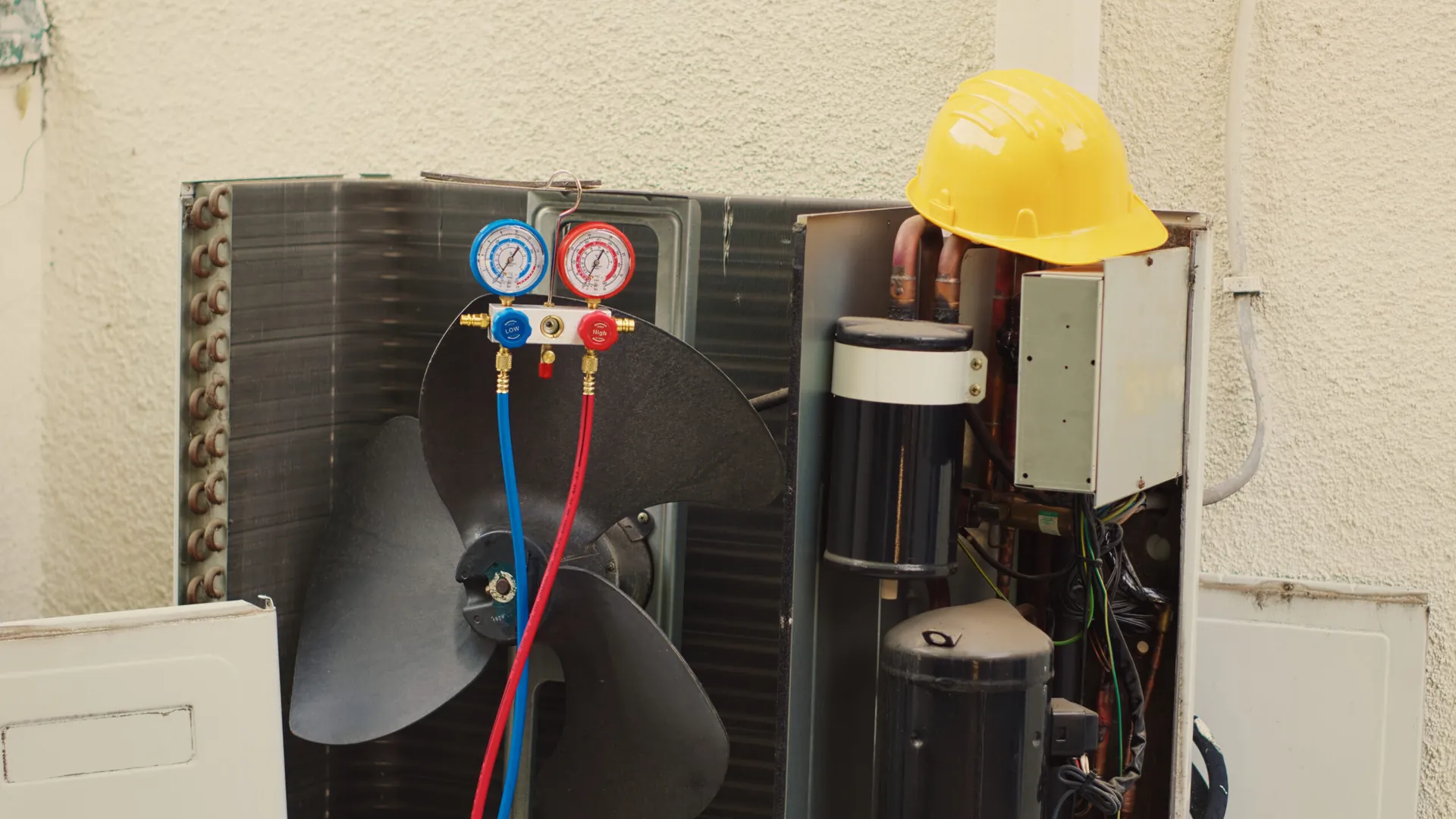
An open HVAC cabinet exposes a large blower wheel, copper tubing, electrical controls, and red and blue service gauge hoses.

How Does a Heat Pump Work?

A heat pump is an air conditioner that can run in reverse. In summer it pulls heat out of your house and dumps it outside. In winter a reversing valve flips the refrigerant’s direction, so the system pulls heat from the outdoor air (even cold air holds usable heat) and carries it indoors. Because it moves heat instead of making it, a heat pump delivers more heat than the electricity it uses, which is why it usually costs far less to run than electric resistance heat.

In Austin, where we cool most of the year and heat for a few months, that means one system for both jobs. It can run through your existing ducts or as a ductless mini-split, and in homes with gas it can team up with a furnace as a dual fuel system.
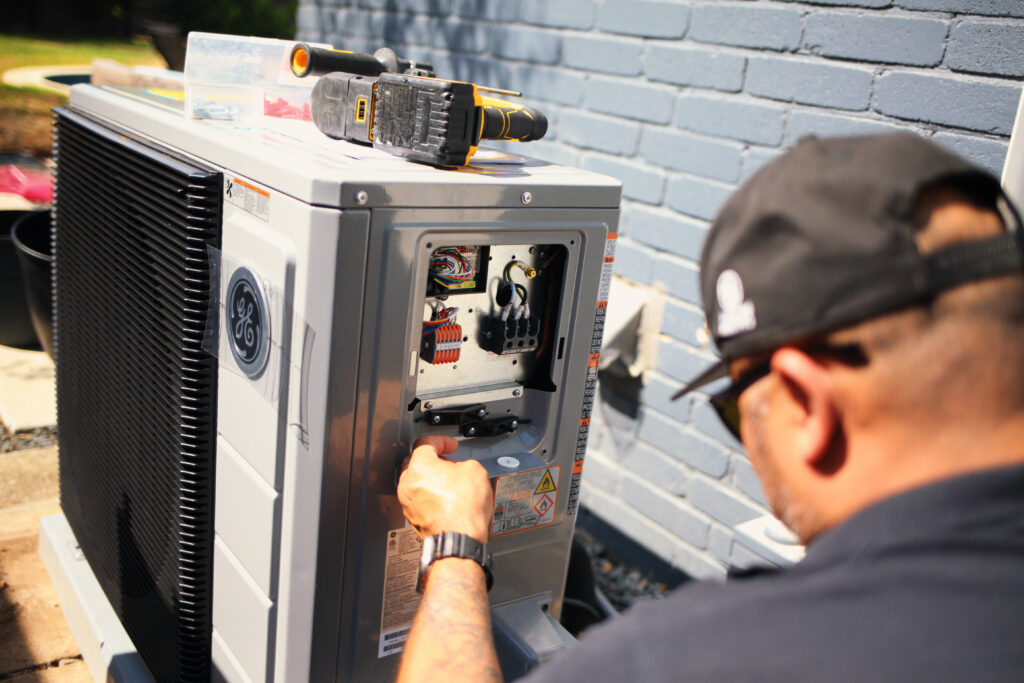
A technician adjusts exposed wiring inside a gray outdoor heat pump, with a cordless drill on top beside a light blue brick wall.

What Happens to a Heat Pump During a Texas Freeze?

As the outdoor temperature falls, a heat pump’s heating capacity falls with it, just as your house loses heat faster. Most Central Texas heat pumps have electric heat strips in the indoor air handler as backup, usually in the attic, shown as “aux heat” on the thermostat. The strips kick in when the heat pump can’t keep up and during defrost cycles. They work, but they use far more electricity than the heat pump, which is why bills jump in a cold snap.

Three choices keep those strips in check: sizing the heat pump and backup heat correctly, setting the thermostat so the strips run only when they’re needed, and choosing variable-speed or cold-climate equipment if you want more capacity on nights like February 2021.

More on winter heating: Can a Heat Pump Keep Up With a Texas Freeze? and Heat Pumps vs. Electric Resistance Heat.

Call 512-489-4653

What Do SEER2 and HSPF2 Mean?

SEER2 rates cooling efficiency and HSPF2 rates heating efficiency, under the Department of Energy’s current test procedures. Higher is better. Since 2023, a new split-system heat pump must rate at least 14.3 SEER2 and 7.5 HSPF2.

Higher-efficiency, variable-speed models cost more up front, but they spend most of their time at low speed, and long, slow cycles pull more moisture out of the air in an Austin summer. We lay out purchase price against running cost for each tier so you can see what the extra efficiency buys. See What Do SEER and SEER2 Mean?

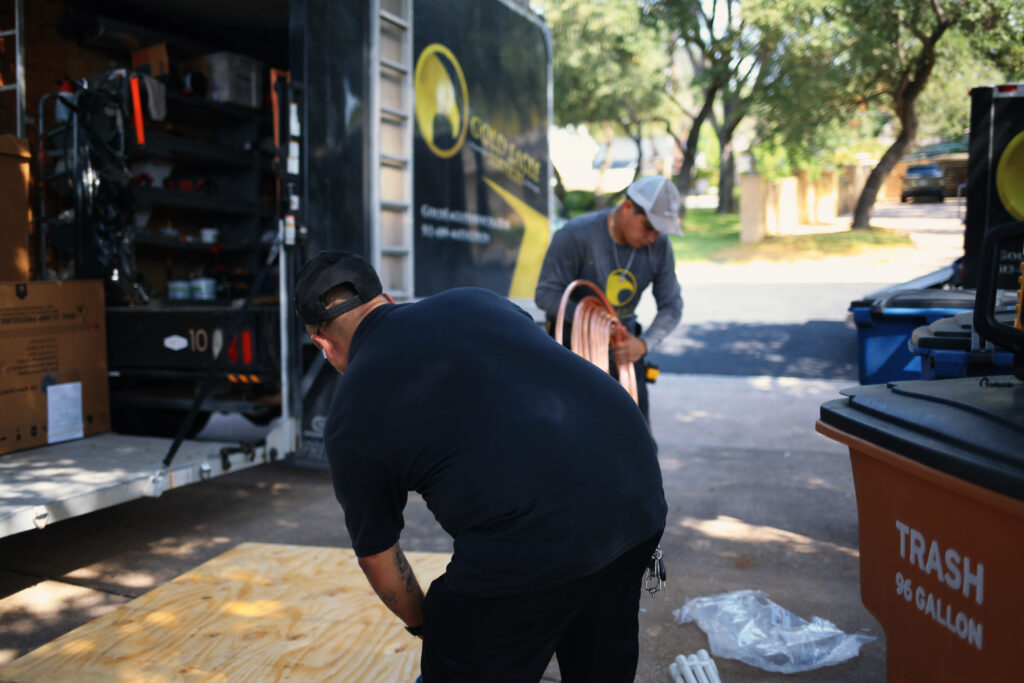
Two Gold Eagle Services technicians handle tools beside an open service truck, with a coiled copper-colored line and gear visible.

Signs Your Heat Pump Needs Repair

  • Lukewarm or cool air in heat mode
  • Ice on the outdoor unit that does not clear after a defrost cycle
  • Aux or emergency heat running constantly, or a sudden jump in your electric bill
  • Short cycling, or running nonstop without reaching the set temperature
  • Grinding, rattling or banging noises
  • Water leaking from the indoor unit
  • Stuck in one mode and will not switch between heating and cooling

The usual culprits: a refrigerant leak, a failed capacitor or contactor, a bad defrost control or sensor, a stuck reversing valve, dirty coils or a thermostat wiring fault. We pin down which one it is before any part gets replaced.

Call 512-489-4653

Should You Repair or Replace Your Heat Pump?

A Central Texas heat pump works nearly year-round, so it racks up more hours than one in a milder climate. Replacement is worth a look when:

  • The system is older and needs a major repair, such as a compressor or reversing valve
  • It keeps leaking refrigerant
  • It runs on R-22 refrigerant, which is no longer produced
  • Your bills keep climbing, or the backup heat runs more each winter
  • Some rooms never get comfortable, which can point to sizing or duct problems

When replacement makes sense, we size the new system with an ACCA Manual J load calculation, check the ductboard plenum and flex runs in the attic, and match the indoor and outdoor equipment. If the ducts are part of the problem, see our duct replacement and sealing services. See also How Long Does an AC Last in Central Texas?

Are There Rebates or Tax Credits for Heat Pumps?

Replacing an older system with qualifying high-efficiency equipment may earn a utility rebate. The programs come with conditions, such as efficiency tiers, Manual J sizing, permits, inspections, participating-contractor rules and limits on backup heat, so check the current terms before you buy. Our 2026 guide to HVAC rebates and tax credits is the place to start.

The federal Energy Efficient Home Improvement Credit (Section 25C) is no longer available for equipment placed in service after December 31, 2025. Talk to a tax professional about your situation.

What Does a Heat Pump Cost in Austin?

The price of a heat pump job comes down to:

  • System size (tonnage), based on your home’s load calculation
  • Efficiency level and single-stage, two-stage or variable-speed equipment
  • Whether the indoor air handler is replaced along with the outdoor unit
  • Backup heat size and any electrical work
  • Duct repairs or modifications
  • Equipment location and access, such as an air handler in a cramped attic
  • Permits and inspections

Want pricing for your home? Build your system online: choose a heat pump, dual fuel or another setup and see pricing for your picks in a few minutes.

If yours is blowing lukewarm air or leaning on aux heat, call 512-489-4653 or schedule online for a repair visit or a replacement quote. Ask about financing.

Frequently Asked Questions

It depends on the house. Many Austin homes are all-electric, and a heat pump is the natural fit there. If you have gas, a dual fuel system pairs a heat pump for most of the year with a gas furnace for the coldest nights. We'll compare both for your home.

Learn More From Our Resource Center

Heat pump not keeping up? Let’s talk.

Call 512-489-4653

Heat Pump Acting Up? Let's Talk.

Tell us what it's doing (lukewarm air, ice that won't clear, aux heat that never shuts off) and roughly how old it is, and we'll get back to you. Or call 512-489-4653, Monday to Saturday, 7am to 7pm.

Contact Us
This field is for validation purposes and should be left unchanged.
Name(Required)
Same-day service
BookTextCall 512-489-4653Call