
 HVAC Systems
 Heating
 Ductwork & Air Flow
 Ventilation
 Filtration
 Dehumidification
 Maintenance
 Mold
Mold Remediation & Restoration
 Pure Maintenance
 Your Home
 Building Science
 Insulation & Envelope
 Health & Safety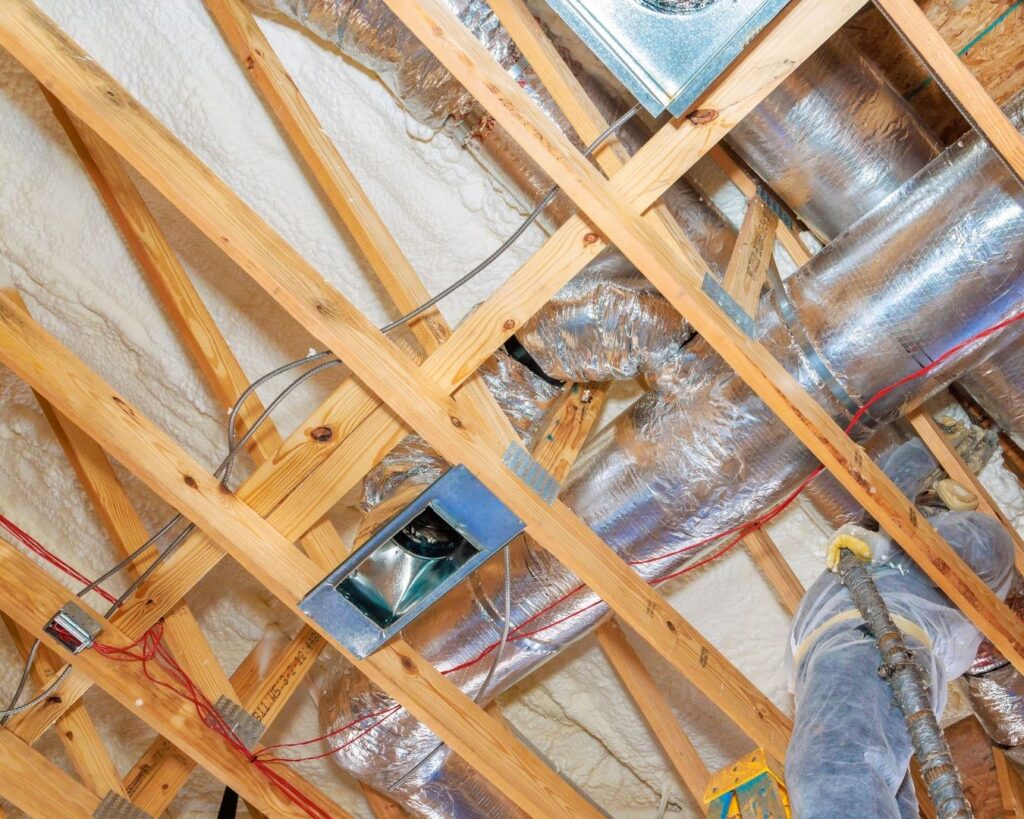
Quick answer: The return side of your duct system runs under suction, so any leak in a return duct, filter grille, or air handler cabinet in the attic or garage pulls in hot, humid, dusty air and blows it straight into your rooms. Supply leaks push cooled air into the attic instead, which can make the house draw outside air in through other gaps.
In this guide
- How do leaky ducts pull attic air into your house?
- Why are return-side leaks the bigger problem?
- What happens when supply ducts leak?
- Can a supply duct suck air in? (The Venturi effect)
- What are the signs your ducts are pulling in attic air?
- How do HVAC pros find duct leaks?
- How do you fix leaky ductwork?
- Frequently asked questions
- What should you do next?
How do leaky ducts pull attic air into your house?
The blower creates suction on the return side, and suction doesn’t care where the air comes from. Your system is a loop: the blower pulls air out of the house through the return grille, pushes it across the coil, and sends it back through the supply ducts. Everything upstream of the blower is under negative pressure. Everything downstream is under positive pressure.
That means a gap anywhere on the return side works like a second, uninvited return grille. In most Austin homes the air handler, the ductboard plenums and the flex duct runs all sit in a vented attic that can hit roughly 130°F or more in August. So the “extra” air your system picks up through a return leak isn’t house air. It’s attic air, with whatever is floating around up there.
If you want the bigger picture of how returns, supplies and plenums fit together, our guide on how your home’s duct system works walks through it.
Why are return-side leaks the bigger problem?
Because whatever they pull in goes through the blower and straight into your living space. The suction is strongest close to the blower, so the worst spots are usually the ones nearest the equipment:
- The return plenum, the ductboard box or trunk that feeds the air handler. A loose seam here is under the most suction in the whole system.
- The air handler cabinet. Panel seams, unsealed service doors, and holes where wires and refrigerant lines pass through all leak.
- The filter rack or filter grille frame. A gap around the filter or its frame lets air skip the filter entirely.
- Return ducts and boxes in the attic or in a platform return (a return built into the stand under the air handler), where connections were taped instead of sealed.
Attic air brings along heat, humidity (July dew points here commonly sit in the 70s°F), dust, and loose insulation fibers. When the air handler sits in an attached garage, a return leak can pull in garage air too, including car exhaust and fumes from whatever is stored out there. None of that belongs in your ductwork.
What happens when supply ducts leak?
Supply leaks push air you already paid to cool into the attic, and that can quietly depressurize the house. If the return pulls a full load of air out of the house but some supply air escapes into the attic before reaching a register, less air comes back than left. The house ends up under slightly negative pressure, and it makes up the difference by pulling air in through every gap it can find: can lights, attic hatches, plumbing penetrations, the door to the garage.
So supply leaks don’t blow attic dust into your rooms the way return leaks do, but they still drag unconditioned air in through the back door. They also leave the rooms at the end of long runs short on cool air. Our guide to where your home leaks air covers those building gaps in more detail.
Can a supply duct suck air in? (The Venturi effect)
Yes, at some leaks it can, thanks to the Venturi effect. Our team covered this bit of physics in National Comfort Institute (NCI) training, and it surprises a lot of people.
The Venturi effect is related to Bernoulli’s principle: when air speeds up, its pressure drops. Air rushing past an opening creates a pocket of lower pressure right at that opening, and that low pressure can draw surrounding air in. In a duct, air speeds up and swirls where the shape changes, like at fittings, takeoffs, elbows, reducers and transitions. At the right spot, that fast-moving air can pull a little attic air in through a nearby leak, even though the supply duct as a whole is under positive pressure.
Keep it in proportion. On most systems, the Venturi effect is a secondary player. The main driver of dirty air getting into ducts is the plain suction on the return side. The Venturi effect is why we don’t shrug off supply leaks near fittings and transitions, and why “it’s only a supply leak” isn’t a good excuse to leave one open.
What are the signs your ducts are pulling in attic air?
The clearest sign is dust that comes back fast, no matter how often you clean. Six clues tend to show up together:
- Dust returning within days on furniture and floors after a thorough cleaning.
- Dark streaks around supply registers or around the edges of the return filter grille, where dirty air has been sneaking past.
- Dirt on the “clean” side of the filter or a dusty blower and coil even though you change filters on schedule. That points to air bypassing the filter.
- Rooms that won’t cool, especially ones at the far end of long duct runs.
- High electric bills for the size of the house, with the system running long cycles on hot afternoons.
- A musty or “attic” smell that shows up inside when the system kicks on.
Any one of these can have another cause. Two or three together make leaky ducts a strong suspect.
How do HVAC pros find duct leaks?
With three tools: a duct leakage test, static pressure readings and an old-fashioned look around the attic. Each one answers a different question.
Duct leakage testing
A duct leakage test (often done with a calibrated fan called a duct blaster) seals off the registers, pressurizes the duct system, and measures how much air it takes to hold that pressure. That puts a number on the leakage and gives you a baseline for after sealing.
Static pressure readings
Static pressure readings are like taking the system’s blood pressure. Readings on the return and supply sides show whether the ducts are restricted, undersized or behaving oddly, and they narrow down where the trouble is.
Visual inspection
Then someone climbs into the attic. Disconnected flex ducts, torn or crushed runs, peeling tape, gaps around the plenum and unsealed air handler panels are usually easy to spot once you know where to look. Dirt tracks around a seam are a giveaway: leaking air leaves a trail.
How do you fix leaky ductwork?
Seal the leaks with materials that last, starting with the spots under the most suction. This is pro work in a hot attic, and a typical repair plan looks like this:
- Seal joints and seams with mastic. Mastic is a thick paste that gets brushed on and cures into a durable seal. Ordinary cloth duct tape tends to dry out and let go in attic heat.
- Seal the air handler and filter rack. Close up cabinet seams, line and wire penetrations, and the gaps around the filter slot or grille frame so every bit of return air goes through the filter.
- Reconnect or replace damaged flex. Disconnected runs get reattached and properly fastened. Torn, crushed or kinked sections get replaced.
- Clean after sealing, not before. Once the leaks are closed, air duct cleaning clears out the dust and debris that already made it in. Cleaning first just gives the leaks a fresh start.
- Replace when repair no longer makes sense. Old, brittle, badly routed or undersized ductwork is sometimes better off replaced. Our duct replacement page explains what that involves.
After the work, a follow-up leakage test shows how much tighter the system got. Gold Eagle’s ductwork team handles the testing, sealing and repair across the Austin area.
Frequently asked questions
Will a better filter fix dust from leaky ducts?
Not by itself. A filter only cleans the air that passes through it. Air pulled in through a return leak past the filter, or around a loose filter frame, never touches it. Seal first, then choose a filter that suits your system.
Is duct tape good enough to seal a duct leak?
Generally no. Standard cloth duct tape tends to fail in hot attics. Mastic, or foil tape rated for ductwork, holds up much better. Mastic is the usual choice for joints and seams.
Should I get my ducts cleaned or sealed first?
Seal first. If the ducts are still pulling in attic air, a cleaning only buys you a short break before the dust comes back.
Does the Venturi effect mean supply leaks are as bad as return leaks?
Usually not. The Venturi effect can let fast-moving air draw some attic air in at certain supply leaks, especially near fittings and transitions, but the return side’s steady suction is the bigger source of dirty air on most systems. Both are worth sealing.
What should you do next?
- Check the filter grille or rack for gaps, and look for dark streaks around its edges and around supply registers.
- Note whether dust comes back within days, far rooms won’t cool, or a musty smell shows up when the system starts.
- Hold off on duct cleaning until the leaks are sealed.
- Book a Gold Eagle visit or call 512-489-4653 for a duct leakage test and an attic inspection.
Related guides: How Your Home’s Duct System Works: A Central Texas Guide, Duct System Optimization: What It Involves and Why It Matters, Where Your Home Leaks Air: Central Texas Air Sealing Priorities, What Are MERV Ratings, and How Do They Affect IAQ?
More quick answers: How Do You Increase Airflow to One Room? and Why Is My House Humid Even With the AC Running?.
About Gold Eagle Services: This guide comes from the team at Gold Eagle Services, a family-run Austin HVAC, indoor air quality and mold remediation company founded in 2017. We’re licensed (TACLA119235 and RCO1783), insured and bonded, and we serve homes across the greater Austin area.
Need help with this in your home? Learn about our duct sealing and repair, or call 512-489-4653 to schedule a visit.
More in Ductwork & Air Flow
All 19 guides Ductwork & Air FlowWhy Is One Room Hotter Than the Rest of the House?One room runs hotter when it gains more heat than its air supply can carry away. Usual causes: afternoon sun on west or south…
 Ductwork & Air FlowDoes Closing Vents in Unused Rooms Save Money?Usually not. With central air, closing vents in unused rooms doesn't make the blower move less air. It raises duct pressure and pushes more…
 Ductwork & Air FlowHow Do You Increase Airflow to One Room?Start with free checks: the register fully open and unblocked, a clean filter, and a path for air back to the return (compare the…