Skip to content

Duct Replacement & Sealing

Most Austin ductwork lives in a hot attic. When it leaks, sags or is sized wrong, you pay for it in comfort, humidity and electric bills. We seal, redesign and replace duct systems across Central Texas.

An open HVAC cabinet exposes a large blower wheel, copper tubing, electrical controls, and red and blue service gauge hoses.

Why Do Ducts Matter So Much in Central Texas?

In most Austin-area homes, the air handler and ductwork sit in a vented attic that can top 130°F on a summer afternoon. Every leak in a supply duct pushes cooled air into that attic. Every leak in a return duct pulls hot, humid, dusty attic air into your system. ENERGY STAR estimates that a typical home loses 20 to 30 percent of the air moving through its ducts to leaks, holes and poorly connected ducts. Here, that shows up as long run times, rooms that never cool off and humidity that will not come down.

Ducts also pick up heat through their walls. Thin, damaged or missing duct insulation means air that left the coil cold can arrive at the register noticeably warmer.

A close view inside a dark, ribbed HVAC duct shows dust and light-colored residue along the lower surface and inner folds.

Signs Your Ducts Need Attention

  • Rooms that are much hotter or colder than the rest of the house
  • Weak airflow from some registers
  • Dust that builds up quickly, or dark streaks around vents
  • Musty odors when the system starts
  • High bills or an AC that runs almost nonstop
  • Condensation dripping from ducts, boots or ceiling grilles
  • Crushed, kinked, torn or disconnected ducts in the attic
Call Now

Why Does Flex Duct Sag, and Why Does It Matter?

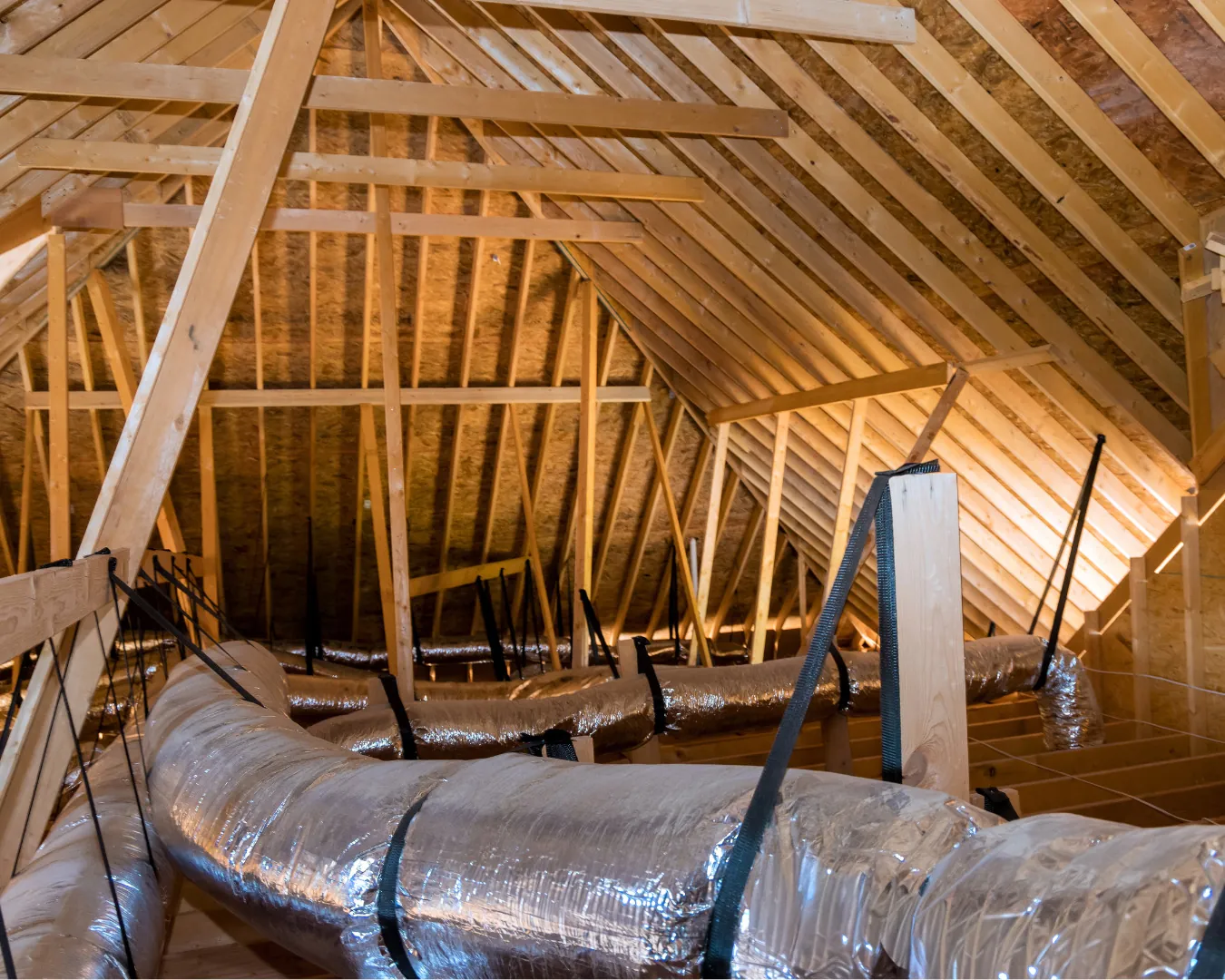
Most homes in the Austin area use flexible duct. Installed right, pulled tight, supported at proper intervals and run with gentle bends, it performs well. Installed poorly, or left alone for years, it sags between supports, kinks around framing and gets crushed during other attic work.

Every sag and tight bend adds resistance and cuts airflow to that room. Over time the outer jacket can become brittle in attic heat, and connections at boots and collars can loosen or pull apart. Pinching straps, runs far longer than needed, and ducts lying on hot attic surfaces are all problems we find and fix.

Duct Sealing or Duct Replacement?

Not every duct problem needs new ducts.

  • Sealing makes sense when the ducts are in reasonable shape and sized correctly. Sealing leaks at the plenums, boots, collars and connections with mastic and proper tape can make a big difference, and it is usually faster and less expensive than replacement.
  • Replacement makes sense when ducts are crushed, torn, deteriorated, contaminated or badly undersized, or laid out so poorly that sealing will not fix the comfort problem. It is also the time to fix design problems, such as adding a return, resizing trunks or moving registers.

We will explain what we found and recommend the fix that actually solves the problem.

If your ducts are in good shape and just dirty, air duct cleaning may be all you need.

What Is Manual D, and Why Does It Matter?

ACCA Manual D is the industry-standard method for designing duct systems. It uses the room-by-room loads from a Manual J calculation and the blower’s available airflow to size each trunk, branch and return so every room gets the air it needs. Many existing Central Texas homes were never designed this way.

When we replace ductwork, we design it instead of copying what was there. A well-designed duct system also lets a new high-efficiency AC or heat pump deliver the performance it is rated for. Learn more in Smart HVAC Design: Manual J, D and S Explained, and see our ductwork services and AC services.

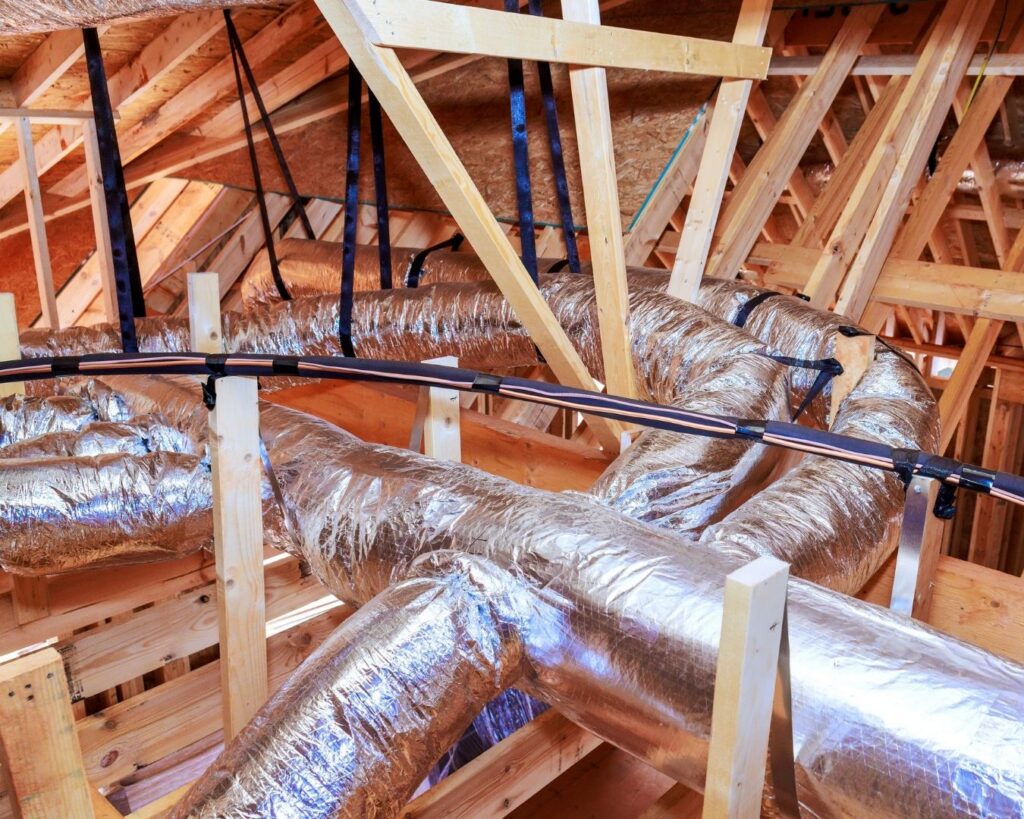
Large insulated HVAC pipes and smaller utility lines run through a tight attic space, with a caution label visible on the panel above.

What If There Is Mold in the Ducts?

Ducts in humid Central Texas can grow mold when conditions are wrong: condensation on leaky or poorly insulated ducts, returns pulling in humid attic air, or an air handler that is not draining properly.

If you suspect mold, the order matters. Under Texas rules, the mold assessment must be done by an independent, licensed mold assessor, not the company doing the remediation. We coordinate with independent, licensed mold assessors. When their protocol calls for cleaning, treatment or duct replacement, the licensed mold remediation contractor leads the remediation, and Gold Eagle Services can carry out the HVAC scope alongside them under both our Texas air conditioning contractor license (TACLA119235) and mold remediation company license (RCO1783). Projects involving 25 or more contiguous square feet of mold fall under TDLR mold rules. Clearance testing is done by an independent assessor. Learn more on our mold and your HVAC system and indoor air quality pages, and consider a whole-home dehumidifier if humidity is the root cause.

Call Now

What Does Duct Replacement Cost in Austin?

The main things that drive the cost of duct work are:

  • The size of the home and the number of supply and return runs
  • Sealing only, partial replacement or full replacement
  • Attic access, height and working conditions
  • Design changes, such as added returns or resized trunks
  • Replacing plenums, boots and registers
  • Mold protocol requirements, if any

Call for a quote at 512-489-4653 or schedule online. Austin Energy customers may qualify for rebates on duct sealing through its whole-home efficiency programs; see our rebates page and check current terms.

Frequently Asked Questions

Cleaning removes built-up dust and debris, but it does not fix leaks, sagging runs, crushed ducts or poor sizing. If airflow or comfort is the problem, cleaning alone usually will not solve it.

Rooms that never cool off? Let’s check your ducts.

Call Now

Need Help With Your HVAC? Let's Talk.

Tell us what you need, and our team will get back to you as soon as possible. No pressure, no obligation just honest advice and fast service.

Contact Us
Name(Required)

Same-day service
TextCall 512-489-4653