
 HVAC Systems
 Heating
 Ductwork & Air Flow
 Ventilation
 Filtration
 Dehumidification
 Maintenance
 Mold
 Remediation & Restoration
 Pure Maintenance
 Your Home
 Building Science
 Insulation & Envelope
 Health & Safety
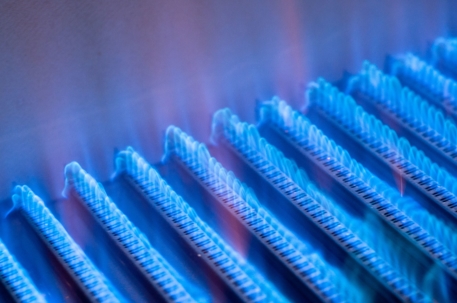
Quick answer: A gas furnace flame should be mostly blue, sometimes with a small yellow tip. A flame that stays yellow or orange can mean the gas isn’t burning completely, which can raise carbon monoxide. Don’t adjust anything yourself: turn the heat off and call a technician. If a CO alarm sounds, get everyone outside and call 911.
In this guide
What color should a gas furnace flame be?
Mostly blue. Blue means the gas is getting the right amount of air and burning completely. Gas utilities describe a proper flame as blue, sometimes with a tiny yellow tip and a light blue inner cone. When a burner is starved of air, or the gas and air mix poorly, the flame turns yellow or orange and burns dirtier.
What does a yellow or orange furnace flame mean?
A flame that stays yellow or orange points to incomplete combustion: the gas isn’t burning all the way. Common causes:
- Dust, dirt or rust flakes on the burners.
- A blocked air opening, or a problem with the vent pipe that carries exhaust outside.
- A burner that’s damaged or out of adjustment.
Not every flicker is trouble. Utilities note that a quick flash of orange can come from dust burning off, which is common the first time an attic furnace fires in the fall after a summer of sitting idle. A flame that stays yellow or orange is different, and it needs a technician. Incomplete combustion can produce more carbon monoxide, which you can’t see or smell.
Is it safe to look at your furnace flame?
Only if you can see it without opening anything. Some furnaces have a small sight window in the front panel. Many modern furnaces, including sealed models that draw their air from outside, offer no view at all, and that’s fine.
Don’t remove the burner cover or panels to get a look. Gas, flame and wiring live behind them, and that’s a job for a licensed technician.
What are other signs of a bad furnace flame?
Watch for these, even if you can’t see the flame:
- Soot or dark scorch marks around the furnace.
- Flames that jump, lift off the burner or shift when the blower starts.
- A furnace that shuts down on a safety switch again and again.
- A carbon monoxide alarm that goes off.
Any of these calls for an inspection. ENERGY STAR’s maintenance checklist has the technician check gas pressure, burner combustion and the heat exchanger (the metal chamber that keeps exhaust out of your air), and the Consumer Product Safety Commission (CPSC) recommends a professional inspection of fuel-burning heating systems every year.
What should you do if the flame looks wrong?
Turn the heat off at the thermostat and call for service. If a CO alarm sounds, get everyone outside and call 911 from there. To tell a real alarm from a low-battery chirp, see why a CO alarm beeps or chirps. If you smell rotten eggs, don’t flip any switches: leave the house right away and follow the gas leak steps.
For a flame that stays yellow, Gold Eagle’s technicians clean and adjust burners and check the heat exchanger and venting on gas furnaces across the Austin area. Our heating services page has the details.
Should gas logs burn blue?
No. Vented decorative gas logs are designed to burn yellow, like a wood fire. The blue-flame rule covers furnace, water heater and range burners. Gas logs still need a working chimney or vent as the maker specifies, and any home with a gas appliance needs CO alarms in the right places.
What should you do next?
- Check the flame through the sight window, if your furnace has one, and note whether it stays yellow or orange.
- Test your CO alarms so you know they work.
- Turn the heat off and call for service if the flame stays yellow, you see soot or the furnace keeps shutting down.
- Book the yearly furnace inspection before heating season.
Related guides: Where Should CO Detectors Go in a Home With a Gas Furnace?, Heater Smells Like Burning? What’s Normal and When to Call and Hidden Home Hazards: Radon, CO, Asbestos, Lead Paint and Fire.
About Gold Eagle Services: This guide comes from the team at Gold Eagle Services, a family-run Austin HVAC, indoor air quality and mold remediation company founded in 2017. We’re licensed (TACLA119235 and RCO1783), insured and bonded, and we serve homes across the greater Austin area.
Need help with this in your home? Learn about our heater repair and tune-ups, or call 512-489-4653 to schedule a visit.
More in Health & Safety
All 17 guides Health & SafetyWhy Does My Furnace Rattle or Rumble When It Starts?A brief rattle as the blower spins up is often a loose panel, screw or duct connection. A rumble or boom as the burners…
 Health & SafetyWhy Is Your Carbon Monoxide Alarm Beeping or Chirping?Four loud beeps and a pause, repeating, usually means the alarm has detected carbon monoxide: get everyone outside and call 911. A single chirp…
 Health & SafetyWhat Should You Do If You Smell Rotten Eggs Near Your Furnace or Water Heater?A rotten egg or sulfur smell near a furnace or water heater can mean a gas leak. Get everyone out right away, and don't…