
 HVAC Systems
 Heating
 Ductwork & Air Flow
 Ventilation
 Filtration
 Dehumidification
 Maintenance
 Mold
Mold Remediation & Restoration
 Pure Maintenance
 Your Home
 Building Science
 Insulation & Envelope
 Health & Safety
Quick answer: A rotten egg or sulfur smell near a furnace or water heater can mean a gas leak. Get everyone out right away, and don’t flip switches, use phones or light anything on the way. Once you’re outside and away from the house, call 911 and your gas utility, and don’t go back in until they say it’s safe.
In this guide
Why does my house smell like rotten eggs?
Because the smell is added on purpose. Natural gas and propane have no odor of their own, so suppliers add one called mercaptan, which smells like sulfur or rotten eggs, to make leaks easy to notice. If you smell it, your nose is doing exactly what the gas company intended.
What should I do if I smell gas?
Get out first, then call. These are the same steps gas utilities give:
- Leave immediately, and take everyone, including pets, with you.
- Don’t use anything electrical on the way out: no light switches, no doorbell, no thermostat, and no phones, tablets or other devices inside.
- Don’t light a match or cigarette, and don’t start a car in an attached garage.
- Call 911 and your gas utility once you’re outside and a safe distance away.
- Stay out until the utility or fire department says it’s safe to go back in.
Your gas company’s emergency number is printed on your gas bill. Save it in your phone now, while nothing smells funny.
What if I smell propane?
Follow the same drill. Plenty of Hill Country homes beyond the city gas lines run on a propane tank, and propane carries the same rotten-egg odorant. The usual propane advice: leave, shut off the gas at the tank’s service valve (the shutoff on the tank itself) only if you can do it safely without going back inside, and call 911 and your propane supplier from outside.
Should I look for the leak or turn off the gas?
No. Don’t hunt for the source, and don’t stop to open windows or check the furnace on your way out. Finding and fixing a leak is the utility’s job first, then a licensed plumber’s or HVAC technician’s. Your only job is getting everyone out.
What if the gas smell is faint or comes and goes?
Treat it the same way. A faint smell can still mean a leak, and the strength of the smell tells you nothing about how much gas has built up. Let the utility check it. That’s what the emergency line is for, and a false alarm is a far better outcome than a missed leak.
Plug-in natural gas and propane alarms are available, and the National Fire Protection Association now has a standard for them, NFPA 715. They make a good backup, but they never replace leaving when you smell gas.
One common false alarm: a sulfur smell that comes only from hot water at the faucet, not from the air, usually traces to the water heater’s anode rod, a job for a plumber. If the smell is in the air, treat it as gas.
What happens after the gas company clears the house?
If they find a leak in your home’s piping or an appliance, they’ll usually shut off the gas, at that appliance or at the meter, until it’s repaired. After repairs, have a technician check and relight the furnace and water heater. This is not a DIY job. Gold Eagle’s technicians check and relight gas furnaces across the Austin area once the utility and plumber have finished; our heating services page covers that work.
It’s also a good moment to confirm your CO alarms work and sit in the right places. Where CO alarms should go covers placement, and heater smells covers the smells that aren’t emergencies.
What should I do next?
- Save your gas utility’s or propane supplier’s emergency number in your phone today.
- Press the test button on your CO alarms and check that they’re in the right places.
- Consider a plug-in natural gas or propane alarm as a backup.
- Book a yearly heating inspection for your gas furnace.
Related guides: Heater Smells Like Burning? What’s Normal and When to Call, Where Should CO Detectors Go in a Home With a Gas Furnace? and Hidden Home Hazards: Radon, CO, Asbestos, Lead Paint and Fire.
About Gold Eagle Services: This guide comes from the team at Gold Eagle Services, a family-run Austin HVAC, indoor air quality and mold remediation company founded in 2017. We’re licensed (TACLA119235 and RCO1783), insured and bonded, and we serve homes across the greater Austin area.
Need help with this in your home? Learn about our heater repair and tune-ups, or call 512-489-4653 to schedule a visit.
Related Gold Eagle service: Indoor air quality services
More in Health & Safety
All 15 guides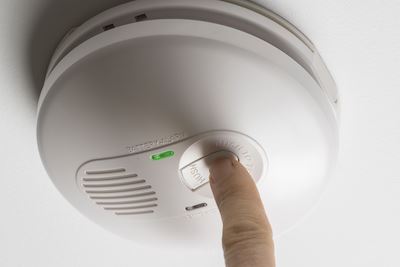 Health & SafetyWhy Is Your Carbon Monoxide Alarm Beeping or Chirping?Four loud beeps and a pause, repeating, usually means the alarm has detected carbon monoxide: get everyone outside and call 911. A single chirp…
 Health & SafetyAre Space Heaters Safe to Use Alongside Central Heat?Yes, if you follow the CPSC's basics: keep an electric space heater at least 3 feet from anything that can burn, plug it straight…
 Health & SafetyCan a Dirty Air Conditioner Make You Sick?A dirty AC doesn't create germs on its own, but it can recirculate dust and, if the coil, drain pan or ducts stay wet,…