
 HVAC Systems
 Heating
 Ductwork & Air Flow
 Ventilation
 Filtration
 Dehumidification
 Maintenance
 Mold
Mold Remediation & Restoration
 Pure Maintenance
 Your Home
 Building Science
 Insulation & Envelope
 Health & Safety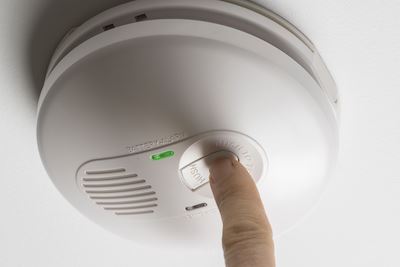
Quick answer: Four loud beeps and a pause, repeating, usually means the alarm has detected carbon monoxide: get everyone outside and call 911. A single chirp about once a minute usually means a low battery, and a different chirp pattern can mean the alarm has reached the end of its life. Check the label on yours.
In this guide
What do 4 beeps on a carbon monoxide alarm mean?
On most CO alarms, including models from major makers like Kidde and First Alert, it’s four short, loud beeps, a pause of a few seconds, then four more, over and over. Many also flash a red light or say “carbon monoxide” out loud.
Treat it as real. CPSC and CDC advice agree: get everyone out to fresh air right away and call 911 from outside. Don’t hunt for the source, and don’t go back in until responders say it’s safe.
Why is my CO alarm chirping once a minute?
Usually a low battery. Replace it with the type listed on the alarm, then press the test button. That’s a safe DIY fix. Some alarms have a sealed battery meant to last the life of the unit, and on those, a low-battery chirp means it’s time to replace the whole alarm.
How do I know my CO alarm has expired?
It varies by brand, which is why the label matters. When the sensor inside wears out at the end of its rated life, many alarms chirp in a pattern different from the low-battery chirp, or show “End” or “ERR” on a display. The label on the back usually shows a replace-by date, or a manufacture date you count forward from using the life span in the manual. If that date has passed, replace the alarm, even if it seems fine.
Can a CO alarm go off in a house with no gas?
Yes, and it deserves the same respect. An all-electric house can still have a car in an attached garage, a fireplace, or a generator running during an outage. Can an air conditioner produce carbon monoxide? lists the usual sources.
In Central Texas, winter is prime time for CO trouble: fireplaces get lit, cars warm up in garages, and generators come out when an ice storm takes the power down.
If the alarm sounds, go outside and call 911 first. Working out why comes later, with the fire department or a technician.
How do I keep my CO alarm working?
Five habits cover it:
- Test each alarm once a month with the test button.
- Put a note on your calendar for when the battery or the alarm itself is due.
- Mount alarms where the maker says, outside sleeping areas and on every level. Where CO alarms should go covers homes with a gas furnace.
- Have gas appliances, including the furnace, checked by a licensed technician every year. Gold Eagle’s technicians do furnace tune-ups across the Austin area.
- Never run a generator, car or grill inside a garage, even with the door open.
Not sure which sound you heard? The model number is on the label on the back, and the manual or the maker’s website for that model spells out each pattern.
What should I do next?
- Read the label on each CO alarm and note its model number and replacement date.
- Press the test button on each alarm today.
- Replace any alarm past its date or showing an end-of-life signal.
- If you have a gas furnace, book a yearly furnace check through our online scheduler.
Related guides: Can an Air Conditioner Produce Carbon Monoxide?, Where Should CO Detectors Go in a Home With a Gas Furnace? and Hidden Home Hazards: Radon, CO, Asbestos, Lead Paint and Fire.
About Gold Eagle Services: This guide comes from the team at Gold Eagle Services, a family-run Austin HVAC, indoor air quality and mold remediation company founded in 2017. We’re licensed (TACLA119235 and RCO1783), insured and bonded, and we serve homes across the greater Austin area.
Need help with this in your home? Learn about our heater repair and tune-ups, or call 512-489-4653 to schedule a visit.
Related Gold Eagle service: Indoor air quality services
More in Health & Safety
All 15 guides Health & SafetyWhat Should You Do If You Smell Rotten Eggs Near Your Furnace or Water Heater?A rotten egg or sulfur smell near a furnace or water heater can mean a gas leak. Get everyone out right away, and don't…
 Health & SafetyAre Space Heaters Safe to Use Alongside Central Heat?Yes, if you follow the CPSC's basics: keep an electric space heater at least 3 feet from anything that can burn, plug it straight…
 Health & SafetyCan a Dirty Air Conditioner Make You Sick?A dirty AC doesn't create germs on its own, but it can recirculate dust and, if the coil, drain pan or ducts stay wet,…