
 HVAC Systems
 Heating
 Ductwork & Air Flow
 Ventilation
 Filtration
 Dehumidification
 Maintenance
 Mold
 Remediation & Restoration
 Your Home
 Building Science
 Insulation & Envelope
 Health & Safety
 Case Study
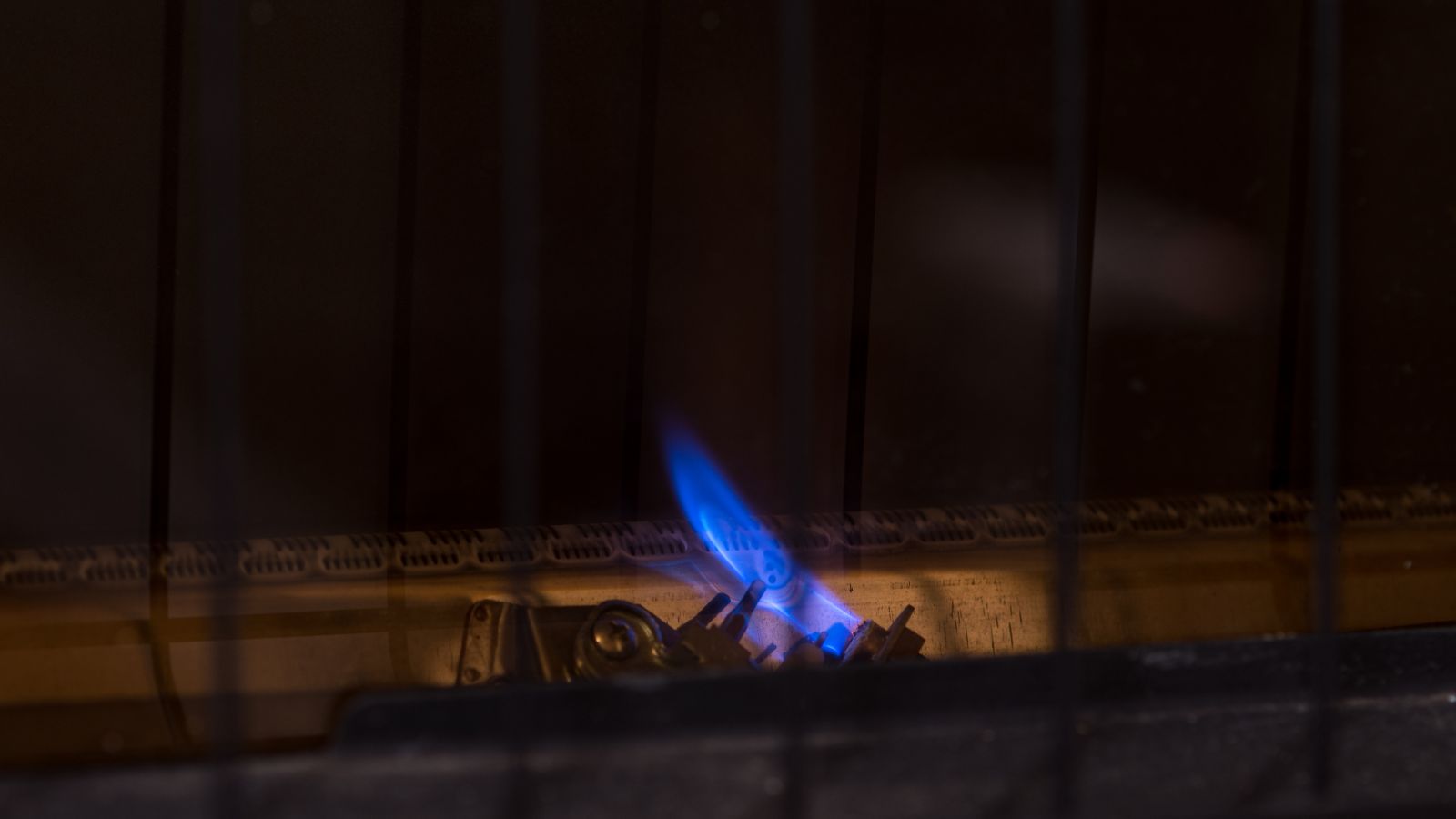
Quick answer: A flame sensor is a thin metal rod in the burner flame that tells the furnace’s control board the gas really lit. When residue coats it, the signal gets too weak and the board shuts the gas off seconds after the burners light. A cleaning usually fixes it; a cracked or worn sensor gets replaced.
In this guide
What does a furnace flame sensor do?
A flame sensor proves there’s a flame every time the furnace’s gas valve is open. It’s a safety device. Without it, a furnace could keep pouring gas into the burner box when nothing lit, and nobody wants that in an attic.
The sensor itself is simple: a bent metal rod, usually with a white ceramic insulator at its base, mounted so the tip sits right in the flame of one burner. One wire runs from it back to the control board. That’s the whole part.
How does a flame sensor know the flame is there?
It uses a trick called flame rectification, which just means the flame itself carries a tiny signal. The control board sends a small voltage to the rod. A gas flame conducts a tiny bit of electricity, so when the flame touches the rod, a very small current flows from the rod, through the flame, to the grounded burner and back to the board. That current is measured in microamps, which is millionths of an amp.
If the board sees that current within a few seconds of opening the gas valve, it keeps the gas on. If it doesn’t, it closes the valve. The board isn’t looking at the flame at all. It’s only reading that tiny current, which is why a small amount of grime on the rod can fool it.
Why does a furnace flame sensor get dirty?
Because it lives in the flame. Each firing leaves a thin layer of combustion residue on the rod, and dust that slips past the filter adds to it. Over a season or two that builds into a dull whitish or dark film. The flame is still there, but the film insulates the rod and the current through it drops.
Once the signal falls below what the board needs, the board plays it safe: burners light, gas shuts off a few seconds later, the furnace retries, and after a few tries many furnaces lock out, refusing to try again for about an hour. The same symptom has other causes, from a poor burner ground to a failing control board, and our guide to a furnace that shuts off after a few seconds walks through all of them.
Things that make a sensor foul faster:
- A dirty or skipped filter, which lets more dust into the cabinet.
- A dusty attic or closet with gaps around the furnace cabinet or return.
- Burners that need cleaning or adjustment, which can make a dirtier flame.
- Aerosols and chemicals used near a closet or garage furnace, which can leave deposits on the rod.
Should a flame sensor be cleaned or replaced?
Most of the time, cleaned. A light polish removes the film and the signal comes right back. Replacement makes sense when:
- The ceramic insulator is cracked or chipped, which can leak the signal to ground.
- The rod is pitted, badly corroded or burned thin.
- The signal stays weak even after a good cleaning, with the rod correctly placed in the flame.
- It keeps fouling within weeks, and the burners and filter have already been checked.
A technician settles this with a meter. They measure the actual flame signal in microamps, compare it to what the manufacturer calls for, clean the rod and measure again. If the number barely moves, the sensor (or the circuit around it) is the problem, not dirt. The meter also catches the sensor that a cleaning revives for a week before the heat quits again.
Can you clean a flame sensor yourself?
Some handy homeowners do, but we’d rather you didn’t on an attic furnace. The job itself is small: shut off power and gas, let the burners cool, remove one screw, slide the rod out, polish it lightly with a fine, non-scratching pad, and put it back without touching the rod with oily fingers or bending it out of the flame.
The trouble is everything around that job. In Central Texas most furnaces sit in an attic, often up a pull-down ladder, across ceiling joists, and next to a gas line and a flue. A cracked insulator, a sensor put back at the wrong angle, or a panel switch left open can turn a quick fix into a no-heat night.
Coarse sandpaper also scratches the rod and can make it foul faster. If you want the list of furnace chores that are truly homeowner-friendly, our DIY furnace maintenance guide covers them.
How do you prevent flame sensor problems?
A yearly heating tune-up is the simplest answer. On a tune-up, the technician checks the flame signal, cleans the sensor, looks at the burners and checks gas pressure and the venting, so a weak signal gets handled in October instead of on the first cold night in January.
A few other habits help:
- Change the filter on schedule. A furnace that pulls in less dust coats its parts more slowly.
- Keep the area around an attic or closet furnace clear. Stored boxes and insulation piled against the cabinet make everything dustier.
A dirty flame sensor is one of the most common reasons we see for a furnace that “works for a few seconds.” It’s a small part, and Gold Eagle’s heating technicians can usually confirm it and restore heat in the same visit across the Austin area.
What should you do next?
- Change the furnace filter on schedule.
- Clear stored boxes and insulation away from the furnace cabinet.
- If the burners light and then shut off within seconds, note how often it happens and whether the furnace locks out.
- Book a heating tune-up before the first cold snap.
Related guides: Why Does My Furnace Turn On and Then Shut Off After a Few Seconds?, How Does a Gas Furnace Work? and What Furnace Maintenance Can You Do Yourself?.
About Gold Eagle Services: This guide comes from the team at Gold Eagle Services, a family-run Austin HVAC, indoor air quality and mold remediation company founded in 2017. We’re licensed (TACLA119235 and RCO1783), insured and bonded, and we serve homes across the greater Austin area.
Need help with this in your home? Learn about our heating tune-ups, or call 512-489-4653 to schedule a visit. Also see our page on furnace control board repair in Austin.
More in Health & Safety
All 24 guides Health & SafetyWhat Is a Furnace Pressure Switch, and Why Won’t the Furnace Start?A pressure switch proves the furnace's exhaust is venting safely before the burners can light. If the small inducer motor runs but the burners…
 Health & SafetyWhat Is a Furnace Limit Switch, and Why Does It Shut Off the Heat?A limit switch is a heat sensor that shuts off a furnace's burners if the furnace gets too hot. It usually trips because airflow…
 Health & SafetyWhen Is a Heating or Cooling Problem an Emergency?It's an emergency when you smell gas, a carbon monoxide (CO) alarm sounds, you see smoke or smell something electrical burning, or the AC…