
 HVAC Systems
 Heating
 Ductwork & Air Flow
 Ventilation
 Filtration
 Dehumidification
 Maintenance
 Mold
Mold Remediation & Restoration
 Pure Maintenance
 Your Home
 Building Science
 Insulation & Envelope
 Health & Safety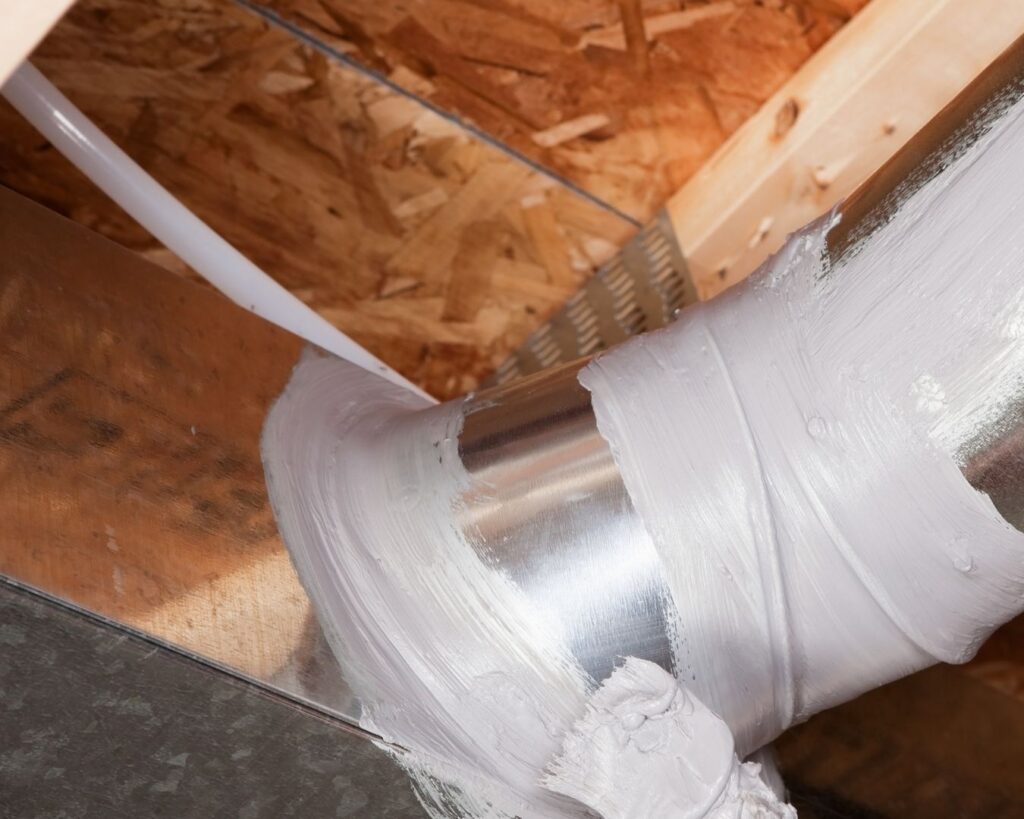
Quick answer: Vents and ducts sweat when a cold surface meets air whose dew point is above that surface’s temperature. AC supply air leaves the coil near 55°F, so humid attic or indoor air touching a register, boot or duct that cold drops its moisture as water. Fixing air leaks, insulation and humidity stops it.
In this guide
- What is dew point, in plain English?
- Why do AC vents and ducts sweat in the first place?
- Where does duct condensation show up in Austin homes?
- What causes ducts and vents to sweat?
- Is a sweating vent or duct a big deal?
- How do you stop vents and ducts from sweating?
- Can you tell whether it’s condensation or a leak?
- Frequently asked questions
- What should you do next?
What is dew point, in plain English?
Dew point is the temperature at which the moisture in a given batch of air turns from vapor into liquid water. Cool air down to its dew point and it can’t hold all its water anymore, so the extra shows up as droplets on whatever surface did the cooling.
You already know this from a glass of iced tea on the back porch in July. The glass isn’t leaking. The air touching it is chilled below its dew point, and the water leaves the air and lands on the glass. Your ducts and vents do the same thing, often where you can’t see it.
Austin summer afternoons commonly bring outdoor dew points in the 70s°F. So any surface colder than the low 70s that touches outdoor or attic air can sweat.
Why do AC vents and ducts sweat in the first place?
They sweat because your AC deliberately makes air colder than the dew point of the air around your ducts. Air leaving a working evaporator coil (the indoor cooling coil) is typically around 55°F. That chills the ductboard plenum, the inner liner of each flex run, the metal boot at the ceiling and the grille itself.
Inside your cooled rooms that’s usually fine. At 75°F and 50% relative humidity, indoor air has a dew point right around 55°F, so a 55°F grille sits at the edge without much dripping. The trouble starts when warmer, wetter air reaches those cold surfaces:
- Attic air. In a vented attic, the air carries roughly the same moisture as outdoor air, so its dew point can sit in the 70s. Any cold spot on a duct that attic air can reach will collect water.
- Humid indoor air. Push indoor humidity up to 60-65% and the indoor dew point climbs into the 60s. Now even a grille in your living room can bead up.
Duct insulation has two jobs. It keeps the outside of the duct warm, above the attic’s dew point, and its outer jacket acts as a vapor barrier that keeps humid air off the cold liner. When either job fails, water forms.
Where does duct condensation show up in Austin homes?
Anywhere cold air or cold refrigerant meets humid air it shouldn’t. On service calls around Austin, these are the usual spots:
- Supply registers and grilles. Droplets on the louvers, or water dripping onto the floor or furniture below.
- Ceiling stains around registers. A brown or yellow ring on the drywall next to a vent is often condensation from the boot above, not a roof leak.
- Duct jackets and boots in the attic. Wet, dripping flex duct or a sweaty boot where the duct meets the ceiling.
- Refrigerant lines. The larger, cold suction line running to the outdoor unit sweats if its foam insulation is missing, cracked or sun-rotted.
- Air handler and plenums. Sweating on the outside of the air handler or its ductboard plenum, especially in a hot attic or a closet that pulls in humid air.
Water coming from the unit itself, like a clogged drain line or an iced-over coil, is a different problem. Our guide Why Is My AC Freezing Up or Leaking Water? covers those.
What causes ducts and vents to sweat?
Almost every case comes down to humid air reaching a cold surface, or a surface running colder than it should. The common causes:
Attic air leaking in around the boot
The boot is the metal box that connects the flex duct to the ceiling register. Builders often cut the drywall hole oversized and never seal the gap, so hot, humid attic air spills right onto a cold metal boot and the back of the grille. It’s one of the most common causes of sweating ceiling registers.
Crushed, torn or thin duct insulation
Flex duct gets stepped on, kinked over trusses and buried under holiday decorations. Compressed insulation loses much of its R-value (its resistance to heat flow), so the outer jacket cools below the attic dew point. A torn jacket lets humid air straight in to the cold liner. Older homes may also have ducts with less insulation than current code calls for.
High indoor humidity
When indoor relative humidity creeps above 60%, the indoor dew point rises toward the temperature of your supply grilles. Showers without exhaust fans, a leaky house and an AC that runs in short bursts all push it up.
Oversized AC, low airflow or a very low thermostat
These attack the problem from both ends. An oversized AC cools the house fast and shuts off before it pulls much moisture out, so humidity stays high. Low airflow, from a dirty filter, a restrictive duct system or a blower set too low, makes the air leaving the coil colder than normal.
Cranking the thermostat down to 68°F on a sticky August day chills every grille and boot for hours at a stretch. A system that’s low on refrigerant can also run a colder-than-normal coil.
Is a sweating vent or duct a big deal?
Yes, if it happens regularly, because the water has to go somewhere. A few drops on one grille during a muggy week is a warning sign. Daily dripping is damage in progress.
- Water stains. Drywall around the register soaks up the drips and stains, then sags if it stays wet.
- Mold growth on surfaces. Damp drywall, dust on grilles and wet duct jackets give mold the moisture it needs. Dark speckling around a vent is a common first sign.
- Wet insulation. Attic insulation under a dripping duct gets soggy, loses its insulating value, and holds water against the ceiling.
Much of this happens in the attic, so it can run all summer before a stain shows up downstairs. A ceiling stain near a vent is worth a look even if it seems dry today.
How do you stop vents and ducts from sweating?
Keep humid air away from cold surfaces, and keep those surfaces from getting too cold. In practice the fix is usually a combination of these:
- Seal boots to the drywall. Mastic or caulk in the gap between each boot and the ceiling blocks attic air from reaching the register. It’s often the simplest, highest-impact fix.
- Repair or replace duct insulation. Re-wrap sweating sections, tape and seal torn jackets, and lift crushed flex duct off the joists. If the ducts are old, undersized or badly damaged, duct replacement is often the cleaner answer.
- Air seal the attic floor. Sealing top plates, can lights and other ceiling holes keeps humid attic air out of your living space and away from boots. Attic insulation work is a good time to do it.
- Get indoor humidity to 40-60%. Around 50% is a good target in an Austin summer. An inexpensive hygrometer tells you where you stand.
- Correct airflow and refrigerant charge. A technician checks static pressure (how hard the blower pushes against the ducts), blower speed and charge so the coil runs at the right temperature instead of too cold.
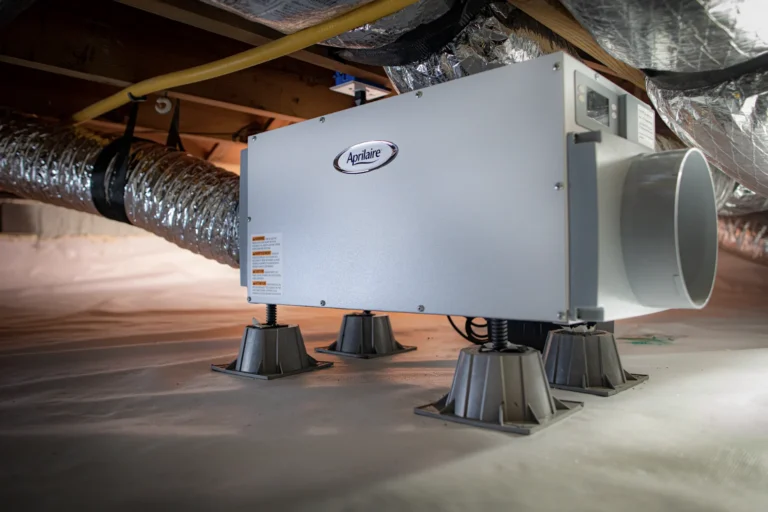
- Add a whole-home dehumidifier. If the AC can’t hold humidity down on its own, a whole-home dehumidifier removes moisture without overcooling the house.
Setting the thermostat to a sensible temperature helps too. The DOE’s suggested summer setting is 78°F when you’re home, and you don’t have to hit that exactly. Just skip the 68°F polar expedition.
Gold Eagle seals boots, repairs and replaces duct insulation, and checks airflow and charge in Austin-area homes; see our ductwork services.
Can you tell whether it’s condensation or a leak?
Usually, yes: condensation follows the AC and the weather, while a leak follows the rain or the plumbing. If the dripping starts on hot, muggy days when the AC runs hard, and stops when the system is off or the weather dries out, condensation is the likely culprit.
Water that appears after a storm points to the roof. A stain that stays wet regardless points to plumbing or a drain line. If you can safely get into the attic, feeling the boot and duct above the stain for dampness answers the question fast.
Frequently asked questions
Should I just wipe the water off my sweating vent?
Wiping protects the drywall for now, but the water keeps coming until you fix the air leak, insulation or humidity problem behind it.
Will closing the sweating vent stop the condensation?
Usually not, and it can make things worse. Closing registers cuts airflow across the coil, which can make the supply air colder, and the duct behind the closed vent still carries cold air.
Why do my vents only sweat in summer?
Summer is when both conditions line up in Austin: the AC is making cold air all day, and outdoor and attic dew points sit in the 70s. In winter the ducts carry warm air, so there’s nothing cold for moisture to condense on.
Is it normal for the refrigerant line to sweat?
The large suction line is cold by design, but it shouldn’t drip if its foam insulation is intact. Sweating usually means the insulation is missing, split or weathered and needs replacing.
What should you do next?
- Check the ceiling around each supply register for drips, stains or dark speckling on a hot afternoon.
- Put a hygrometer in the main living area and aim for 40-60% humidity, around 50% in summer.
- Change a dirty filter and set the thermostat closer to 78°F instead of 68°F.
- Book a Gold Eagle visit to have the boots, duct insulation, airflow and charge checked.
Related guides: What Relative Humidity Really Means: The Bucket Analogy, Why Is My AC Freezing Up or Leaking Water?, Where Your Home Leaks Air: Central Texas Air Sealing Priorities, Can Your HVAC System Grow Mold? How to Prevent It
More quick answers: Why Do Your Windows Sweat, and Is It a Problem? and What Indoor Humidity Level Should You Keep in an Austin Home?.
About Gold Eagle Services: This guide comes from the team at Gold Eagle Services, a family-run Austin HVAC, indoor air quality and mold remediation company founded in 2017. We’re licensed (TACLA119235 and RCO1783), insured and bonded, and we serve homes across the greater Austin area.
Need help with this in your home? Learn about our ductwork services, or call 512-489-4653 to schedule a visit.
Related Gold Eagle service: AC repair in Austin
More in Humidity & Moisture Control
All 19 guides Humidity & Moisture ControlWhat Should You Set Your Thermostat to When You’re Away?In summer, raise the thermostat a few degrees instead of turning the AC off, generally no higher than the mid 80s, so the house…
 Humidity & Moisture ControlWhy Do Your Windows Sweat, and Is It a Problem?Windows sweat when the glass is colder than the dew point of the air touching it. In Austin, outside fogging on muggy mornings is…
 Humidity & Moisture ControlDo You Need a Dehumidifier If You Have Central AC?Many Austin homes don't: a correctly sized, well-maintained central AC in a reasonably tight house usually keeps indoor humidity below 60 percent in summer.…