
 HVAC Systems
 Heating
 Ductwork & Air Flow
 Ventilation
 Filtration
 Dehumidification
 Maintenance
 Mold
 Remediation & Restoration
 Pure Maintenance
 Your Home
 Building Science
 Insulation & Envelope
 Health & Safety
 Case Study

Quick answer: A corner condo at Zilkr on the Park felt clammy even with the thermostat at 68°F, with indoor humidity at 65-72% all summer. The old 1.5-ton single-speed system was too small for the afternoon sun and cycled on and off too often to dry the air. A 2-ton variable-speed heat pump now holds the condo at 41-46% humidity with the thermostat at 74°F.
In this guide
What was the situation?
A resident of a second-floor corner unit at Zilkr on the Park, a condo building near downtown Austin, had a problem every summer. To keep the place from feeling sticky, they set the thermostat to 68°F. It still felt clammy.
Indoor humidity sat at 65-72% from June through August. Water beaded on the windows, and the condo had a musty smell that wouldn’t go away. The air conditioner ran all the time, and it never seemed to get ahead of the moisture. The resident asked Gold Eagle to find out why.
What did we find?
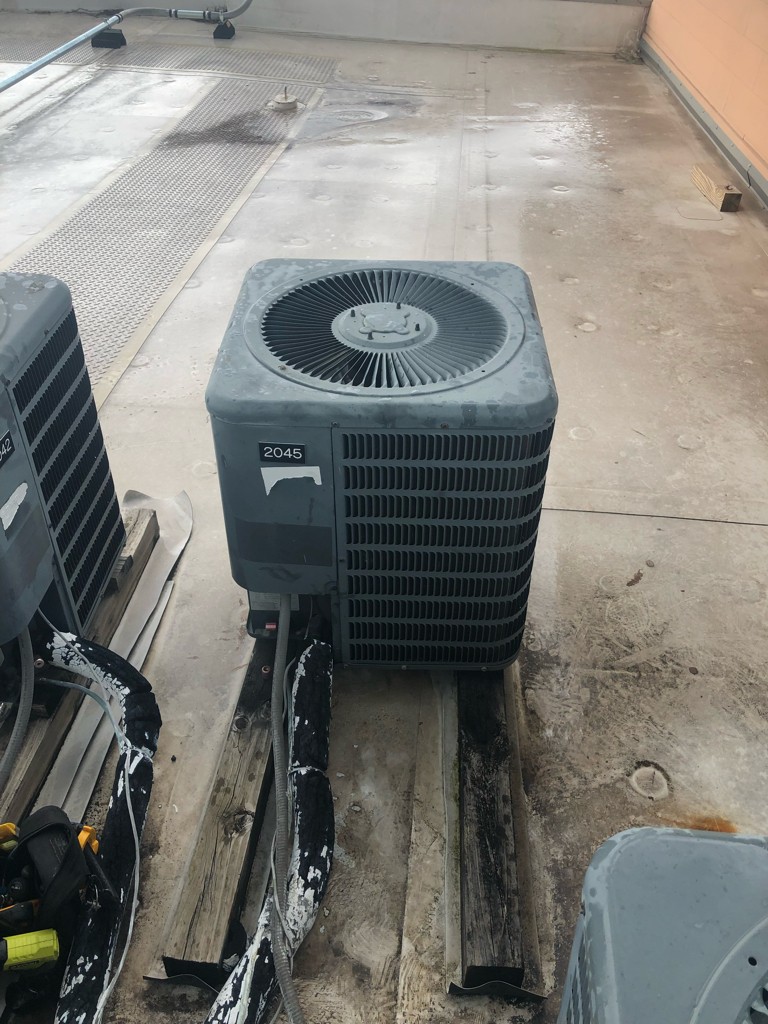
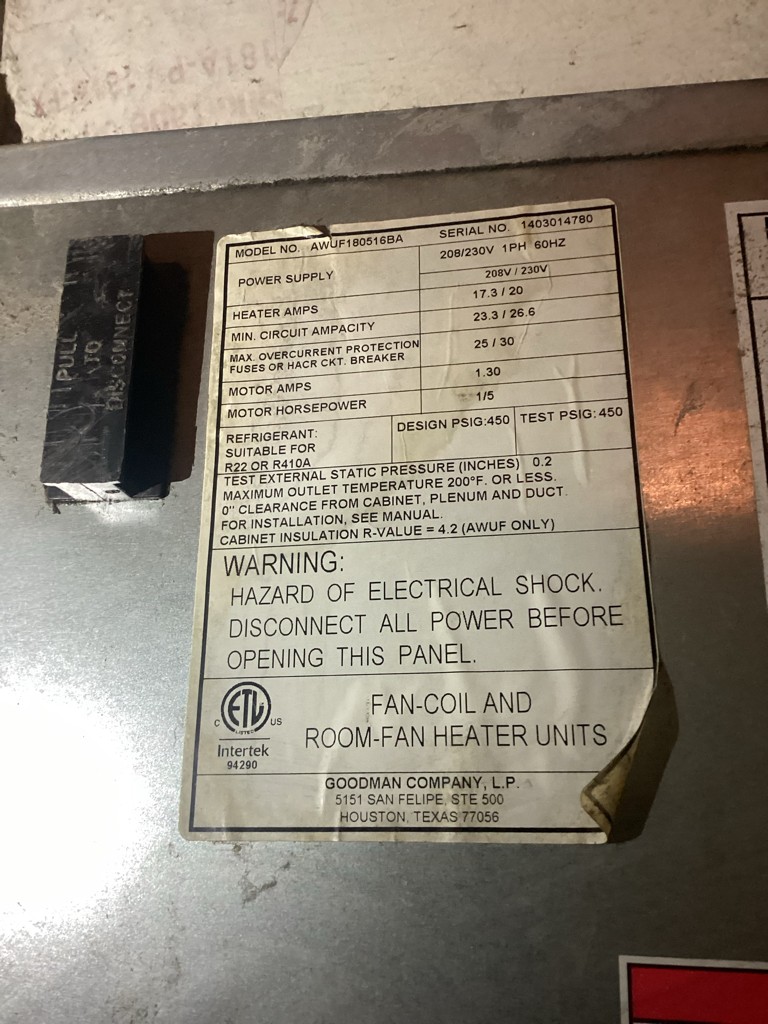
The condo had a 12-year-old, 1.5-ton single-speed system. It could only run two ways: full blast or off. That was the root of the problem.
- The system was too small for the sun it faced. This is a 1,039 sq ft corner unit with east- and south-facing windows and taller-than-usual ceilings. The afternoon sun alone adds roughly 8,000-10,000 BTU/h of heat. At the peak, the system ran flat out just to keep up with the temperature, with nothing left to pull moisture out of the air.
- It also ran in cycles that were too short for the rest of the day. When the sun eased off, the system overshot, shut off and started again, an estimated 8 to 12 times an hour. An air conditioner only removes moisture once its coil has been cold and wet for a while. These cycles were too short for that.
- The water went back into the air. Every time the system shut off, the coil warmed up and some of the moisture sitting on it evaporated right back into the condo.
In plain terms, about 80% of the system’s effort went to cooling the air and only about 20% to drying it. For a sunny corner condo in Austin, that’s not enough.
How did we fix it?
We designed the replacement around humidity as well as temperature. The goal was a system that could slow down and keep drying the air all day.
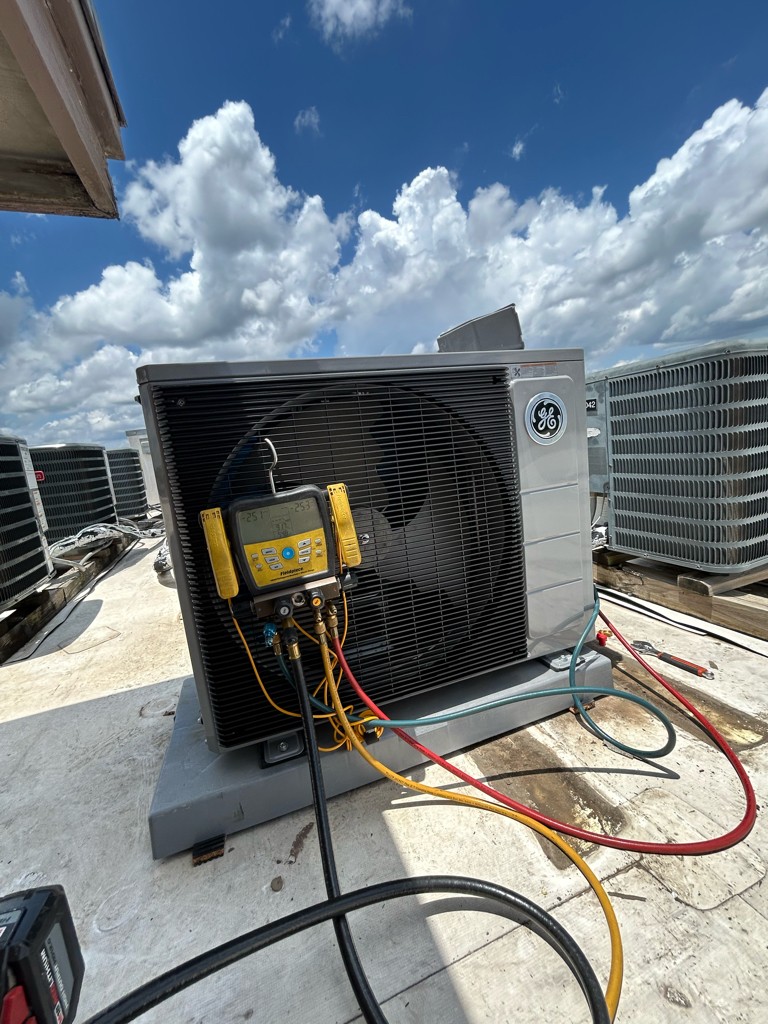
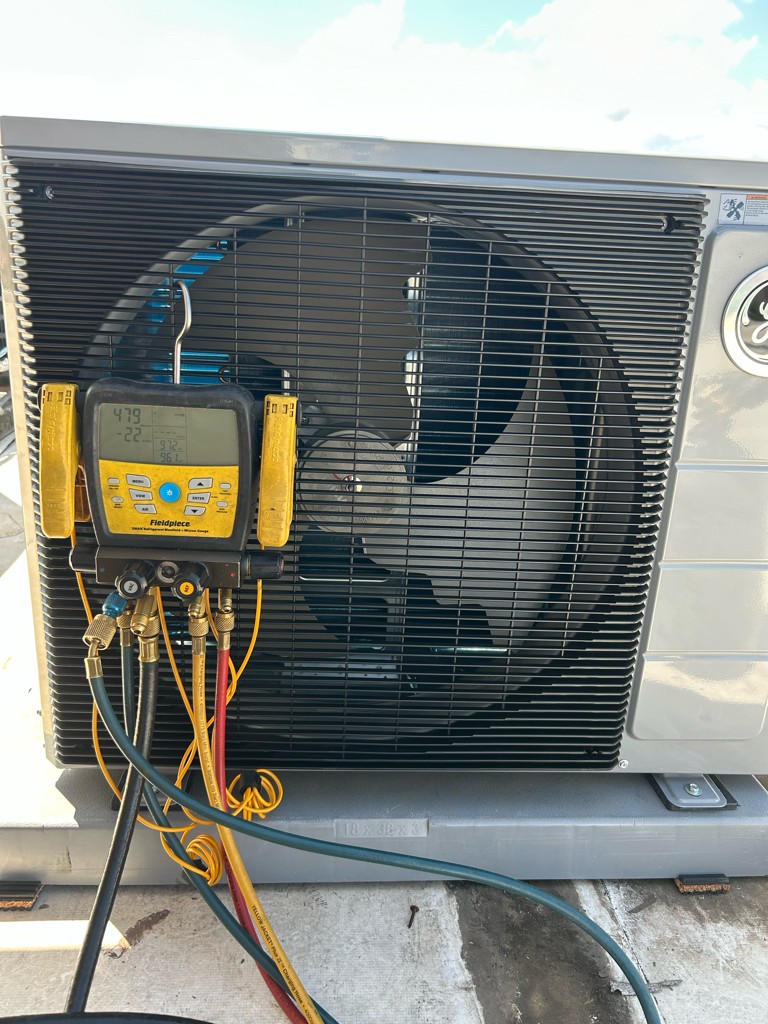
- We installed a variable-speed heat pump, a 2-ton GE inverter heat pump. Instead of switching between full blast and off, it adjusts its speed to match the load, from about 42% up to 100%.
- The new system is the right size for a sunny corner unit. Going from 1.5 to 2 tons gave it room to handle the afternoon sun. Because it can slow down, the extra capacity doesn’t mean overcooling on milder days.
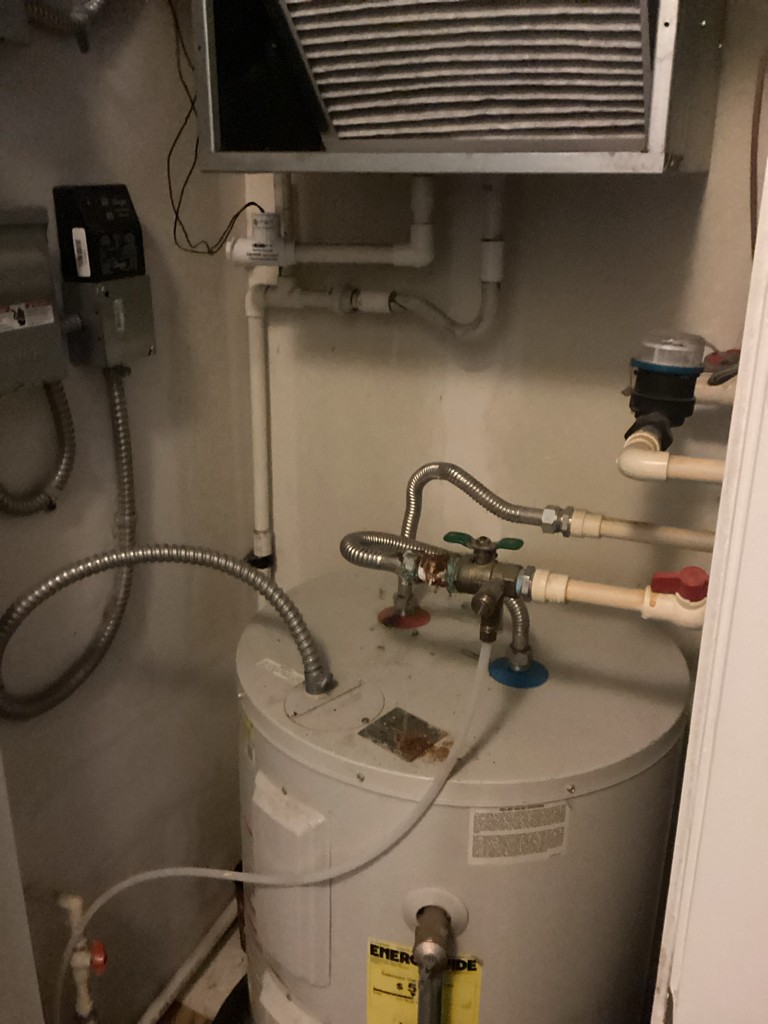
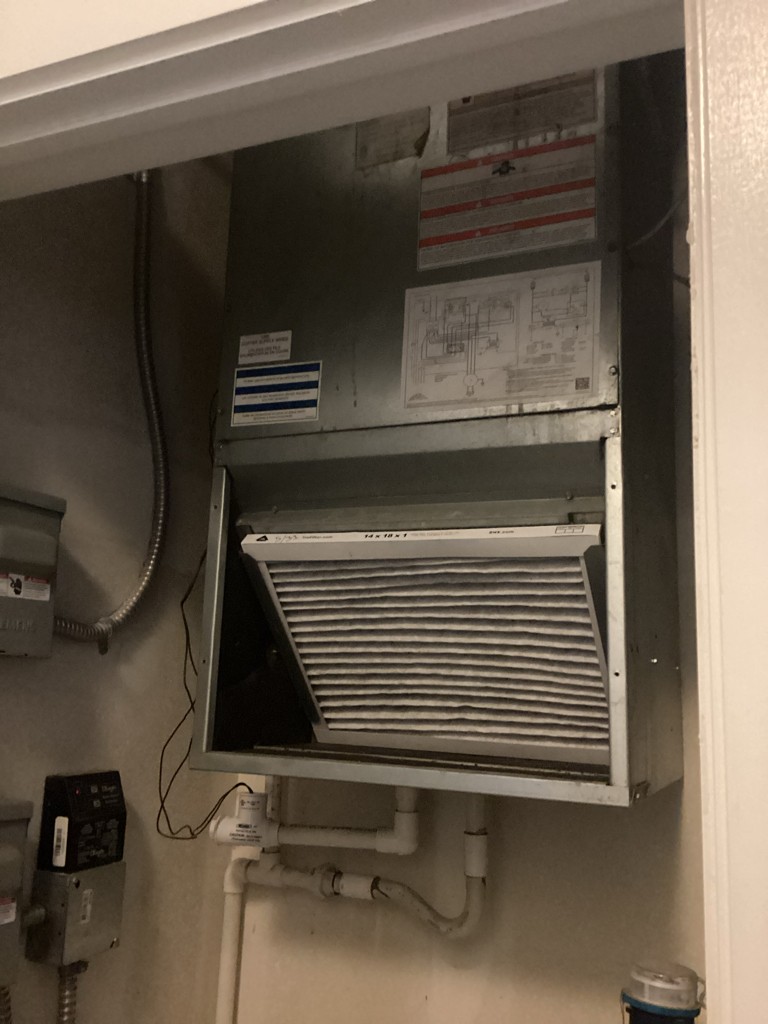
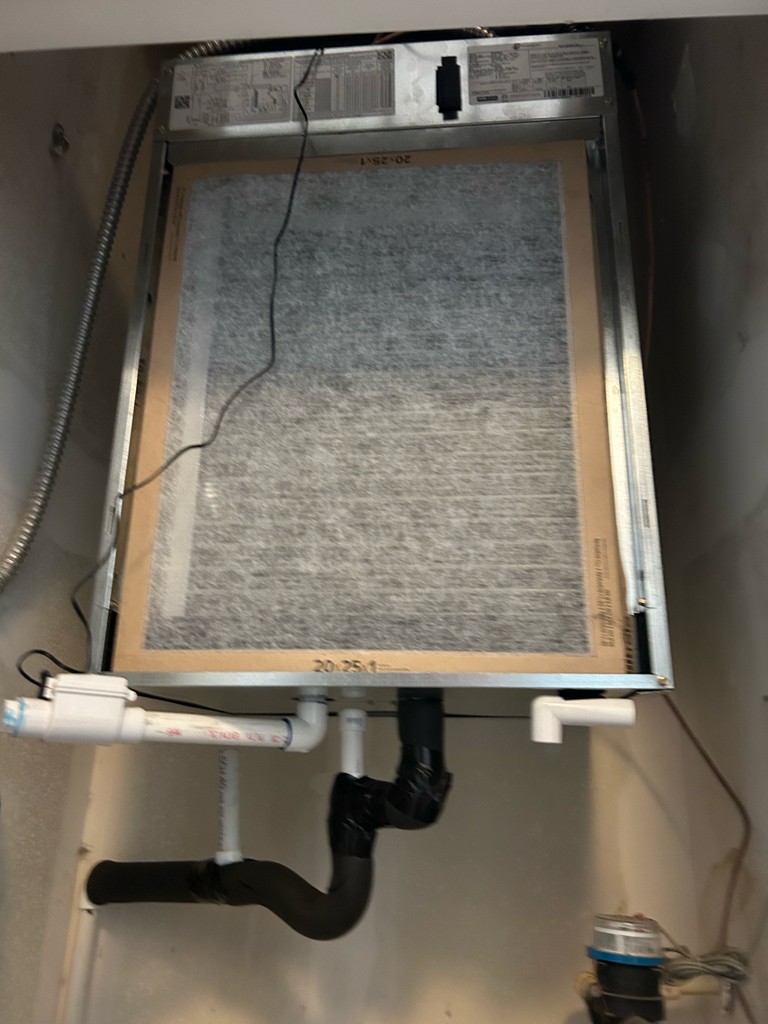
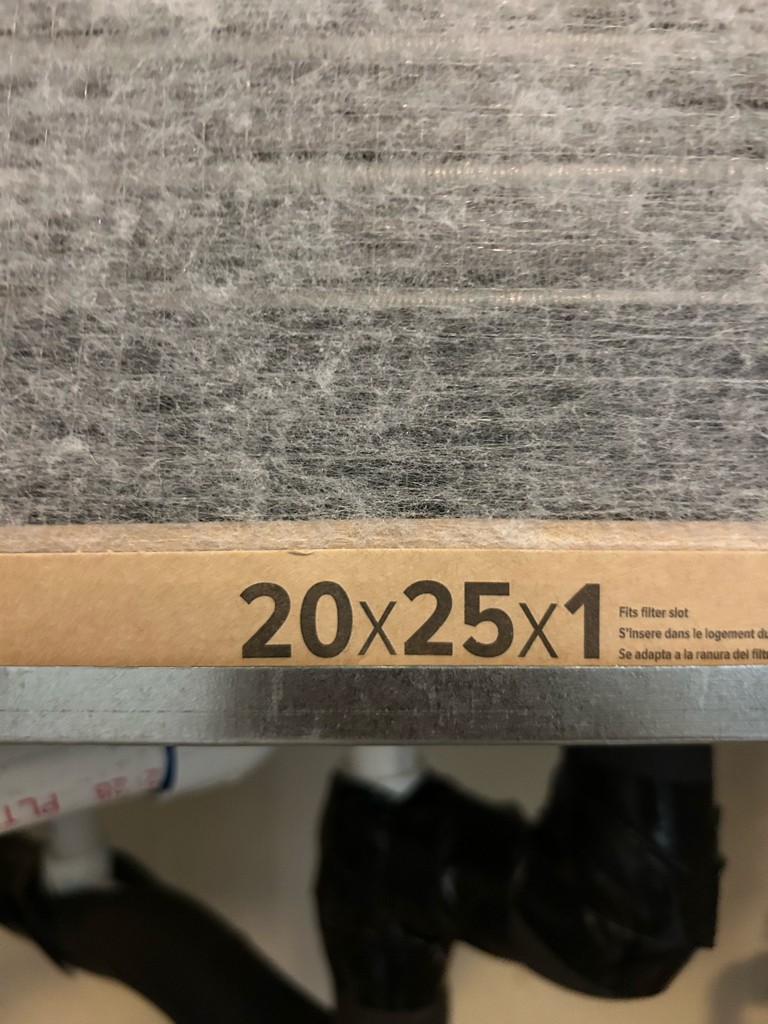
- The new system has a bigger coil and filter. The new indoor unit’s coil has about twice the surface area of the old one, so there’s more cold surface for moisture to condense on. The filter is about twice as big too, so the air moves through more easily.
- The fan can slow down. A variable-speed blower moves air across the coil at the right speed to pull out moisture.
We also commissioned it carefully. We pressure-tested the refrigerant lines, pulled a deep vacuum, and weighed in the exact refrigerant charge for the 45-foot line set instead of guessing. Then we confirmed the coil temperature, superheat and subcooling were all on target at startup. On a small variable-speed system, getting the charge right is what makes the design actually work.
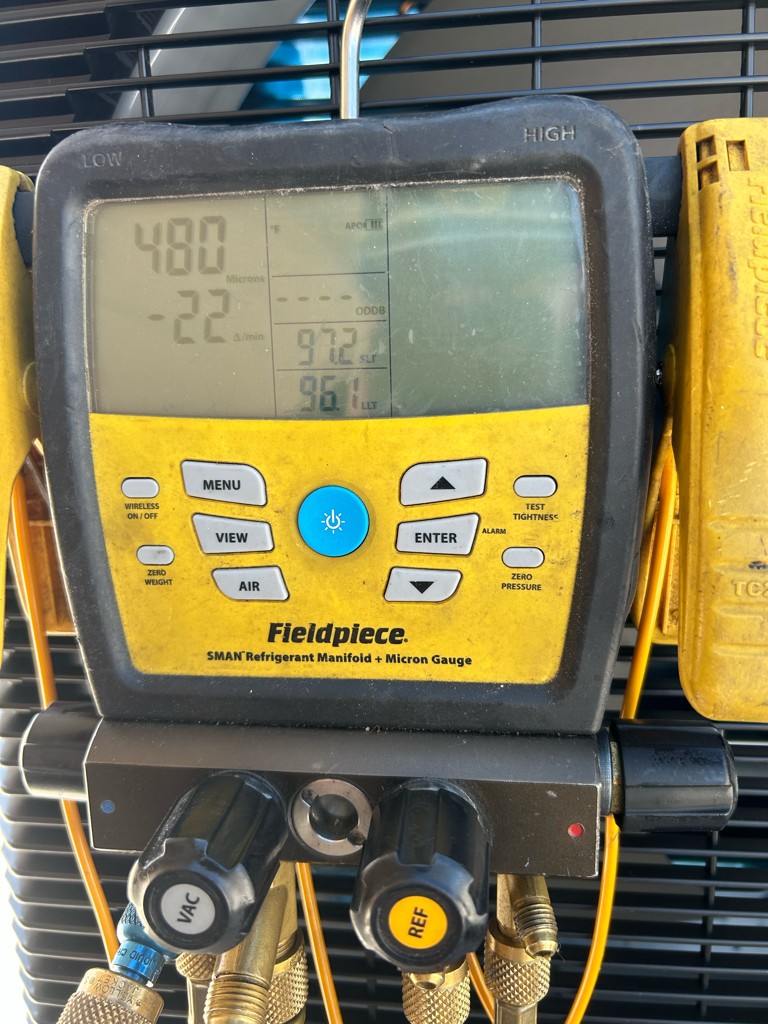
Want the full specs? Model numbers, commissioning readings and the engineering behind the design are in the technical version of this case study.
What was the result?
Over a six-week summer stretch with outdoor temperatures of 88-98°F, the condo stayed between 41% and 46% humidity with the thermostat at 74°F. That’s about 25 points drier, at a setting 6°F warmer than before.
| Before | After | |
|---|---|---|
| Thermostat setting | 68°F | 74°F |
| Summer indoor humidity | 65-72% | 41-46% |
| On/off cycles per hour | 8-12 | 2-4 |
| System | 1.5-ton single-speed | 2-ton variable-speed heat pump |
The resident noticed right away:
- The air is dry and crisp without the chill. The condo feels more comfortable at 74°F than it ever did at 68°F.
- Nights are better. No more waking up clammy.
- There is no more condensation or musty smell. The odor was gone within 48 hours, and the windows stayed dry.
- The home is quieter. The variable-speed system runs at a low, steady hum instead of kicking on and off all afternoon.
- Humidity stays steady all day and night. It held around 44% around the clock, even overnight when outdoor humidity peaked.
We didn’t do a formal energy audit, but the resident reported a slight drop in electricity use, even with a bigger system and a warmer thermostat setting.
What can Austin condo owners learn from this?
- Turning the thermostat down won’t fix humidity. If you’re setting it in the 60s just to stop the clammy feeling, the system isn’t removing enough moisture.
- Bigger isn’t the answer on its own. A larger single-speed unit would short-cycle even more. What helps is a system that can slow down and run longer.
- Corner units and sunny windows change the math. Two condos with the same square footage can need very different systems.
- Watch for the warning signs. Indoor humidity above 60% in summer, an AC that clicks on and off every few minutes, condensation on windows or a musty smell.
Does your condo feel like this one did? Gold Eagle can check your system’s sizing and humidity control and, when it’s time to replace, design a system around humidity the same way. Call 512-489-4653 or schedule online.
Related Gold Eagle service: AC repair in Austin
More in Case Study
All 4 guides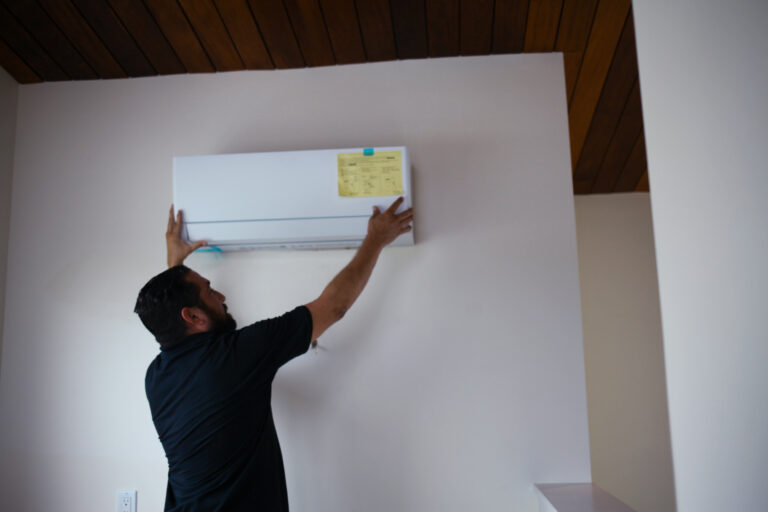 Case StudySouth Austin Home Case Study: When Nearly New HVAC Isn’t RightBuyers of a South Austin home asked us to inspect three nearly new heat pump systems before closing. We found restrictive ducts, high static…
 Case StudyZilkr on the Park Condo Case Study: Fixing High HumidityA 12-year-old 1.5-ton single-stage system in a 1,039 sq ft Zilkr on the Park condo let indoor humidity reach 65-72% even at 68°F. After…
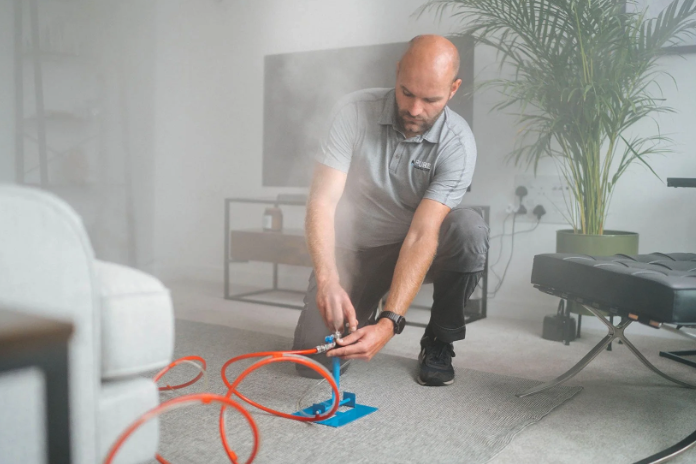 Case StudyU.S. Army Corps of Engineers Case Study: Pure Maintenance Dry-Fog ProcessA U.S. Army ERDC study tested Pure Maintenance's two-step dry-fog process in two vacant Fort Campbell buildings and found large, immediate drops in airborne…