
Skip to content

Attic Insulation

Owens Corning ProCat blown-in fiberglass, installed by an Owens Corning partner and licensed HVAC contractor, so your AC has less heat to fight and your upstairs stays comfortable through an Austin summer.

4.8 on Google from 400+ reviewsOpen Mon to Sat, 7am to 7pm

Bright white clouds drift across a vivid blue sky, with open space at the center and larger cloud formations near the edges.

Why Does Attic Insulation Matter So Much in Austin?

On a summer afternoon, an Austin attic can top 130°F. That heat pushes down through your ceiling all day, and your AC has to remove every bit of it. Thin, settled or disturbed insulation lets more of it through, which shows up as hot upstairs rooms, ceilings that feel warm to the touch and an AC that barely shuts off.

Better attic insulation reduces that heat gain, so the AC runs shorter cycles to hold the same temperature and has more capacity left for the hottest part of the day. It helps in winter too, keeping heat in on cold nights.

The attic is also where most Austin HVAC equipment lives. Insulation on the attic floor keeps heat out of the living space, but the ducts above it still sit in hot attic air, so duct sealing and duct insulation matter too. Ducts that are partly buried in loose-fill insulation pick up less heat, but only when they are well sealed and insulated, because buried ducts can sweat in humid weather if they are not.

How Much Attic Insulation Do You Need?

R-value measures resistance to heat flow, and higher is better. Current energy code for new homes in our climate zone calls for R-49 in the attic. Many older Austin homes have far less, especially after years of settling, foot traffic and past HVAC or electrical work.

For most Austin attics we recommend R-49 to R-60. The biggest gains come from upgrading attics with very little insulation. Blown insulation should be installed to the depth on the manufacturer’s coverage chart, with depth markers in the attic so the level can be checked. See Choosing the Right Insulation Level for Your Climate.

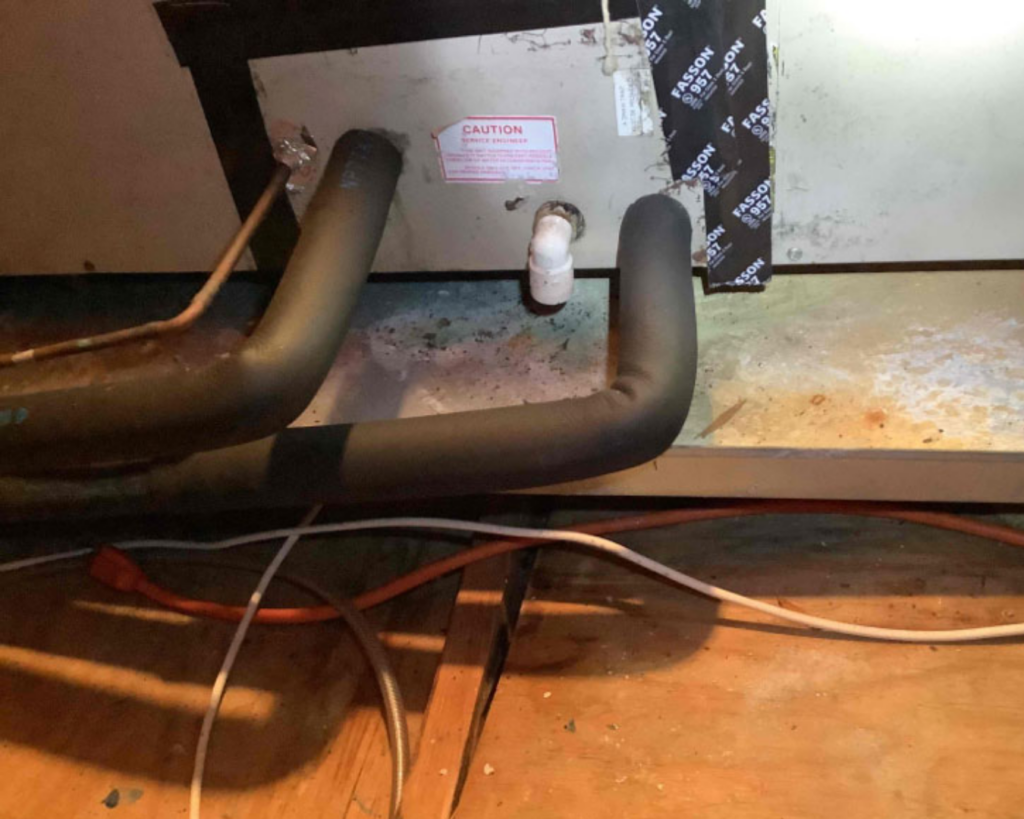
Large insulated HVAC pipes and smaller utility lines run through a tight attic space, with a caution label visible on the panel above.

Why Air Sealing Comes First

Insulation slows heat moving through the ceiling. It does not stop air. Gaps around recessed lights, attic hatches, top plates, plumbing and wiring holes, and chases let air move between the attic and your home, and loose-fill fiberglass is not an air barrier.

Sealing those openings before blowing insulation keeps hot, humid attic air and dust out of the house and helps the insulation perform as rated. See Where Your Home Actually Leaks.

Call Now

Why Owens Corning ProCat Blown-In Fiberglass?

Gold Eagle Services is an Owens Corning partner. ProCat is Owens Corning’s professional loose-fill fiberglass insulation, blown in by machine so it fills in around joists, wiring and odd-shaped spaces where batts leave gaps. Fiberglass is noncombustible, and blown-in insulation is a practical way to add R-value over what you already have. Learn more about Owens Corning ProCat loose-fill insulation and our Owens Corning partnership.

Can You Add Insulation Over What's Already There?

Usually, yes, if the existing insulation is dry and in good condition. Removal may be needed first when:

  • Insulation is wet, moldy or stained from a roof or condensate leak
  • It is contaminated by rodents or pests
  • It is old vermiculite, which can contain asbestos and should not be disturbed until it has been tested

A good installation also keeps soffit vents open with baffles, keeps insulation away from recessed lights that are not rated for contact and from flues, and insulates and seals the attic hatch. As an HVAC contractor, we also pay attention to the equipment that shares the attic: keeping a clear path to the air handler and pointing out duct leaks or crushed runs you may want to fix at the same time.

Are There Rebates for Attic Insulation?

Austin Energy customers may qualify for rebates on attic insulation, typically through whole-home efficiency programs that combine upgrades such as air sealing and duct sealing. Program rules and amounts change, so check current terms. See our rebates page and our 2026 guide to Austin Energy rebates and tax credits. The federal Section 25C credit is no longer available for improvements placed in service after December 31, 2025.

What Does Attic Insulation Cost in Austin?

The main things that drive the cost are:

  • Attic square footage
  • Current insulation depth and the target R-value
  • Air sealing scope
  • Removal of old or damaged insulation
  • Attic access and height
  • Baffles, hatch insulation and other details

Call for a quote at 512-489-4653 or schedule online.

Frequently Asked Questions

Look across your attic floor. If the insulation is level with or below the top of the ceiling joists, you almost certainly need more. Hot upstairs rooms, warm ceilings and an AC that runs constantly are other signs.

Hot upstairs rooms? Let’s look at your attic.

Call Now

Need Help With Your HVAC? Let's Talk.

Tell us what you need, and our team will get back to you as soon as possible. No pressure, no obligation just honest advice and fast service.

Contact Us
Name(Required)

Same-day service
TextCall 512-489-4653