
 HVAC Systems
 Heating
 Ductwork & Air Flow
 Ventilation
 Filtration
 Dehumidification
 Maintenance
 Mold
 Remediation & Restoration
 Pure Maintenance
 Your Home
 Building Science
 Insulation & Envelope
 Health & Safety
 Case Study

Quick answer: A family buying a three-story South Austin home asked us to inspect its three nearly new heat pump systems before closing. We found restrictive ducts, high static pressure, suspected mold inside one system and a humid attic. After closing, a full mechanical remodel rebuilt the ductwork and zoning, added a mini-split system and a whole-home dehumidifier, and left the family comfortable.
In this guide
What was the situation?
A family was under contract on a three-story home in South Austin. On paper, the HVAC looked like a selling point: three heat pump systems only a few years old, with zoning upstairs.
But the buyers had a nagging feeling. They were worried about humidity and about how the systems had been designed. Before their option period ran out, they asked Gold Eagle for a buyer’s HVAC inspection to find out whether “nearly new” really meant “working right.”
What did the inspection find?
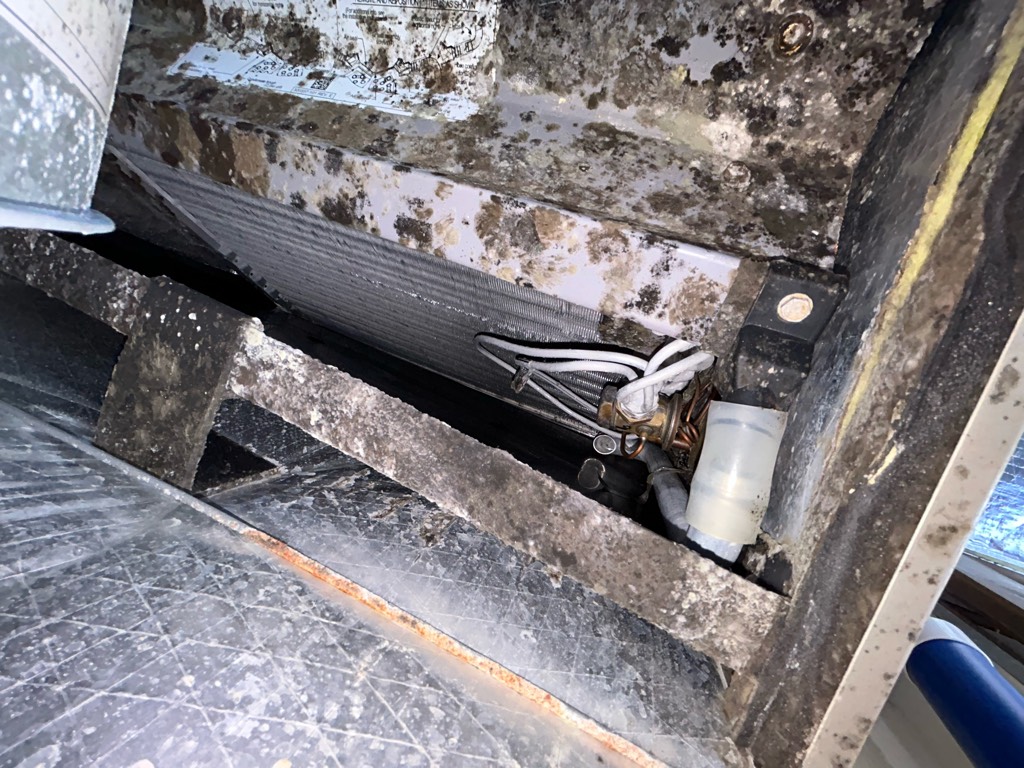
Our technician inspected all three systems, the ductwork, the attic and the air the family would be breathing. The problems had nothing to do with the age of the equipment. They came from how it had been designed and installed.
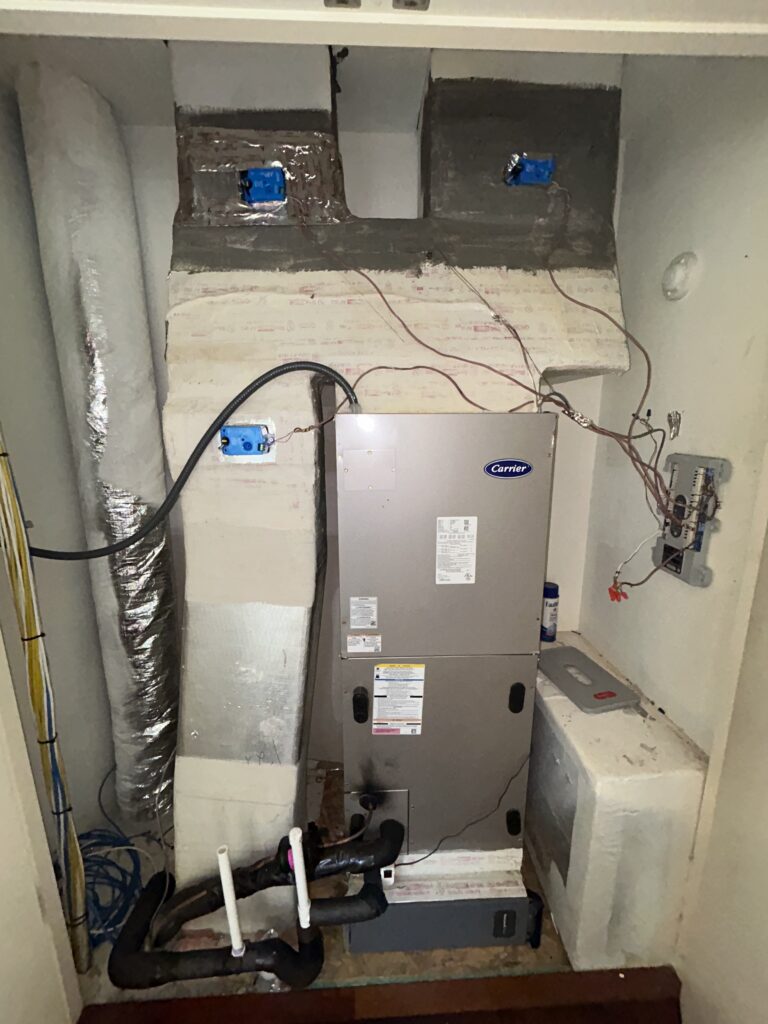
- Air couldn’t move freely. Static pressure was high on two of the three systems. Tight turns in the ducts and cramped space around the air handlers were choking the airflow, which makes a system work harder, cool less and wear out sooner.
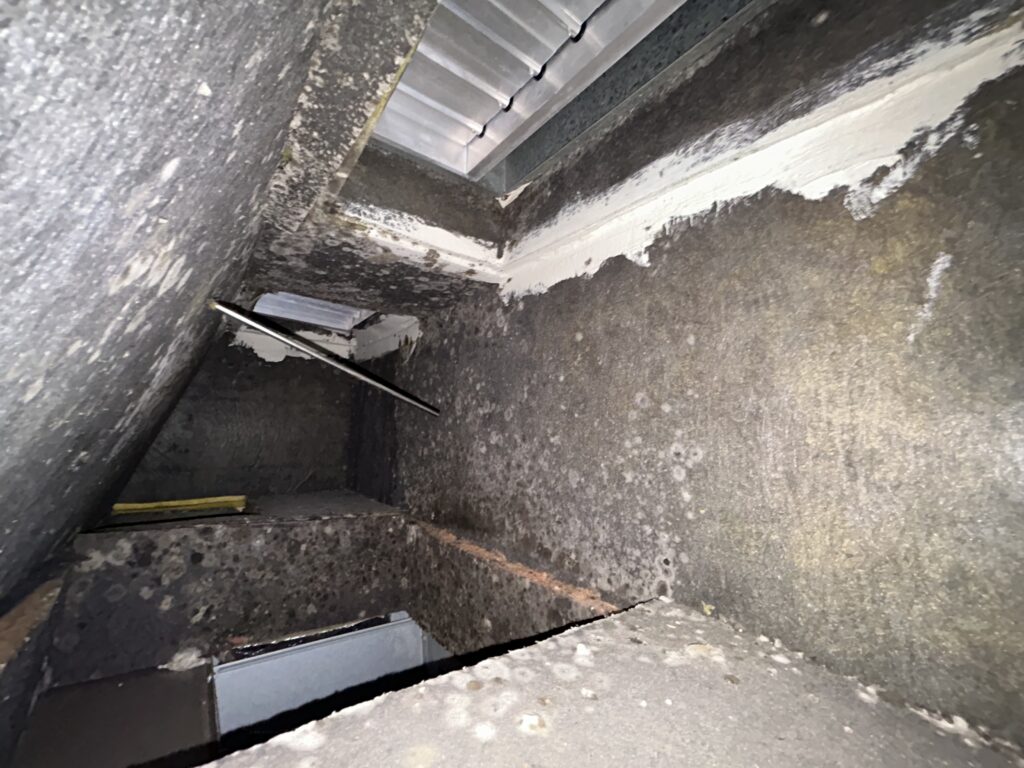
- One system showed suspected fungal growth across several components and its ductwork, the kind of thing that gets blown through every room.
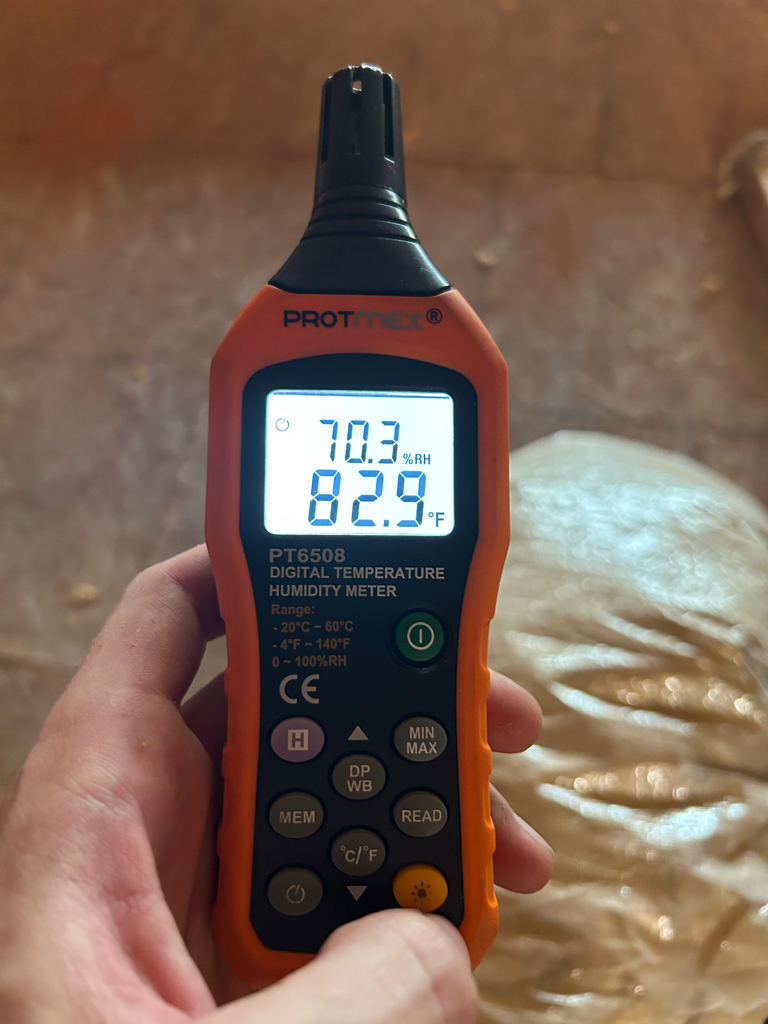
- Attic humidity was high, and there were signs of earlier moisture problems.
- The spray-foam insulation had deficiencies that let heat and moisture in.
- Heavy grease had built up inside the kitchen exhaust system.
None of this is visible on a walkthrough, and none of it shows up on a nameplate. A standard home inspection checks that the system turns on. This one checked whether it was built to work in an Austin house.



How did we fix it?
After closing, the family brought us back for a full mechanical remodel. Our install crew rebuilt how the home is heated, cooled and dried out.
Primary bedroom side
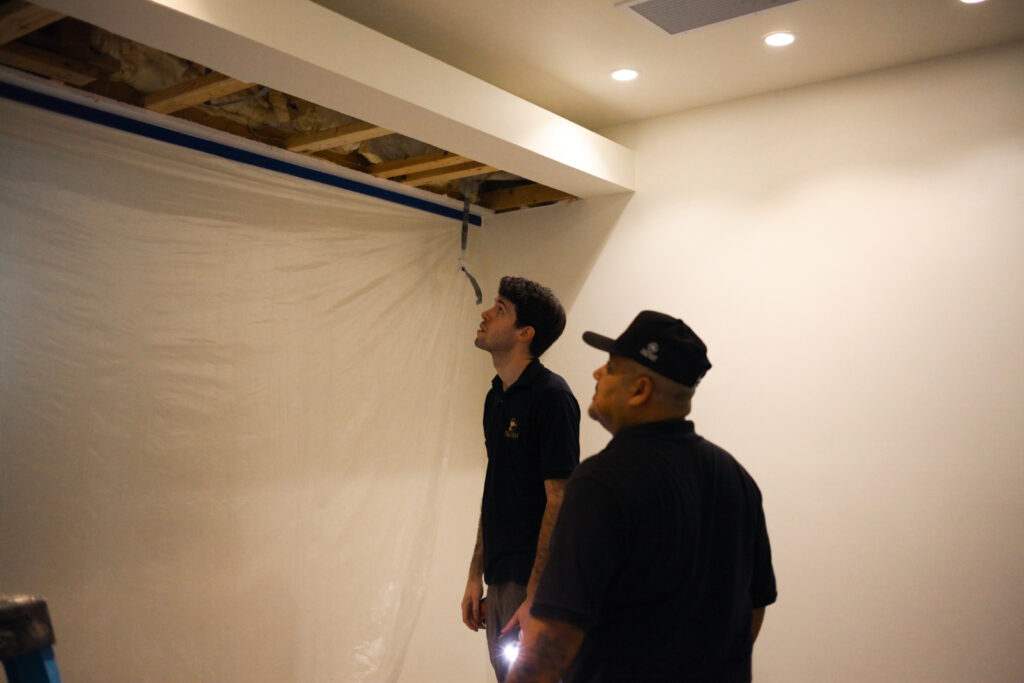
- Removed the old air handler and its restrictive ductwork, with plastic sheeting down to contain dust during removal.
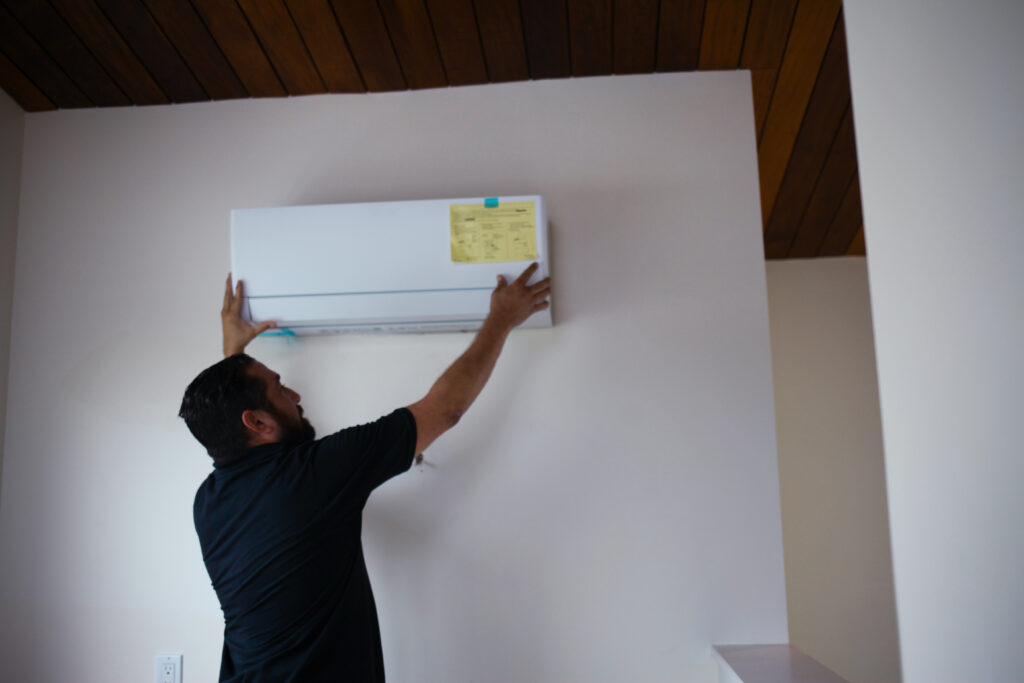
- Installed a Mitsubishi heat pump mini-split system: a ducted air handler for the primary bedroom and a wall-mounted unit for the upstairs office.
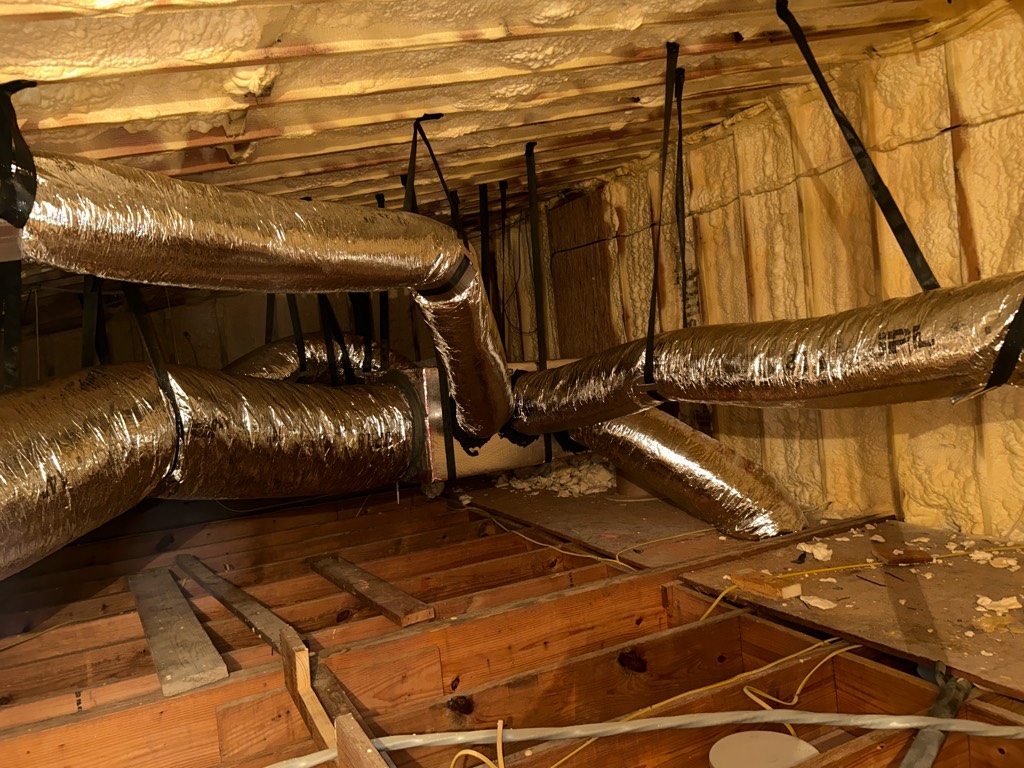
- Built a new insulated sheet-metal supply plenum and ran new R8 supply ducts, sealing every connection.
Upstairs system
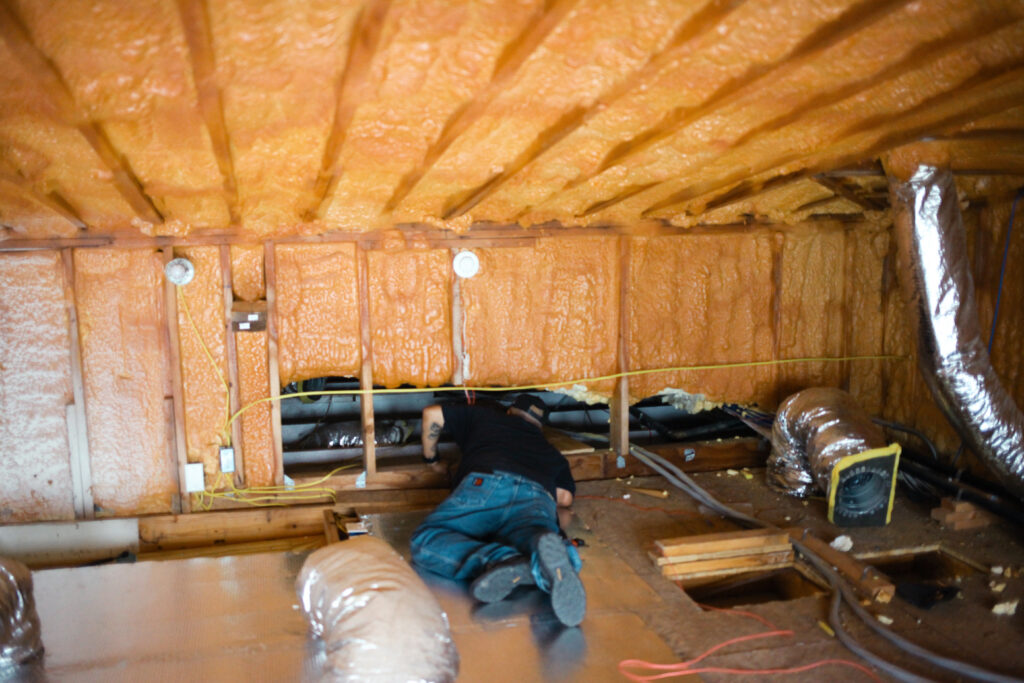
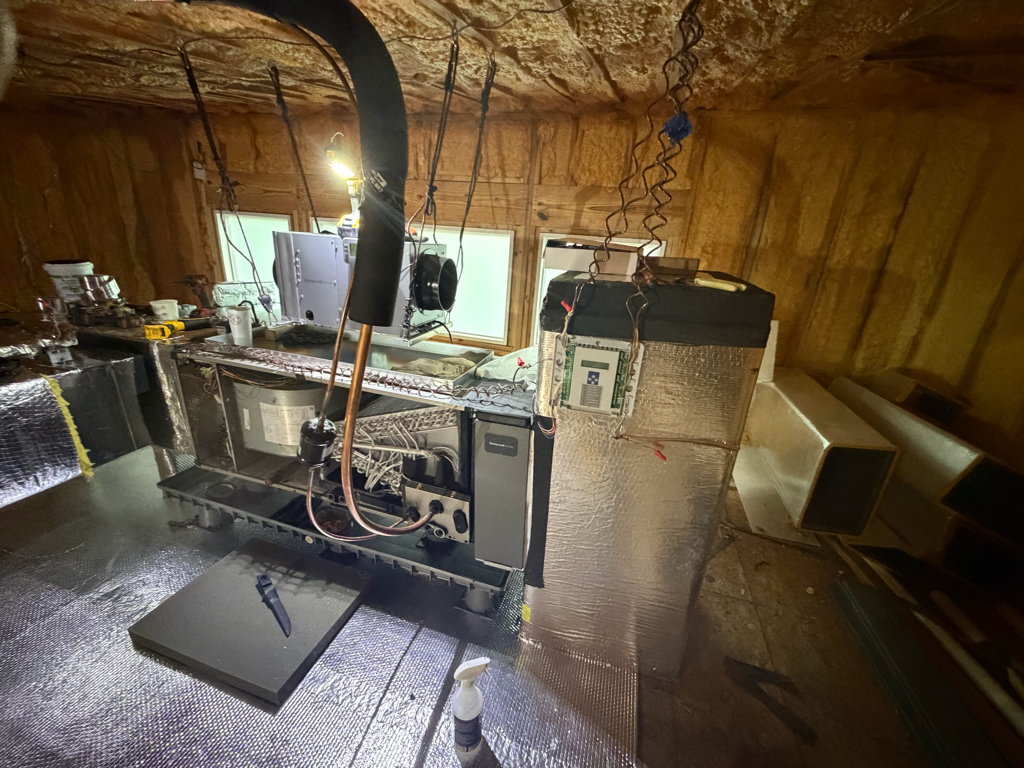
- Took the air handler out of its cramped closet, where tight space was choking the airflow, and moved it to the attic with room for clean, open duct connections.
- Removed the old 3-zone setup and the main attic trunk line.
- Rebuilt the zoning from scratch: new sheet-metal plenums for each zone, 3 motorized dampers and a new zone board.
- Added a new return plenum and a new return duct and grille, so the system can breathe.
Humidity and air quality
- Installed a 65-pint whole-home dehumidifier in the upstairs attic, with a secondary drain pan and two water safety switches.
- Deep-cleaned and sterilized the first-floor system, including the blower wheel.
On a follow-up visit we added a sub-plenum with balancing dampers to the downstairs system and vented a bathroom exhaust fan outside through the wall instead of into the attic.



What was the result?
The family now has a system designed for the house they live in: open airflow, zoning that works, and a dehumidifier keeping the attic dry through an Austin summer.

A new system takes a little getting used to. A few weeks after the remodel, the homeowners called because the house wasn’t reaching their set temperature. Our technician found the system running exactly as it should; the new Mitsubishi thermostat just worked differently from what they were used to. We came back a few days later to check it on a warmer afternoon. By then they’d learned the controls, and they had no more complaints.
That follow-through is part of the job. We don’t consider a project done until the family is comfortable in their home.
What can Austin home buyers learn from this?
- Newer doesn’t mean right. A system can be just a few years old and still have restrictive ducts, choked airflow and trapped moisture.
- A general home inspection isn’t an HVAC inspection. It confirms the system turns on. It doesn’t measure static pressure, look inside the air handler or check the attic for moisture.
- Use your option period. That window is when findings like these can shape your decision, your negotiation and your plans.
- Humidity is a design problem. In Central Texas, how a system is sized, ducted and dried matters as much as the equipment on the label.
Buying a home in the Austin area? Book a Gold Eagle Standard Buyer’s Inspection before your option period ends. Call 512-489-4653 or schedule online.
Related Gold Eagle service: Air duct cleaning
More in Case Study
All 4 guides Case StudyZilkr on the Park Condo Case Study: Clammy at 68°F, Comfortable at 74°FA corner condo at Zilkr on the Park felt clammy at 68°F with 65-72% indoor humidity. A 2-ton variable-speed heat pump now holds it…
- Case StudyZilkr on the Park Condo Case Study: Fixing High HumidityA 12-year-old 1.5-ton single-stage system in a 1,039 sq ft Zilkr on the Park condo let indoor humidity reach 65-72% even at 68°F. After…
 Case StudyU.S. Army Corps of Engineers Case Study: Pure Maintenance Dry-Fog ProcessA U.S. Army ERDC study tested Pure Maintenance's two-step dry-fog process in two vacant Fort Campbell buildings and found large, immediate drops in airborne…