
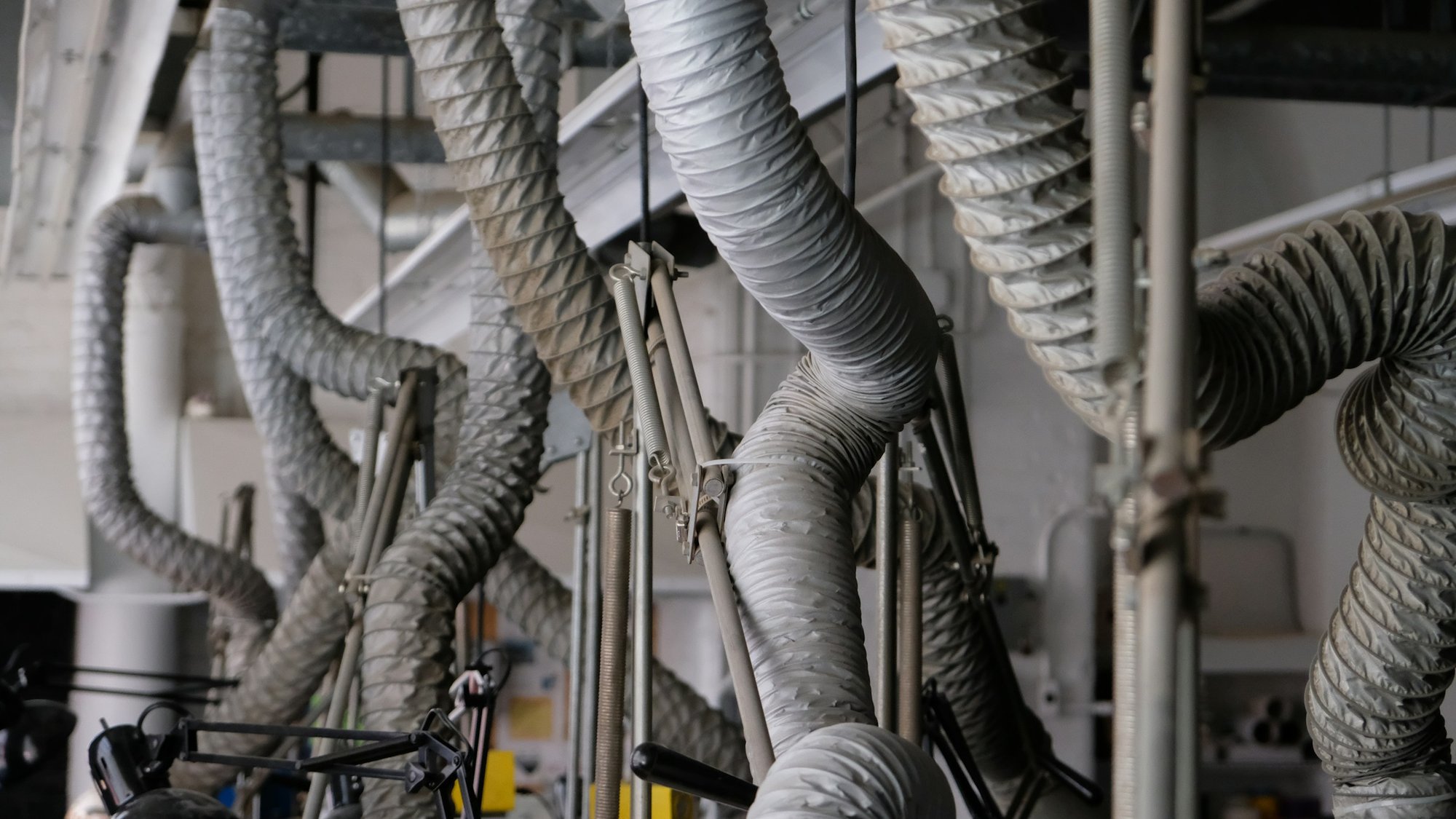
Quick answer: Duct system optimization means checking and improving your ductwork’s sealing, insulation, balance and layout so conditioned air actually reaches every room. Done right, it can cut wasted energy, even out hot and cold rooms and keep attic dust out of the air you breathe.
Why do your ducts matter so much?
Because every bit of air your system cools or heats has to travel through them. You can buy the most efficient air conditioner on the market, but if the ducts leak, sag or were sized wrong, a chunk of what you paid to cool ends up somewhere you don’t live. In most Austin homes, “somewhere” means the attic, which can top 130°F in August.
Duct system optimization is the work of finding and fixing those problems in the design, layout and condition of your ductwork, so the air gets where it’s supposed to go.
What is duct system optimization?
It’s a full evaluation of the duct network in your home, followed by the fixes that improve airflow and cut energy loss. It isn’t just patching holes. Depending on what we find, it can include: – Sealing leaks: Finding and sealing leaks, cracks, gaps and loose connections so conditioned air stays in the ducts instead of escaping into the attic, walls or crawl space. – Balancing airflow: Adjusting dampers and registers so each room gets the right amount of air, which helps even out hot and cold rooms. – Insulating ducts: Ducts in unconditioned spaces gain heat in summer and lose it in winter. Insulation keeps the air closer to the temperature it left the system at. – Redesigning the layout: Sometimes the original design is the problem. Fixing sharp bends, overly long runs or undersized sections can take a lot of restriction out of the system.
What are the benefits of optimizing your ducts?
The payoff shows up in your energy use, your comfort, your air and your equipment.
Does sealing ducts improve energy efficiency?
Yes, often more than people expect. When ducts are sealed and balanced, your system doesn’t have to run as long to hold the temperature you set. – Less wasted air: ENERGY STAR estimates that in a typical house about 20-30% of the air moving through the duct system is lost to leaks, holes and poorly connected ducts, and that sealing and insulating ducts can improve efficiency by as much as 20%. – Less strain on the equipment: A sealed, balanced system runs closer to how it was designed, which puts less strain on components and can help them last longer.
Will better ductwork fix hot and cold rooms?
It’s one of the most common fixes. If the back bedroom is always a few degrees warmer than the rest of the house, the ducts are a prime suspect. – More even temperatures: With good airflow, each room can reach and hold its setting, and you don’t have to crank the thermostat down to get one room comfortable. – Better humidity control: Proper airflow helps your system pull moisture out of the air the way it should. That matters in Central Texas, where muggy air leads to a stuffy feel, condensation and, over time, conditions where mold can grow.
How do leaky ducts affect indoor air quality?
Leaky return ducts can pull air from the attic, walls or crawl space, and that air brings dust, dirt and insulation fibers along for the ride. Sealing those leaks keeps that stuff out of your living space. – Less dust: Sealing, and cleaning when it’s actually needed, can reduce the dust, pollen and pet dander moving through your home’s air. – Fewer odors: Good sealing and circulation help cut down on musty or stale smells that come from dirty ducts or unconditioned spaces.
Can duct optimization lower maintenance costs?
It can. A system that isn’t fighting its own ductwork sees less wear and tear. – Longer equipment life: Less strain on the system can help your heating and cooling equipment last longer. – Fewer surprise breakdowns: Equipment that runs within its design limits is less likely to fail on the worst day of summer, though no ductwork fix makes breakdowns impossible.
Does it help when you sell your home?
It can help. An efficient system with good ductwork is a reasonable selling point. – Better energy performance: Sealed, insulated ducts can improve a home’s energy performance, which appeals to buyers who look at operating costs. – Comfort buyers can feel: Even temperatures, cleaner air and reasonable utility bills make a home easier to love on a July showing.
Is duct optimization worth it for your home?
If you have rooms that never get comfortable, high summer bills or a lot of dust, it’s worth having your ducts evaluated. Ductwork is out of sight in the attic, so it’s easy to forget, but sealing, balancing and insulating it can improve how your system performs, how long it lasts and how your home feels.
At Gold Eagle Services, duct evaluation, sealing and redesign are a big part of what we do. We’ll show you what we find and explain what’s worth fixing.
Related guides: What is a Duct System (and Why Plenum Size Matters Most) for Your Central Texas Home, Understanding Your Home’s Duct System: The Key to Efficient Heating and Cooling in Central Texas and The Importance of Properly Sized Ductwork for Your HVAC System: Goldilocks Was Right!.
About Gold Eagle Services: This guide comes from the team at Gold Eagle Services, a family-run Austin HVAC, indoor air quality and mold remediation company founded in 2017. We’re licensed (TACLA119235 and RCO1783), insured and bonded, and we serve homes across the greater Austin area.
Need help with this in your home? Learn about our ductwork design, sealing and replacement, or call 512-489-4653 to schedule a visit.
