
 HVAC Systems
 Heating
 Ductwork & Air Flow
 Ventilation
 Filtration
 Dehumidification
 Maintenance
 Mold
 Remediation & Restoration
 Your Home
 Building Science
 Insulation & Envelope
 Health & Safety
 Case Study
Quick answer: Stale air collects where air doesn’t move or moisture builds up: closed bedrooms with no return, closets, laundry rooms, bathrooms, rooms against the attic and spots behind big furniture. The fixes are mostly airflow and humidity: a return path for each room, exhaust fans that vent outside and indoor humidity near 50%.
In this guide
- What makes air go stale in the first place?
- Why does a bedroom feel stuffy with the door closed?
- Why do closets, laundry rooms and guest rooms get musty?
- Is your bathroom exhaust fan actually venting outside?
- Why do rooms next to the attic feel stuffy?
- Can the HVAC system itself be a source of stale air?
- How do you fix stale air for the whole house?
- What should you do next?
What makes air go stale in the first place?
Air goes stale when it sits still and picks up moisture and odors faster than your system can move them out. Your central AC or heat pump only conditions the air it can reach. It pushes air out through the supply vents and pulls it back through the returns, and any spot that sits outside that loop gets left behind.
Central Texas houses stay closed up for a cooling season that runs from spring well into fall, so stale spots are usually the places the system doesn’t reach.
The other ingredient is moisture. Cooking, showers, laundry and people all add water to the air. Where that water lingers, smells follow.
Why does a bedroom feel stuffy with the door closed?
Because most Austin homes have one or two central returns in a hallway, not one in every bedroom. When you close a bedroom door, the supply vent keeps blowing air in, but there’s no easy way for it to get back out. The room pressurizes (air piles up with nowhere to go), less fresh conditioned air gets in, and by morning it feels close and warm.
The gap under the door usually isn’t enough. The fixes an HVAC contractor uses:
- A transfer grille, a pair of vents through the wall or above the door that let air pass back to the hallway.
- A jumper duct, a short duct through the attic from the bedroom ceiling to the hallway ceiling.
- A dedicated return in the room, tied back to the system.
Our guide on why rooms get hot when you close the door covers the pressure side.
Why do closets, laundry rooms and guest rooms get musty?
They’re the quietest rooms in the house. Closet doors stay shut, a guest room might go weeks without anyone opening the door, and many laundry rooms have a door that closes on a washer full of damp clothes.
Three things make it worse:
- Closed supply vents. People shut the vent in a spare room or walk-in closet to “save” air. The room still gains heat and moisture through the walls; it just never gets conditioned air to offset them. Closing vents also raises duct pressure and saves little, if anything.
- Packed storage. Clothes, boxes and cardboard pushed tight against a wall hold moisture and block what little air moves.
- Laundry moisture. A front-loader gasket that stays wet, clothes left in the washer overnight and a dryer vent that’s loose or kinked in the attic all add water to the air. Dryer vent cleaning and repair is a job for a dryer vent specialist, but a humidity problem in the laundry room is something we can check.
Leave spare-room vents open and prop doors open for a few hours a week.
Can furniture really make a spot stale?
Yes. A sofa or dresser shoved against a supply vent or return blocks airflow for the whole room, and the wall and floor behind it barely see any moving air. Dust settles there, and on an outside wall that corner can run cooler and damper than the rest of the room.
Pull big pieces a few inches off the wall, keep them off vents and returns, and vacuum behind them now and then. If a return grille is hidden behind a bookcase, the whole house feels it, because every return is part of how your system breathes.
Is your bathroom exhaust fan actually venting outside?
Often not as much as you’d think. A bathroom exhaust fan should run during every shower and for about 20 minutes after, and it should dump that air outside the house, not into the attic.
Two quick checks:
- The tissue test. Hold a single square of toilet paper up to the grille with the fan running. If it doesn’t pull against the grille, the fan is weak, the cover is caked with dust or the duct is blocked.
- The attic look. On a cool morning, look at where the fan duct ends. If it stops short of the roof or wall and just blows into the insulation, that shower steam is going into your attic.
We cover this in whether a bathroom exhaust fan needs to vent outside. The fan itself is usually an electrician’s or contractor’s job; the humidity it leaves behind is where we come in.
Why do rooms next to the attic feel stuffy?
They share walls with a hot attic and sit at the end of long duct runs. Bonus rooms over the garage, rooms with sloped ceilings and anything with a knee wall (the short wall between a room and the attic behind it) back up to an attic that can top 130°F in August. That heat pushes through the drywall all afternoon.
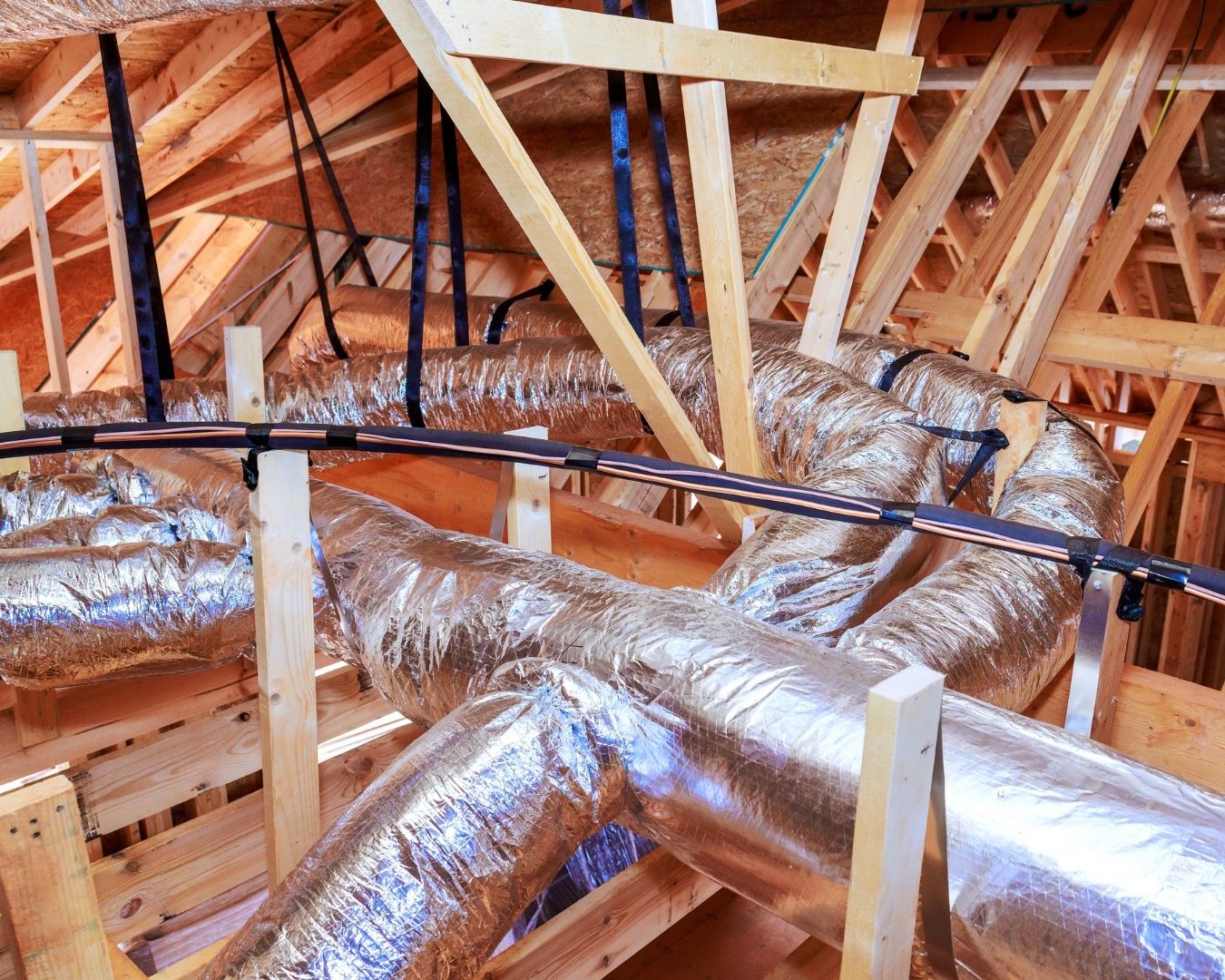
These rooms are also often at the end of the longest duct runs. In most Austin homes the air handler sits in the attic, feeding a fiberglass ductboard plenum with flex duct runs out to each room. The farthest room gets the least air, and a crushed or kinked flex run can cut that further.
Less air means the room warms up, the AC can’t pull as much moisture out of it and it starts to feel stale. Our guide on how to increase airflow to one room covers the fixes.
Can the HVAC system itself be a source of stale air?
Sometimes. The indoor coil gets cold and wet every time the AC runs, and the drain pan under it holds water.
If the filter is loose or overdue, dust sticks to that wet coil. If the condensate drain line is slow, water sits in the pan. Either can give you a musty smell right when the system kicks on.
Leaky return ducts are the other culprit. A return that leaks in a hot, dusty attic or garage pulls that air straight into the system and spreads it through the house.
How do you fix stale air for the whole house?
Start with humidity, because almost every stale spot gets worse when the air is damp. Aim for indoor humidity between 40% and 60%, with about 50% as the target in an Austin summer. A basic hygrometer from a hardware store tells you where you stand.
After that, the whole-house fixes are:
- Airflow: a return path for every closed room, vents open, flex runs that aren’t crushed and a system that’s balanced so every room gets its share.
- Filtration: a filter that fits snugly with no gaps, changed on schedule.
- Dehumidification: a whole-home dehumidifier if the house stays above 55-60% even with the AC running.
- Ventilation: in newer, tighter homes, a planned fresh-air system such as an ERV (energy recovery ventilator) that trades stale indoor air for filtered outdoor air.
Gold Eagle’s technicians add return paths, balance airflow, and install whole-home dehumidifiers and fresh-air systems across the Austin area. See our indoor air quality services.
What should you do next?
- Put a hygrometer in the stuffiest room and check it for a week.
- Open closed vents and prop quiet-room doors open a few hours a week.
- Do the tissue test on every bathroom fan.
- If one room always feels close or the house stays above 60% humidity, book a Gold Eagle visit to check airflow, returns and humidity.
Related guides: How Furniture, Rugs and Closets Affect Your Home’s Airflow, What Indoor Humidity Level Should You Keep in an Austin Home? and Fresh Air in a Tight House: Ventilation Options for Newer Austin Homes.
About Gold Eagle Services: This guide comes from the team at Gold Eagle Services, a family-run Austin HVAC, indoor air quality and mold remediation company founded in 2017. We’re licensed (TACLA119235 and RCO1783), insured and bonded, and we serve homes across the greater Austin area.
Need help with this in your home? Learn about our indoor air quality services, or call 512-489-4653 to schedule a visit.
Related Gold Eagle service: Air duct cleaning
More in Ventilation
All 10 guides VentilationWhy Is the Laundry Room So Hot and Humid? Dryer Vents and Your ACA clothes dryer should push hot, wet air outside through its vent. When that vent is clogged, crushed, too long or disconnected in the…
 VentilationShould You Ventilate Your Home in Winter When It’s Cold Outside?Yes. Your home still makes moisture, odors and stale air in winter, and it needs a steady trickle of fresh air to carry them…
 VentilationDoes Your Kitchen Range Hood Really Matter for Indoor Air?Yes. Cooking is one of the biggest daily sources of moisture, grease, smoke and odors in a home, and gas burners add combustion gases…