
 HVAC Systems
 Heating
 Ductwork & Air Flow
 Ventilation
 Filtration
 Dehumidification
 Maintenance
 Mold
Mold Remediation & Restoration
 Pure Maintenance
 Your Home
 Building Science
 Insulation & Envelope
 Health & Safety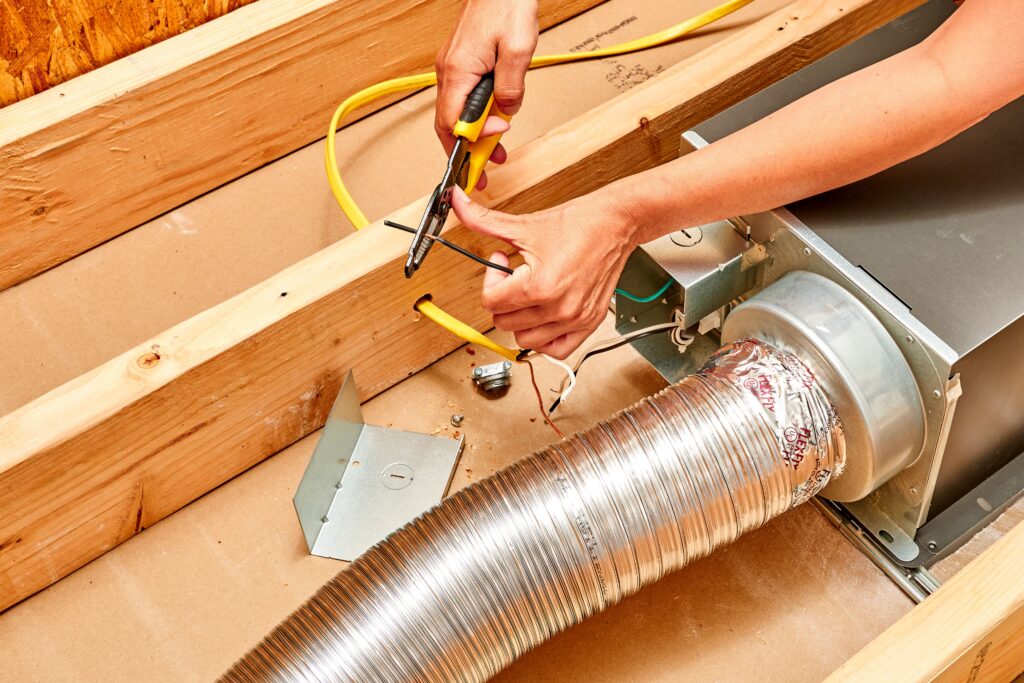
Quick answer: Yes. A bathroom exhaust fan should be ducted all the way outdoors through a roof or wall cap with a damper flap. The residential code bans venting into an attic, soffit, ridge vent or crawl space, because shower steam dumped in the attic just moves the moisture where you can’t see it.
In this guide
What happens if a bath fan vents into the attic?
The moisture lands on the coolest surfaces up there. After a hot shower, the fan can push a lot of warm, wet air into the attic. When a Central Texas cold front drops through and the roof deck cools overnight, that moisture condenses on the underside of the decking and on the nail tips. Over time you get damp insulation, stained or moldy roof sheathing and rusty nails.
Fans that blow “toward” a soffit vent are a common shortcut. Much of that air never leaves. It drifts back into the attic. Even a fan ducted correctly years ago can come loose when someone crawls past it. Our guide to building science and mold prevention covers why hidden moisture matters.
How can you tell where your fan goes?
Start outside. Look for a roof cap or wall cap that lines up with each bathroom. With the fan running, the little damper flap on the cap should open. If you can’t find one, check the attic.
- Hold a tissue to the ceiling grille. If it sticks, the fan is pulling air, but that doesn’t tell you where the air goes.
- Follow the duct in the attic from the fan housing to the roof. It should be one continuous, connected run with no open end lying on the insulation. Go early in the morning, before the attic heats up, and step only on the framing.
- Look for sagging flex duct. Low spots collect condensation, which can drip back down into the fan.
If you find a duct loose or dumping into the attic, have it rerouted to a proper roof or wall cap and sealed at both ends. It’s a short job that protects the whole roof deck.
If you’d rather not crawl the attic, Gold Eagle can recommend a trusted handyman to trace, reroute and seal bath fan ducts. For the rest of your home’s ventilation, see our indoor air quality work.
How big should the fan be, and how long should it run?
ASHRAE Standard 62.2 and the residential code call for at least 50 cubic feet per minute (CFM) when the fan runs on demand, or 20 CFM if it runs continuously. A common rule of thumb for typical bathrooms is about 1 CFM per square foot of floor area.
The duct matters as much as the fan’s rating. A short, smooth run delivers close to the label, while a long, kinked flex run can cut real airflow a lot.
Run it during the shower and for about 20 minutes after. A timer switch or a humidity-sensing switch does this for you. Quiet fans are the ones people actually leave on, so look for a low sone rating, the fan’s noise score.
Does a bath fan help with whole-house humidity?
A bath fan helps at the source, the best place to catch moisture, but it isn’t a whole-house dehumidifier. Every cubic foot a fan exhausts gets replaced by air leaking in from somewhere, and on a July afternoon in Austin that air is hot and humid. Use bath fans for showers, not as an all-day humidity plan. For the bigger picture, see home exhaust fans and vents and ventilation options for newer homes.
What should you do next?
- Walk outside and match a roof or wall cap to each bathroom, then check that its flap opens with the fan running.
- On a cool morning, look in the attic for a loose or open-ended fan duct lying on the insulation.
- Run the fan during every shower and for about 20 minutes after, or add a timer switch.
- For mold on the roof decking, call a general mold remediation company. If you find a fan duct dumping into the attic, book a visit or call 512-489-4653 and Gold Eagle can recommend a trusted handyman to reroute it.
Related guides: Home Exhaust Fans and Vents: Their Role in Indoor Air Quality, Fresh Air in a Tight House: Ventilation Options for Newer Austin Homes and Building Science Best Practices for Mold Prevention.
About Gold Eagle Services: This guide comes from the team at Gold Eagle Services, a family-run Austin HVAC, indoor air quality and mold remediation company founded in 2017. We’re licensed (TACLA119235 and RCO1783), insured and bonded, and we serve homes across the greater Austin area.
Need help with this in your home? Learn about our indoor air quality solutions, or call 512-489-4653 to schedule a visit.
More in Ventilation
All 6 guides VentilationFresh Air in a Tight House: Ventilation Options for Newer Austin HomesNewer Austin homes are built tight, so stale air, odors and moisture no longer leak out by accident. The fix is planned ventilation: exhaust…
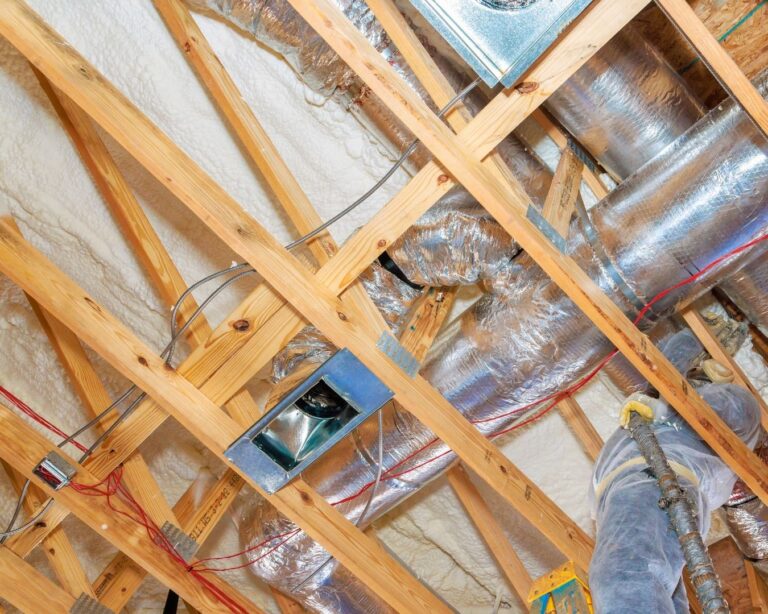 VentilationHome Exhaust Fans and Vents: Their Role in Indoor Air QualityExhaust fans and vents remove moisture, odors and pollutants at the source, like shower steam and cooking smoke, and send them outdoors. Properly vented…
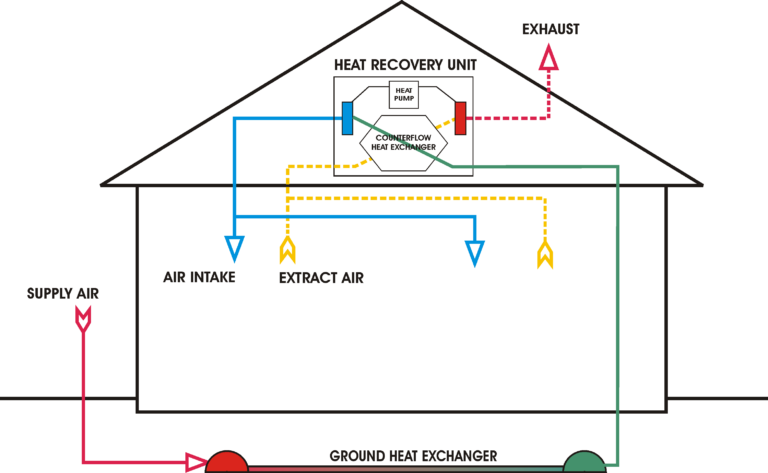 VentilationPassive House Mechanical Systems: ERVs, Heat Pumps and MoreA Passive House relies on matched mechanical systems: balanced ventilation with an ERV or HRV, right-sized heating and cooling (usually a heat pump), efficient…