
 HVAC Systems
 Heating
 Ductwork & Air Flow
 Ventilation
 Filtration
 Dehumidification
 Maintenance
 Mold
Mold Remediation & Restoration
 Pure Maintenance
 Your Home
 Building Science
 Insulation & Envelope
 Health & Safety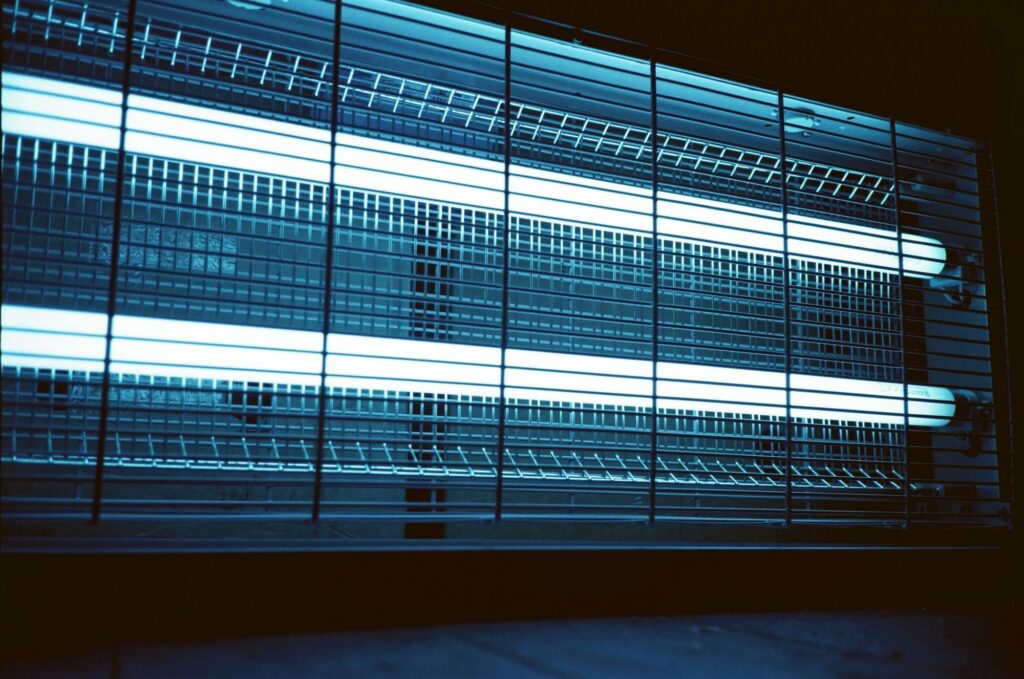
Quick answer: For the best results, install HVAC UV lights at the evaporator coil, aimed at the coil and drain pan, rather than out in the supply plenum. Shining steadily on the coil, UV-C light helps limit mold and bacterial growth right where it forms, which keeps the coil cleaner for better airflow and efficiency and less wear on the equipment.
In this guide
- What do UV lights in an HVAC system actually do?
- Why does UV light placement matter so much?
- Why is the evaporator coil where growth starts?
- How does a cleaner coil help airflow and efficiency?
- Can UV lights help your HVAC equipment last longer?
- Evaporator coil vs. supply plenum: which is better for UV lights?
What do UV lights in an HVAC system actually do?
Their main job is keeping the cooling coil and drain pan cleaner by limiting mold and bacterial growth on those surfaces. That’s the honest, useful version of the pitch. But a UV light only does that job if it can see the surfaces it’s meant to protect. Like a reading lamp, it helps a lot when it’s pointed at the page and not much when it’s pointed at the ceiling.
Some installers put UV lights in the supply plenum. We recommend placing them at the evaporator coil instead. That isn’t a matter of taste; it follows from how your system works and where growth actually starts. Here’s the reasoning, so you can make the call for your own system.
Why does UV light placement matter so much?
Because UV-C works on what it shines on, and for how long. Where the lamp sits decides how much light reaches the places mold and bacteria grow. Think of it as treating the source instead of chasing the symptoms. Here’s why the evaporator coil is the better spot:
Why is the evaporator coil where growth starts?
Because it’s cold, wet and dark most of the summer. As your system cools the house, warm, humid air passes over the cold coil and water condenses on it. In a Central Texas summer that’s a lot of water, and in the dark, mostly undisturbed inside of an air handler, it makes a good home for mold, mildew and bacteria.
A UV light mounted at the coil shines steadily on the surface where that growth starts, helping keep it from getting established. A surface that sits in the light all day gets far more exposure than air rushing past, which is the whole point of this location. It gives you:
- A cleaner coil: the light hits the coil constantly, which helps hold back the growth that thrives in those damp conditions, along with the slimy buildup and musty odors that come with it.
- Less re-contamination: all the air your system moves passes over the coil. Keeping it cleaner means the coil itself is less likely to become a source of buildup and odors, so the system isn’t pushing air across a dirty surface.
How does a cleaner coil help airflow and efficiency?
A dirty coil moves heat poorly, so the system runs longer to do the same work. When mold and grime build up, they act like a blanket on the coil, making it harder to pull heat out of the air. They can also clog the gaps between the fins and choke airflow.
A UV light at the coil helps prevent that buildup, which supports good airflow and efficiency:
- Better cooling performance: a clean coil transfers heat more efficiently, so the house cools without the system straining.
- Energy savings: a system that doesn’t have to work as hard uses less energy, which can show up on your electric bill over a long cooling season.
Can UV lights help your HVAC equipment last longer?
They can help, by keeping the coil cleaner. An HVAC system is a big purchase, and anything that reduces strain on it is worth a look. Buildup from microbial growth and grime slowly works against the system over time.
A UV light at the coil supports a longer equipment life by:
- Reducing wear: a clean coil avoids the buildup of dirt, grime and biological material that makes the system work harder. A cleaner-running system puts less stress on the blower motor, fan and other parts.
- Easier maintenance: parts that stay cleaner need deep cleaning less often, which saves time and hassle and can mean fewer big coil cleanings down the road. The lamp itself still needs replacing on the manufacturer’s schedule, and the filter still needs changing.
Evaporator coil vs. supply plenum: which is better for UV lights?
The coil, for most homes. Here’s how the two common approaches compare:
Evaporator coil installation (our recommendation):
- Pros: aims directly at the main place mold and bacteria grow; keeps the coil surface itself cleaner; supports better airflow and efficiency; helps the equipment last by preventing buildup.
- Cons: needs careful professional installation for proper placement and safety. UV-C light shouldn’t be looked at directly and must stay contained inside the unit, and some plastics and wire insulation near the lamp can break down under UV over time.
Supply plenum installation (less effective):
- Pros: usually easier to access for the initial install.
- Cons: does little about the mold and bacteria that build up on the evaporator coil, because the light doesn’t reach the place growth starts. Air moves past the lamp in a fraction of a second, so any effect on the air itself is limited and depends on the product and placement. It doesn’t address the root cause of growth inside the system.
Related guides: High-Powered UV Lights for HVAC Systems, Benefits and Deficiencies of UV Lights in HVAC Systems and Dust Free Air Purification: Active Gold, LightStick Gold and Bypass HEPA.
About Gold Eagle Services: This guide comes from the team at Gold Eagle Services, a family-run Austin HVAC, indoor air quality and mold remediation company founded in 2017. We’re licensed (TACLA119235 and RCO1783), insured and bonded, and we serve homes across the greater Austin area.
Need help with this in your home? Learn about our indoor air quality solutions, or call 512-489-4653 to schedule a visit.
More in Indoor Air Quality (IAQ)
All 30 guides Indoor Air Quality (IAQ)Do Portable Air Purifiers Help During Austin Allergy Season?A portable HEPA purifier can lower the fine particles floating in one room, such as dust, pet dander and some pollen, if it's sized…
 Indoor Air Quality (IAQ)Can a Dirty Air Conditioner Make You Sick?A dirty AC doesn't create germs on its own, but it can recirculate dust and, if the coil, drain pan or ducts stay wet,…
 Indoor Air Quality (IAQ)Moisture From Below: Slab and Pier-and-Beam Homes in Central TexasGround moisture reaches Austin homes two ways: as vapor moving up through concrete slabs, and as humid outdoor air flowing through vented crawlspaces under…