
 HVAC Systems
 Heating
 Ductwork & Air Flow
 Ventilation
 Filtration
 Dehumidification
 Maintenance
 Mold
Mold Remediation & Restoration
 Pure Maintenance
 Your Home
 Building Science
 Insulation & Envelope
 Health & Safety
Quick answer: A portable HEPA purifier can lower the fine particles floating in one room, such as dust, pet dander and some pollen, if it’s sized for the room and runs with doors and windows closed. It does less for heavier pollen grains and dust mite debris that settle quickly. Questions about symptoms belong with your doctor.
In this guide
What does a portable air purifier actually remove?
A true HEPA purifier removes particles from the air that passes through it, and not much else. HEPA filters are rated to capture at least 99.97 percent of particles at 0.3 microns, the size that’s hardest to catch. That rating describes the filter, not your bedroom. What matters in the room is how much air the unit pulls through that filter.
The EPA points out that many portable units can’t keep up with larger particles such as pollen, dust mite debris and cockroach debris, because those settle onto surfaces within minutes, long before they reach the filter. Fine particles like smoke and some dander float for hours, and that’s where a purifier does its best work.
What size air purifier does a room need?
Check the CADR (clean air delivery rate) on the box, which tells you how much filtered air the unit puts out. The EPA’s rule of thumb: pick a unit whose smoke CADR is at least two-thirds of the room’s floor area, assuming 8-foot ceilings. A 12 by 14 foot bedroom is 168 square feet, so you’d want a smoke CADR of at least 112. Higher ceilings, or a unit you’ll mostly run on low, call for more.
Run it continuously on a setting you can sleep through, keep the door closed, and give it a foot or two of space. A purifier wedged behind a nightstand is mostly cleaning the nightstand.
Which purifiers should you avoid?
Skip anything that produces ozone on purpose, including devices sold as ozone generators. Ozone is an air pollutant, and it doesn’t pull particles out of the air. The California Air Resources Board certifies air cleaners that meet its ozone emission limit, which makes its list a handy shortcut when shopping. Our guide on ozone generators goes deeper.
When do Austin’s allergy seasons make a purifier most useful?
Year-round, because something is almost always in the air here: mountain cedar in winter, oak and grasses in spring, ragweed in fall, and mold spores whenever it’s warm and damp. Pollen rides in on clothes, pets and shoes, and through leaks around doors, windows and attic ducts. See why allergies are so bad in Austin and cedar fever for the seasonal detail.
That’s why a purifier works best as one piece of the plan. Keeping windows closed on high pollen days, changing clothes after yard work and vacuuming with a HEPA vacuum all cut down on what settles. Whether cleaner bedroom air changes how you feel is a question for your doctor or allergist.
Is a portable purifier or a better HVAC filter the better choice?
They do different jobs, so many homes use both. Your HVAC filter cleans air from the whole house, but only while the blower runs. A MERV 11 to 13 filter catches far more fine particles than a basic one, as long as your system can handle the airflow (MERV ratings explained). A portable unit runs day and night in the one room you choose, usually the bedroom. Think of the HVAC filter as the house’s net and the purifier as the bedroom’s. For the whole-house side, Gold Eagle can check which filter your system can take and walk you through whole-home air quality options.
What should you do next?
- Measure the room and pick a unit with a smoke CADR of at least two-thirds of the floor area.
- Run it continuously with the door closed and space around it.
- Check your HVAC filter and change it on schedule.
- Book a Gold Eagle visit or call 512-489-4653 to ask which filter rating your system can handle.
Related guides: Air Purification Systems: Choosing the Right One for Your Home, What Are MERV Ratings, and How Do They Affect IAQ? and Why Are Allergies So Bad in Austin Right Now?
About Gold Eagle Services: This guide comes from the team at Gold Eagle Services, a family-run Austin HVAC, indoor air quality and mold remediation company founded in 2017. We’re licensed (TACLA119235 and RCO1783), insured and bonded, and we serve homes across the greater Austin area.
Need help with this in your home? Learn about our indoor air quality solutions, or call 512-489-4653 to schedule a visit.
More in Filtration
All 8 guides FiltrationShould You Run Your HVAC Fan on ON or AUTO?For most Austin homes, AUTO is the better fan setting in cooling season. On AUTO, water on the cold AC coil drains away after…
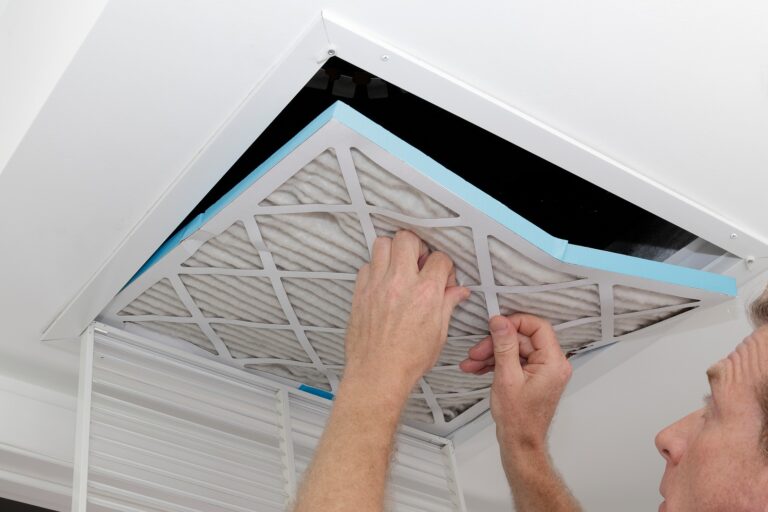 FiltrationHow Often Should You Change Your AC Filter in Central Texas?Check a standard 1-inch filter every month and change it when it looks gray and dusty, which in a Central Texas summer often means…
 FiltrationIndoor Air Quality Buyer’s Guide for Austin HomesThe most common indoor air quality problems in Austin homes are pollen, dust, pet dander, VOCs, high humidity and mold. Fix the source first:…