
 HVAC Systems
 Heating
 Ductwork & Air Flow
 Ventilation
 Filtration
 Dehumidification
 Maintenance
 Mold
Mold Remediation & Restoration
 Pure Maintenance
 Your Home
 Building Science
 Insulation & Envelope
 Health & Safety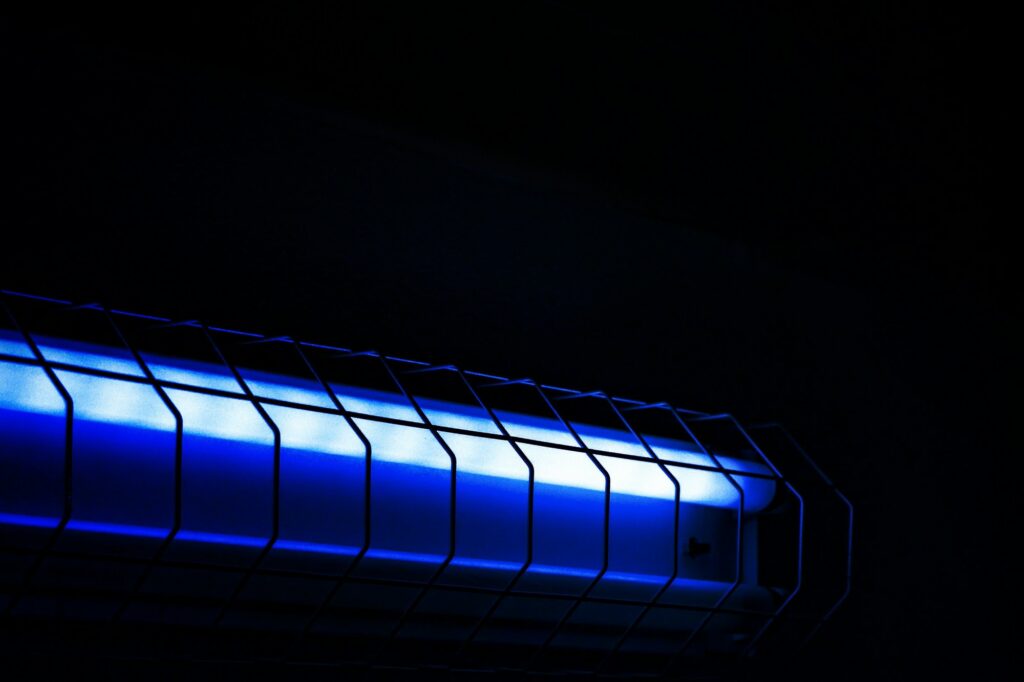
Quick answer: High-powered UV-C lights in your HVAC system shine on the cooling coil and drain pan, where condensation keeps things damp. Steady light on those surfaces limits mold and bacterial growth there, which helps keep the coil cleaner and cuts musty odors from the system, as long as the lights are placed and maintained correctly.
In this guide
What does a UV light in an HVAC system actually do?
It keeps the wettest parts of your air conditioner cleaner. Every time your AC runs, the indoor coil pulls water out of the air, and that water drips into a drain pan below. In Austin, that goes on for most of the year, and a dark, damp coil and pan are exactly where slimy growth likes to settle.
The UV used here is UV-C, a narrow slice of the ultraviolet spectrum. Mount a UV-C lamp so it shines on the coil and drain pan, and it limits mold and bacterial growth on those surfaces. The payoff is a cleaner coil, fewer musty smells from the vents and equipment that stays in better shape.
How do UV-C lights work inside your HVAC system?
UV-C damages the genetic material (DNA and RNA) of mold and bacteria that sit in its light long enough. The key phrase is “long enough.” It decides where UV lights earn their keep and where they don’t:
- On the coil and drain pan: where UV does its best work. These surfaces stay put and stay wet, so a lamp aimed at them delivers hours of exposure every day. That steady light keeps growth from taking hold on the coil fins and in the pan.
- In the ductwork: a limited effect on moving air. Some products sit in the duct so air passes through a lit zone. Air crosses that zone in a fraction of a second, so any effect on what it carries is small and depends heavily on the product, its strength and where it sits. That’s why we treat UV as a way to keep the system itself cleaner, and pair it with good filtration when the goal is cleaner air in your rooms.
What are the benefits of UV lights for your HVAC system?
The benefits are about the equipment. Here’s what you can fairly expect:
- A cleaner coil and drain pan. This is the most reliable benefit. Less growth on the parts your air passes over can mean fewer musty smells from the vents. UV doesn’t replace a good filter, and results depend on the product and placement. Health questions belong with your doctor, not your HVAC tech.
- Less slimy buildup in the drain pan. A pan full of gunk can slow the drain, and with an attic unit, a slow drain is how a lot of ceiling water stains start. A cleaner pan helps the water go where it should.
- Less strain on the system. Buildup on a coil makes it harder for air to pass through and for the coil to do its job. A cleaner coil can mean fewer clog-related service calls and less wear, though a UV light is no substitute for regular maintenance.
- Better efficiency. A coil coated in grime has to work harder to cool your home. A cleaner coil helps the system run closer to its design, which can trim your energy use.
Is a UV light right for your home?
If you’ve dealt with musty odors from the vents, a slimy drain pan or a coil that gets dirty fast, a UV light is worth a look. Austin homes are a good fit in general, because air conditioners here run long seasons and humid months keep coils wet for weeks at a time. If your system doesn’t have those problems, a UV light is a nice-to-have, not a must.
What should you know about installation and maintenance?
Two things matter most: who installs it, and whether anyone changes the bulb.
- Have a pro install it. UV-C light is harmful to skin and eyes, so lamps must be mounted inside the equipment where nobody gets exposed, and aimed where they’ll actually do some good. Placement also matters because UV-C can age some plastic parts over time. A qualified HVAC technician gets the position and wiring right.
- Replace the bulb on schedule. UV-C bulbs lose strength long before they burn out, so a lamp that still glows may not be doing much. Most need replacing every 1-2 years, depending on the manufacturer. Your technician can check it during regular maintenance and tell you the schedule for your model.
Want a UV light installed, or an old one checked? That’s part of Gold Eagle’s indoor air quality services.
What should you do next?
- Note whether you’ve had musty odors from the vents, a slimy drain pan or a coil that gets dirty fast.
- Keep changing your filter: a UV light isn’t an air purifier and it isn’t a filter.
- If you already have a UV light, ask when the bulb was last replaced.
- Book a visit so a technician can check your coil and pan and tell you which option fits your equipment.
Related guides: Optimal Placement for UV Lights in HVAC Systems: Why Location is Everything for Your Home’s Air, Benefits and Deficiencies of UV Lights in HVAC Systems and Dust Free Air Purification: Active Gold, LightStick Gold and Bypass HEPA.
About Gold Eagle Services: This guide comes from the team at Gold Eagle Services, a family-run Austin HVAC, indoor air quality and mold remediation company founded in 2017. We’re licensed (TACLA119235 and RCO1783), insured and bonded, and we serve homes across the greater Austin area.
Need help with this in your home? Learn about our indoor air quality solutions, or call 512-489-4653 to schedule a visit.
Related Gold Eagle service: AC repair in Austin
More in Indoor Air Quality (IAQ)
All 30 guides Indoor Air Quality (IAQ)Do Portable Air Purifiers Help During Austin Allergy Season?A portable HEPA purifier can lower the fine particles floating in one room, such as dust, pet dander and some pollen, if it's sized…
 Indoor Air Quality (IAQ)Can a Dirty Air Conditioner Make You Sick?A dirty AC doesn't create germs on its own, but it can recirculate dust and, if the coil, drain pan or ducts stay wet,…
 Indoor Air Quality (IAQ)Moisture From Below: Slab and Pier-and-Beam Homes in Central TexasGround moisture reaches Austin homes two ways: as vapor moving up through concrete slabs, and as humid outdoor air flowing through vented crawlspaces under…