
 HVAC Systems
 Heating
 Ductwork & Air Flow
 Ventilation
 Filtration
 Dehumidification
 Maintenance
 Mold
Mold Remediation & Restoration
 Pure Maintenance
 Your Home
 Building Science
 Insulation & Envelope
 Health & Safety
Quick answer: Excess indoor moisture, whether it’s relative humidity that stays above about 60%, a leak or condensation, creates conditions where mold, bacteria and dust mites can grow, leading to musty odors and damage to building materials. Controlling moisture at the source is the most important step for better indoor air quality.
In this guide
Why does moisture matter for indoor air quality?
Because it sets the stage for most of the other problems. Ask people about indoor air and they think of dust, pollen or pet dander. Moisture rarely makes the list, yet it’s often the hidden cause behind the bigger issues.
Even small amounts, over months, change how a house behaves, and they affect both the building and the air inside it. In Central Texas, where the AC fights sticky air from spring into fall, moisture is never far away.
How does humidity affect the air in your home?
Above about 60% relative humidity, a home gets much friendlier to mold, bacteria and dust mites, which all grow more readily in damp conditions. As they multiply, they can add spores, fragments and other particles to the air, along with that musty smell. The EPA puts it simply: the key to mold control is moisture control.
Where does indoor moisture come from?
From more places than most people expect. The usual sources:
- Plumbing leaks under sinks, in walls, or around appliances like water heaters and dishwashers.
- Roof leaks or poorly sealed windows and doors that let rain in.
- Showers and cooking without exhaust fans that vent outdoors.
- AC condensation that isn’t draining properly, from a clogged drain line or an overflowing drain pan.
- Sweating ductwork or supply vents in a hot, humid attic.
- Poor drainage around the foundation, or a damp crawl space if your home has one.
- Lots of indoor plants with little airflow.
Even a slow drip behind a wall can turn into a long-term air quality problem.
What are the signs of a moisture problem?
Moisture problems don’t always announce themselves, but they leave clues:
- Musty or earthy odors, especially when the AC kicks on.
- A house that feels cool but clammy.
- Condensation on windows, supply vents or cold water pipes.
- Water stains on ceilings, especially below the attic air handler.
- Visible spots or discoloration on walls, grout, window sills or around vents.
- Warped wood flooring, peeling paint or bubbling drywall.
- A humidity reading above 60% on a thermostat or hygrometer (a small humidity gauge).
If you have health concerns related to your home’s air, talk with your doctor. Gold Eagle helps with the building side: tracking down the moisture and fixing the HVAC causes, like a clogged drain or sweating ducts.
Where do treatments like Pure Maintenance fit in?
After the source is fixed, not instead of it. Moisture problems always have to be solved at the source: fixing leaks, improving ventilation, correcting AC drainage or adding dehumidification.
Once that’s done, some homeowners add a whole-home dry fog treatment from our sister company, Pure Maintenance of Central Texas, to temporarily reduce lingering odors. It’s an indoor air quality treatment, not a replacement for fixing the source, and not a mold treatment. If you’ve had a leak or see visible growth, start with a state-licensed professional: mold in the AC system or ducts is work we handle, and mold in walls or the attic goes to a general mold remediation company.
How can you prevent moisture problems?
Stay ahead of them. The habits that matter most:
- Keep indoor humidity below 60%, ideally in the 40-50% range.
- Use bathroom and kitchen exhaust fans that vent outdoors.
- Keep your AC drain line clear and have the system maintained each year.
- Make sure your AC is properly sized so it runs long enough to remove humidity. An oversized unit cools the house fast and quits before it dries the air.
- Consider a whole-home dehumidifier if your AC can’t keep humidity in check.
- Check plumbing regularly and fix leaks promptly.
- After a significant water event, have the home checked by a state-licensed professional before anything else.
What should you do next?
- Put a hygrometer in your main living area and check that indoor humidity stays below 60%.
- Look under sinks, around the water heater and below the attic air handler for stains or drips.
- Run bathroom and kitchen exhaust fans every time you shower or cook.
- If humidity stays high or you find a leak, book a visit so we can find the source and fix it.
Related guides: Indoor Air Quality Beyond Mold: Dust, VOCs, Filtration and Upkeep, Decon7 (D7): A Targeted Tool for Indoor Air Quality and How to Improve Indoor Air Quality with Your HVAC System.
About Gold Eagle Services: This guide comes from the team at Gold Eagle Services, a family-run Austin HVAC, indoor air quality and mold remediation company founded in 2017. We’re licensed (TACLA119235 and RCO1783), insured and bonded, and we serve homes across the greater Austin area.
Need help with this in your home? Learn about our indoor air quality solutions, or call 512-489-4653 to schedule a visit.
Related Gold Eagle service: HVAC mold remediation
More in Humidity & Moisture Control
All 19 guides Humidity & Moisture ControlWhat Should You Set Your Thermostat to When You’re Away?In summer, raise the thermostat a few degrees instead of turning the AC off, generally no higher than the mid 80s, so the house…
 Humidity & Moisture ControlWhy Do Your Windows Sweat, and Is It a Problem?Windows sweat when the glass is colder than the dew point of the air touching it. In Austin, outside fogging on muggy mornings is…
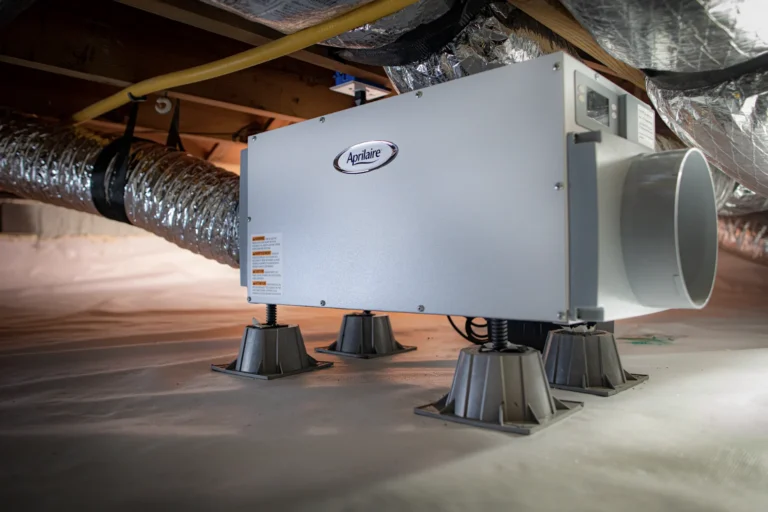 Humidity & Moisture ControlDo You Need a Dehumidifier If You Have Central AC?Many Austin homes don't: a correctly sized, well-maintained central AC in a reasonably tight house usually keeps indoor humidity below 60 percent in summer.…