
 HVAC Systems
 Heating
 Ductwork & Air Flow
 Ventilation
 Filtration
 Dehumidification
 Maintenance
 Mold
Mold Remediation & Restoration
 Pure Maintenance
 Your Home
 Building Science
 Insulation & Envelope
 Health & Safety
Quick answer: Your HVAC system filters particles, removes moisture and moves air through the whole house, so it’s your best tool for indoor air quality. The biggest gains usually come from the right filter changed on schedule, sealed and clean ductwork, humidity control, regular maintenance, and air cleaning add-ons only where they solve a specific problem.
In this guide
- How does your HVAC system affect indoor air quality?
- Which air filter should you use?
- Do your air ducts need attention?
- What indoor humidity should you aim for?
- Are air purifiers and UV lights worth adding?
- How does HVAC maintenance help air quality?
- How can you improve airflow in your home?
- Does the type of HVAC system matter for air quality?
- How do you keep remodeling dust out of your HVAC system?
- What should you do next?
How does your HVAC system affect indoor air quality?
It touches nearly every breath of air in your house. Your HVAC system pulls air in, filters and conditions it, and sends it back out through the ducts. The air handler, blower, ducts and filter work together to do three jobs:
- Capture particles such as dust, pollen and pet dander.
- Remove moisture, which helps limit the damp conditions mold likes.
- Circulate conditioned air evenly so every room stays comfortable.
In Central Texas the AC runs for much of the year, and the ductwork usually lives in an attic that can hit 130°F in August. A well-maintained system goes a long way toward cleaner air, better comfort and longer equipment life.
Which air filter should you use?
Use the best filter your system can handle, and change it on time. The filter is your first line of defense, and it’s the cheapest upgrade on this list.
- Pick the right MERV rating: MERV ratings show how well a filter captures particles; higher numbers catch smaller ones. For many homes, a MERV 8-12 filter balances filtration with airflow, while MERV 13-16 filters catch more fine particles, as long as the system can move air through them.
- Replace on schedule: Filters generally need replacing or cleaning every one to three months, depending on the filter, household size, pets and conditions. A dirty filter chokes airflow and catches less.
- Consider advanced options: Some homes can add a bypass HEPA air cleaner or an electronic air cleaner, both designed to capture finer particles than a standard filter.
Do your air ducts need attention?
Often, yes. Every bit of air in your home travels through the ducts, usually a ductboard plenum with flex runs to each room. Dust and debris can build up inside over time, and leaky ducts in the attic can suck in dusty, hot, humid attic air, which hurts both air quality and efficiency.
- Regular inspections: Look for leaks, disconnected sections, dust buildup or signs of moisture. Sealing ducts keeps attic air out and airflow even.
- Professional cleaning when needed: If ducts have heavy buildup or contamination, professional cleaning can remove it.
What indoor humidity should you aim for?
Aim for roughly 40% to 60%, and around 50% is a good target in an Austin summer. Too much moisture encourages mold and dust mites; very dry air feels uncomfortable and can dry out wood furniture and floors. Around here, too much humidity is by far the more common problem.
- Whole-home dehumidifiers: Many HVAC systems can be paired with a whole-home dehumidifier to help keep indoor humidity roughly between 40% and 60%.
- Longer, steadier run times: Variable-speed and two-stage systems can run longer at lower speeds, which often pulls more moisture out of the air.
Are air purifiers and UV lights worth adding?
They can be, when they target a specific problem. Modern HVAC systems can support three common add-ons:
- UV-C lights: Installed near the coil, they’re designed to help limit mold and bacterial growth on the coil and drain pan.
- Air purifiers: Whole-home purifiers are designed to reduce particles and, depending on the technology, some odors in circulating air.
- Electronic air cleaners: These use an electric charge to capture fine particles that standard filters may miss. Look for products certified for zero ozone output (UL 2998).
How does HVAC maintenance help air quality?
A clean system does a better job cleaning your air. A dirty coil or a slimy drain pan works against everything else on this list. Regular maintenance includes four jobs:
- Changing filters on schedule.
- Cleaning coils, blower parts and drain pans, and clearing the condensate drain line.
- Inspecting and sealing ductwork.
- Checking refrigerant charge and system settings.
Many homeowners schedule professional service twice a year, once before cooling season and once before heating season, to catch problems early and keep the system running as designed.
Gold Eagle does this maintenance, along with dehumidifier and air cleaner installs, as part of our indoor air quality services.
How can you improve airflow in your home?
Start by getting things out of the way. Good airflow spreads conditioned air evenly and prevents stagnant spots where dust and humidity hang around.
Keep supply registers and return grilles clear (the couch doesn’t need to sit on the return), make sure the home has enough return air, and consider zoning for larger or two-story homes so every room gets its share.
Does the type of HVAC system matter for air quality?
Yes, because it changes how much air passes through the filter and how well moisture gets removed:
- Variable-speed systems adjust airflow continuously, which supports steady filtration and humidity control throughout the home.
- Two-stage systems can run longer at a lower stage, which often improves filtration and humidity control compared with single-stage systems.
- Single-stage systems run at full capacity and cycle on and off, so air only passes through the filter while the system is running.
If you’re replacing equipment, note that efficiency is now rated in SEER2, the standard for new AC and heat pump systems since January 1, 2023.
How do you keep remodeling dust out of your HVAC system?
Close off the work area and change the filter as soon as the dusty work ends. Sanding, demolition and painting fill the air with fine dust and fumes, and most central systems recirculate indoor air instead of bringing in fresh air.
During a project, open windows and use a fan to push air out of the work area, and cover nearby return grilles. Then put in a fresh filter right after the dusty work so the ductwork doesn’t spread it through the house.
What should you do next?
- Check your filter now, and set a reminder to look at it every one to three months.
- Put a hygrometer (a small humidity gauge) in your main room and aim for 40% to 60% humidity.
- Move furniture off supply registers and return grilles.
- Book a maintenance visit or call 512-489-4653 to have Gold Eagle check the coil, drain and ducts before cooling season.
Related guides: Decon7 (D7): A Targeted Tool for Indoor Air Quality, Indoor Air Quality Beyond Mold: Dust, VOCs, Filtration and Upkeep and How Indoor Moisture Affects Your Home’s Air.
About Gold Eagle Services: This guide comes from the team at Gold Eagle Services, a family-run Austin HVAC, indoor air quality and mold remediation company founded in 2017. We’re licensed (TACLA119235 and RCO1783), insured and bonded, and we serve homes across the greater Austin area.
Need help with this in your home? Learn about our indoor air quality solutions, or call 512-489-4653 to schedule a visit.
Related: Wondering whether your AC itself puts out anything harmful? Read Do Air Conditioners Emit Harmful Gases?
More in Indoor Air Quality (IAQ)
All 30 guides Indoor Air Quality (IAQ)Do Portable Air Purifiers Help During Austin Allergy Season?A portable HEPA purifier can lower the fine particles floating in one room, such as dust, pet dander and some pollen, if it's sized…
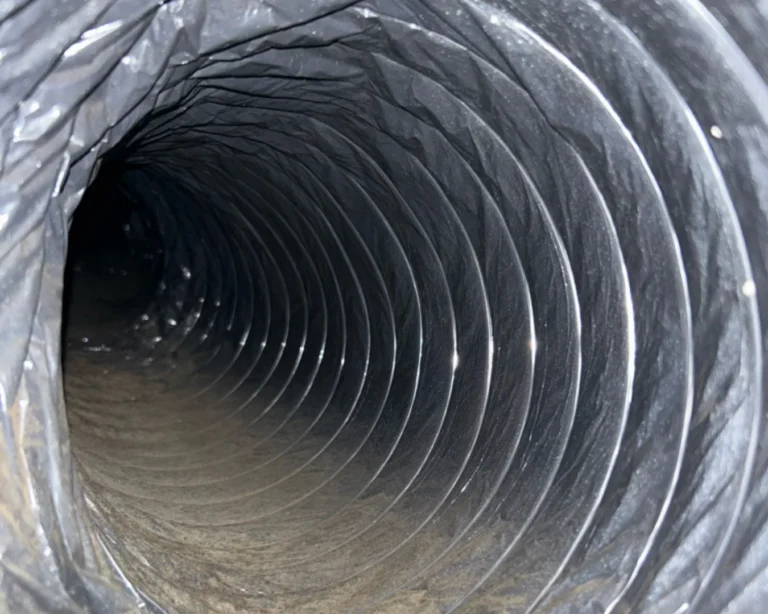 Indoor Air Quality (IAQ)Can a Dirty Air Conditioner Make You Sick?A dirty AC doesn't create germs on its own, but it can recirculate dust and, if the coil, drain pan or ducts stay wet,…
 Indoor Air Quality (IAQ)Moisture From Below: Slab and Pier-and-Beam Homes in Central TexasGround moisture reaches Austin homes two ways: as vapor moving up through concrete slabs, and as humid outdoor air flowing through vented crawlspaces under…