
 HVAC Systems
 Heating
 Ductwork & Air Flow
 Ventilation
 Filtration
 Dehumidification
 Maintenance
 Mold
 Remediation & Restoration
 Pure Maintenance
 Your Home
 Building Science
 Insulation & Envelope
 Health & Safety
 Case Study
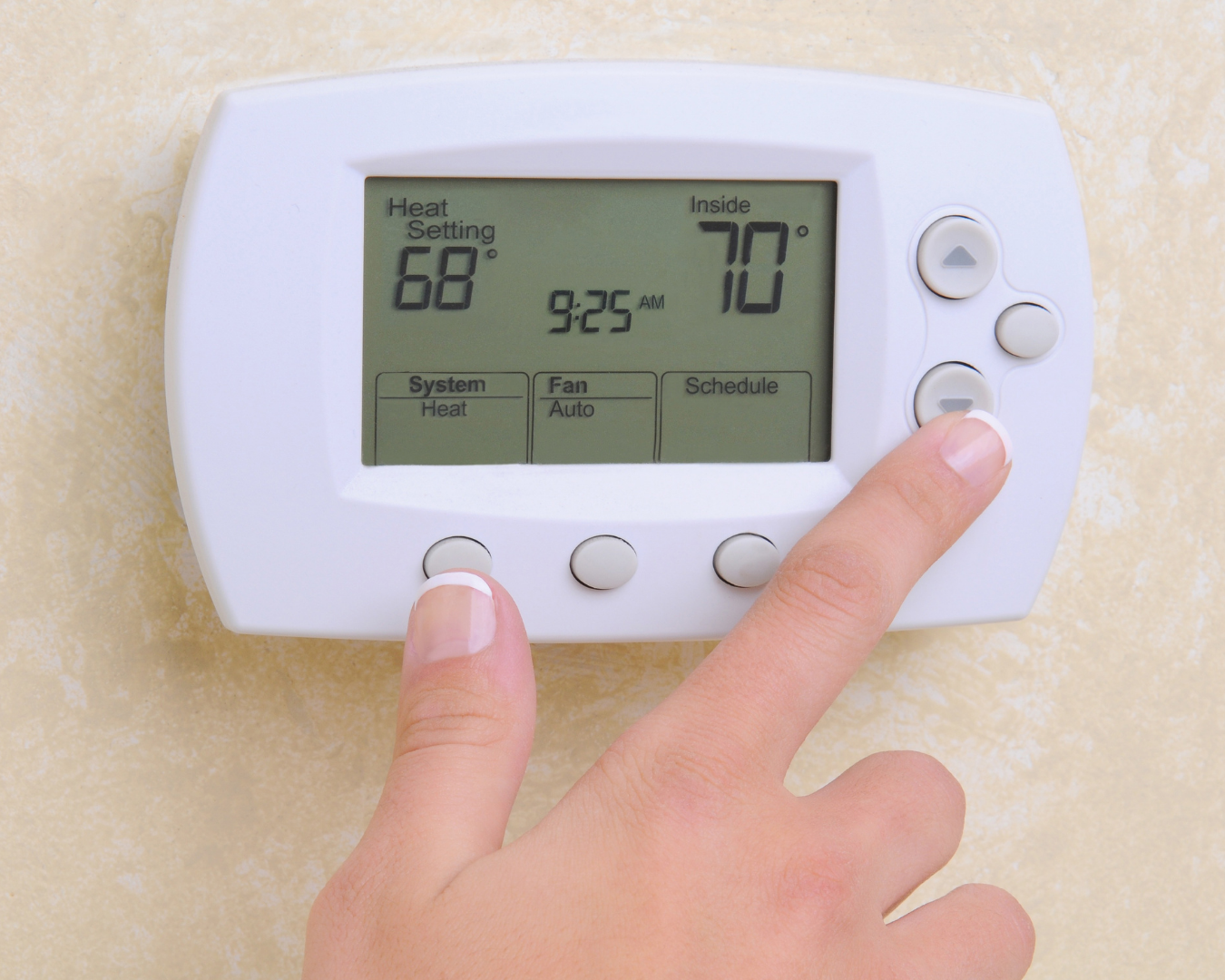
Quick answer: There’s no single right number. Many thermostats aim for about three heating cycles an hour, so each run lasts longer as it gets colder: a few minutes on a mild Austin day, most of the hour on a freezing night. Heat pumps run longer than furnaces. Repeated runs of only a minute or two point to a problem.
In this guide
How long should a heater run each cycle?
Anywhere from a few minutes to most of an hour, depending on how cold it is outside. A normal cycle runs long enough to bring the house back to the temperature you set (the setpoint), then rests. Most thermostats pace this with a cycle rate setting, which caps how many times an hour the heat can start. For heat pumps and high-efficiency furnaces, Honeywell recommends about three cycles per hour, and many other brands land in the same neighborhood.
The math follows from there. If the house needs heat half the time, three cycles an hour works out to roughly 10 minutes on and 10 minutes off. If it needs heat a quarter of the time, the runs get shorter.
You don’t need a stopwatch. Watch the pattern over a whole morning instead.
Why does a heat pump run longer than a furnace?
A heat pump delivers warm air instead of hot air, so it takes longer to raise the temperature. A gas furnace blows air that feels hot at the vent, then shuts off. A heat pump sends a steady stream of air that’s warmer than the room but can feel lukewarm on your hand, and it keeps going.
Variable-speed and two-stage heat pumps, which can run at low power instead of just full blast or off, stretch the runs further. On a 50°F January morning in Austin, a variable-speed unit may run almost all day at low speed. That’s by design, and it’s easier on the equipment than a string of starts and stops.
Does cold weather make the heater run longer?
The colder it gets, the longer each cycle runs. A sunny 65°F afternoon might need a short run or two. A 28°F night can keep a heat pump going nearly nonstop, with its backup heat strips (electric coils that add heat when the heat pump can’t keep up) pitching in.
Both are normal. What matters is whether the house holds the temperature you set.
How do I know if my heater’s run time is a problem?
Three patterns deserve a closer look:
- Very short cycles over and over are one sign. A furnace that runs a minute or two, shuts off and soon restarts is short cycling. Common causes include an oversized furnace (why a bigger furnace isn’t better), a clogged filter that trips a safety switch, or a thermostat near a supply vent or in afternoon sun.
- Nonstop running on a mild day is another sign. A heat pump that runs constantly at 50°F outside, or shows aux heat (the backup heat strips) all the time, often has a refrigerant, airflow or control problem. Brief aux heat during a defrost or right after you raise the setting is normal. See why aux heat stays on.
- Long runs with a cold house are another. A system that runs and runs while the house keeps losing ground isn’t delivering heat, whether from a failing part or a disconnected duct in the attic.
What can I safely check before calling?
Four quick checks are safe to do yourself. Put in a fresh filter, and make sure the thermostat isn’t near a lamp, a supply vent or a sunny window.
Open any closed vents and move furniture off the returns (the large grilles that pull air back to the system). For a heat pump, clear leaves and mulch from around the outdoor unit.
Leave the cycle rate setting alone unless your thermostat’s manual walks you through it, since the right value depends on your equipment. If short cycling continues, Gold Eagle’s heating technicians can check the filter rack, the thermostat setup and, on a furnace, the flame sensor, a small rod that proves the burner lit.
What should I do next?
- Watch the system over one cold morning and note roughly how long each run lasts.
- Check whether the house holds the temperature you set.
- If you see runs of only a minute or two, or aux heat on all day in mild weather, note when it happens.
- If the pattern looks off, book a heating check and share those notes with the technician.
Related guides: Why a Bigger Furnace Isn’t Better: The Case for Dual Fuel, Aux Heat vs. Emergency Heat: What Your Heat Pump Thermostat Is Telling You and Heat Pumps vs. Electric Resistance Heat for Central Texas Homes.
About Gold Eagle Services: This guide comes from the team at Gold Eagle Services, a family-run Austin HVAC, indoor air quality and mold remediation company founded in 2017. We’re licensed (TACLA119235 and RCO1783), insured and bonded, and we serve homes across the greater Austin area.
Need help with this in your home? Learn about our heater repair and tune-ups, or call 512-489-4653 to schedule a visit.
More in Heating
All 52 guides HeatingWhat Is Heat Pump Defrost Mode, and Is the Steam Normal?Yes, the steam is normal. When frost builds on the outdoor coil in cold, damp weather, a heat pump switches into defrost for a…
 HeatingWhat Are Heat Strips, and Why Do They Raise Your Bill on Cold Nights?Heat strips are electric coils in the air handler that back up a heat pump. They turn power straight into heat, one unit of…
 HeatingWhat Temperature Should You Set Your Thermostat to in Winter in Austin?The U.S. Department of Energy suggests 68°F while you're home and awake, and lower while you sleep or are away. Many Austin households settle…