
 HVAC Systems
 Heating
 Ductwork & Air Flow
 Ventilation
 Filtration
 Dehumidification
 Maintenance
 Mold
Mold Remediation & Restoration
 Pure Maintenance
 Your Home
 Building Science
 Insulation & Envelope
 Health & Safety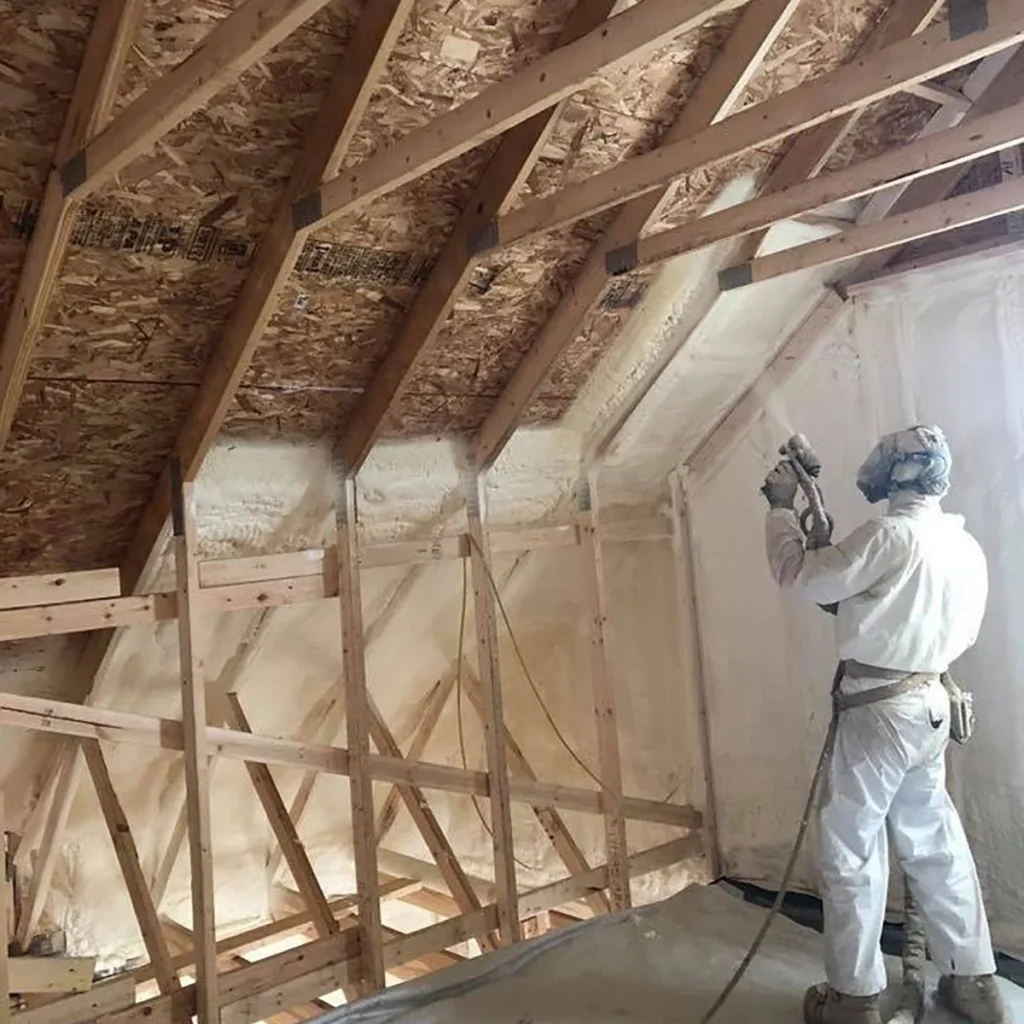
Quick answer: Roof deck spray foam can make a Texas home much more comfortable, but trouble comes from everything around the foam. Open-combustion gas appliances, like 80% AFUE furnaces and standard gas water heaters, can’t safely run in a sealed attic, and a sealed home without humidity control can feel clammy.
In this guide
Spray foam can be one of the best things that ever happened to a Texas home. Spray the roof deck, bring the attic into conditioned space, and your ductwork stops baking in a 140-degree sauna every August.
The upstairs finally feels like the downstairs. The system runs less. It sounds like a no-brainer.
Here’s the catch. We get called into a lot of homes after the foam is on the roof deck and the check has cleared, and the homeowner is wondering why the house feels clammy or why the energy bill barely moved. The foam did its job. Everything around the foam is the problem.
Can a gas furnace or water heater stay in a spray-foamed attic?
Not if it’s an open-combustion appliance. This is the biggest issue, and it’s not a gray area.
An 80% AFUE furnace (AFUE is the share of fuel turned into heat) is an open-combustion appliance, and it’s the standard furnace in most Texas attics. It pulls the air it burns straight from the space it sits in. It exhausts through a B-vent (double-wall metal pipe) or single-wall metal flue that relies on natural draft: hot gases rise and pull the exhaust out, and fresh air gets drawn in to replace it.
The whole arrangement depends on a steady, unrestricted supply of air from the surrounding space.
Spray the roof deck and seal the attic, and you’ve changed that space completely. Air no longer moves freely to and from the outside, and the furnace now competes with the rest of the house for a limited oxygen supply. Two things can go wrong, and both are serious.
First, oxygen depletion. The furnace starves for combustion air, the flame burns incompletely, and carbon monoxide production goes up sharply.
Second, backdrafting. A tight house creates negative pressure zones, especially when exhaust fans run or the blower kicks on. That naturally drafting flue, designed for a leaky house with plenty of makeup air, can reverse and push combustion gases back into the living space.
The water heater has the same problem, and it falls through the cracks constantly. A standard atmospheric or power-vent gas water heater is the same kind of appliance: open combustion, dependent on the surrounding air, with the same oxygen and backdrafting risks.
Because water heaters aren’t part of the HVAC conversation, they routinely get overlooked when the spray foam and HVAC contractors talk through the job. Nobody claims the problem, and the homeowner doesn’t know to ask.
A third hazard is about heat, not air. The metal flue pipe on an 80% furnace runs hot, especially the single-wall connector section closest to the appliance. Code requires clearance to combustibles for exactly that reason: typically 6 inches for single-wall connector pipe and 1 inch for B-vent.
Spray foam applied directly against that pipe wipes out the clearance. It also wraps a hot pipe in an insulating blanket, so the pipe runs hotter because it can’t shed heat. And once the pipe is buried in foam, nobody can inspect it or spot a failing joint. That flue pipe can’t just be foamed around.
The fix for all of this is the same: sealed combustion. That means a 90%+ furnace that pipes its own combustion air in from outside through PVC and exhausts through a sealed PVC flue, completely isolated from your house air. Pair it with a direct-vent water heater set up the same way, or a sealed-combustion tankless unit.
These appliances don’t care how tight your house is, because they never touch your house air. In most jurisdictions this isn’t just best practice when combustion equipment sits in a sealed space. It’s code.
If a spray foam contractor walked your attic, saw a gas furnace and water heater, and didn’t bring this up, that’s a red flag.
Does spray foam make your AC oversized, and what about the ducts?
Often, yes. When you sharply cut your home’s heat load, the existing system can end up too big for it, and the ducts need attention before the foam goes on. The sizing part rarely makes it into the spray foam sales pitch.
Equipment sizing comes from a calculation of how much heat the house gains in summer and loses in winter, based on square footage, window area, insulation and air leakage. Your system was sized for the old version of your house. Spray foam on the roof deck changes those inputs a lot.
An oversized air conditioner short-cycles. It hits the thermostat setting fast, shuts off, and never runs long enough to do the other half of its job: pulling moisture out of the air. In Central Texas, where moisture makes up a big share of the summer cooling load, that matters.
A short-cycling oversized system leaves you with a house that’s 74 degrees and 65% relative humidity. Technically cooled, genuinely miserable. Homeowners feel it and assume the foam didn’t work. The foam worked fine. The equipment is now wrong for the house.
This is also where duct leakage stops being a simple energy problem and becomes a moisture problem. Many people assume leaks stop mattering once the attic is sealed: if the ducts leak into an attic that’s now conditioned, what’s the harm? The harm is moisture, and in a sealed roof-deck attic, moisture has few places to go.
Supply ducts run cold. When warm, humid air hits those cold duct surfaces, it condenses. That air can come from a poorly sealed opening, a bath fan that doesn’t vent outside, or plain leakage in spring and fall. Repeat that over a Texas summer and you’ve built a slow-motion moisture trap inside your sealed attic, with very little ability to dry out.
On top of that, any ductwork resting on the roof deck or framing when the foam crew arrives gets buried in foam. The leaky joints get locked in permanently, and you lose all access. The contact point also creates a thermal bridge, a weak spot where heat moves straight through, right where the duct is coldest.
Ducts need to be strapped and hung off the deck before the foam goes on. Then the joints stay reachable, and you’re not entombing a problem you can’t fix later.
The right sequence: test the ducts, seal the ducts, strap them off the deck, then foam. After that, run a new Manual J load calculation to find out whether your equipment is still the right size for the house you now have. In our climate, a whole-home dehumidifier often becomes part of the answer too.
Why is retrofit spray foam harder than new construction?
An existing house comes with years of decisions the foam has to work around. New construction is cleaner: the insulation contractor works on a blank canvas, and the mechanical systems are designed around the sealed attic from day one.
Retrofit foam on an existing roof deck means dealing with open-combustion appliances, ductwork with unknown leak rates, bath fans that may or may not vent outside, recessed lights, attic hatches and plumbing holes. Every one of those details has to be resolved before the foam goes on, or the performance you paid for leaks right back out, sometimes literally.
Doing it right means replacing open-combustion furnaces and water heaters with sealed-combustion units, and testing, sealing and strapping the ductwork. It means confirming every exhaust fan vents outdoors, rechecking equipment sizing, and in most cases adding mechanical ventilation, because a house that tight needs controlled fresh air.
That’s not a knock on spray foam. That’s just what the job actually is. Gold Eagle installs sealed-combustion furnaces, heat pumps and dual-fuel systems, and our Build Your System tool lets you compare those options for your home before you talk to anyone.
Add all of that up and the economics look very different from the insulation bid alone. That doesn’t mean it isn’t worth doing. But anyone who hands you a roof deck foam quote without that conversation is selling you the easy part and leaving you to figure out the rest.
If you really want spray foam, the cleanest path is buying a house that was designed for it from the get-go.
What should you do before adding spray foam?
Treat it as a whole-home project, not an insulation job. We’re not anti-spray-foam. Planned correctly, with the whole system designed around it, it really does change what an HVAC system can do in this climate. But the insulation, the HVAC equipment, the gas appliances and the fresh-air plan all have to move together.
Before you sign anything, sit down with your insulation contractor and your HVAC contractor together, not separately, and ask:
- What happens to every gas combustion appliance in the home?
- What happens to my equipment sizing?
- How will the ductwork be handled before the foam goes on?
- How will the house breathe afterward?
The foam is the easy part. Getting everything else right is where the job actually lives.
What should you do next?
- Go into the attic and note whether your furnace and water heater have a metal flue (open combustion) or PVC pipes (sealed combustion).
- Write down the age and size of your AC so the post-foam Manual J has something to compare against.
- Get the ducts tested, sealed and strapped off the roof deck before the foam crew is scheduled.
- Book a visit or call 512-489-4653 to have Gold Eagle walk the attic with you before you sign a foam quote.
Related guides: Spray Foam Insulation: Benefits, Drawbacks, and What to Consider Before You Install, A Homeowner’s Guide to Buying a Home with Spray Foam Insulation and Differences Between Types of Insulation.
About Gold Eagle Services: This guide comes from the team at Gold Eagle Services, a family-run Austin HVAC, indoor air quality and mold remediation company founded in 2017. We’re licensed (TACLA119235 and RCO1783), insured and bonded, and we serve homes across the greater Austin area.
Need help with this in your home? Learn about our indoor air quality solutions, or call 512-489-4653 to schedule a visit.
Related Gold Eagle service: Attic insulation
More in Insulation & Envelope
All 21 guides Insulation & EnvelopeLeaky Ducts: How They Pull Attic Air and Dust Into Your HomeThe return side of your duct system runs under suction, so any leak in a return duct, filter grille or air handler cabinet in…
 Insulation & EnvelopeWhere Your Home Leaks Air: Central Texas Air Sealing PrioritiesIn most Central Texas homes, the biggest air leaks aren't windows and doors but hidden openings in the attic and ductwork. Sealing between the…
 Insulation & EnvelopeWhat R-Value Attic Insulation Do You Need in Austin?R-value measures how well insulation resists heat flow: the higher the number, the better it insulates. In Austin, the current building code minimum for…