
 HVAC Systems
 Heating
 Ductwork & Air Flow
 Ventilation
 Filtration
 Dehumidification
 Maintenance
 Mold
Mold Remediation & Restoration
 Pure Maintenance
 Your Home
 Building Science
 Insulation & Envelope
 Health & Safety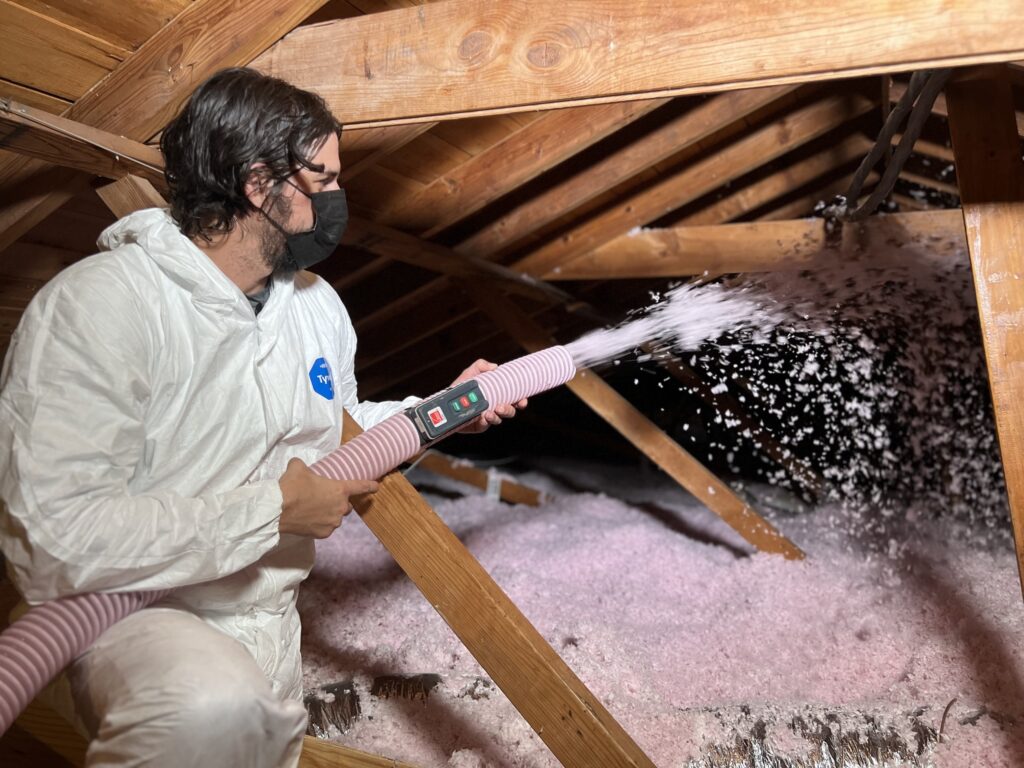
Quick answer: The three most common attic insulation choices are blown-in fiberglass, blown-in cellulose and spray foam. Each trades off cost, R-value per inch, air sealing and how it handles moisture. The best choice depends on your attic, your HVAC setup and your budget.
In this guide
What are the main types of attic insulation?
For most Austin homes it comes down to three: blown-in fiberglass, cellulose or spray foam. Your pick shapes energy use, comfort and indoor air quality (IAQ), which is simply how clean and dry the air inside your house stays.
As an Owens Corning partner, Gold Eagle Services installs Owens Corning ProCat® blown-in fiberglass. Every material here still has its place, and knowing the trade-offs lets you choose with your eyes open.
How does fiberglass compare to cellulose?
Both work well when they’re blown in to the right depth. They are the two most common loose-fill attic materials, and they differ in what they’re made of, how they settle and how they react to water.
| Aspect | Owens Corning ProCat® Blown-in Fiberglass | Cellulose Insulation |
| R-Value Stability | Owens Corning designs ProCat to resist settling so it holds its installed R-value. It is backed by a manufacturer warranty – ask us for the details. | Settles somewhat after installation; installers typically blow in extra depth so the settled insulation still meets the target R-value. |
| Moisture Resistance and Air Quality | Glass fibers are inorganic and don’t absorb much water. Insulation that gets wet from a roof or duct leak should still be dried or replaced. | Made largely from recycled paper and treated with borates for fire and pest resistance. It can absorb water if there’s a leak, so leaks should be fixed quickly and wet material replaced. |
| Installation Process | Blown in with a machine. Crews use protective gear and keep the work contained to the attic. | Blown in with a machine; can be dusty during installation, so containment and cleanup matter. Also commonly used as dense-pack insulation in walls. |
Why choose fiberglass?
Because it’s stable and simple. Owens Corning ProCat® is designed to resist settling, so the R-value you pay for on install day is the R-value you keep. It’s backed by a manufacturer warranty; ask us for the details.
Glass fibers also shrug off most water. That makes fiberglass a practical fit for an attic, where a small roof drip or a sweating duct shouldn’t turn your insulation into a wet blanket.
Why choose cellulose?
For recycled content and dense-pack wall jobs. Cellulose is made largely from recycled paper, which appeals to many homeowners, and installers use it both in attics and packed tightly into wall cavities.
It does settle after installation, so a good installer blows in extra depth to allow for it. Like any insulation, keep it dry: fix roof or duct leaks promptly and replace any material that gets soaked.
How does fiberglass compare to spray foam?
They differ in cost, installation and how they change the way your attic works. Fiberglass insulates the attic floor and leaves the attic vented; spray foam seals the roof deck and brings the attic inside the house.
| Aspect | Owens Corning ProCat® Blown-in Fiberglass | Spray Foam Insulation |
| R-Value Stability | Moderate R-value per inch. Higher R-values are reached by adding depth, which is straightforward in most open attics. Backed by a manufacturer warranty – ask us for the details. | High R-value per inch, especially closed-cell foam. Performance depends on correct thickness and quality installation. |
| Moisture Resistance and Air Quality | Doesn’t stop air movement on its own, so air sealing the attic floor first is important. Works in a vented attic, where the attic itself stays outside the conditioned space. | Acts as an air barrier. Applied to the roof deck, it creates a sealed (unvented) attic, which usually calls for an HVAC design that manages humidity and fresh air. |
| Installation Process | Loose fiberglass is blown over the attic floor; most attics can be done quickly with little disruption. | Two components are mixed and sprayed on site by trained crews. Manufacturers specify ventilation and how long occupants should stay out while it cures. |
| Cost Efficiency | Typically a lower upfront cost for insulating an attic floor. | Typically a higher upfront cost. Because it can bring ducts inside the conditioned space, some homeowners find the added cost worthwhile. |
When is spray foam worth the higher upfront cost?
When you want a sealed attic with the ducts inside the conditioned space. Spray foam pairs air sealing with a high R-value per inch. Sprayed on the underside of the roof deck, it turns the attic into part of the house.
That matters in Central Texas. Most homes here have the air handler and ductboard plenum in the attic, which can top 130°F in August, and ducts in that heat lose a lot of the cooling you paid for.
The trade-offs are a higher upfront cost and a tighter house, which needs an HVAC design that handles humidity and fresh air. Trained crews also have to follow the manufacturer’s curing and ventilation instructions.
Blown-in fiberglass keeps the traditional vented attic. It usually costs less up front, and with the attic floor air-sealed and the ducts sealed and insulated, it performs well in many homes.
Which insulation is right for your home?
It depends on your attic and your plans. For many Austin homes with a vented attic, Owens Corning ProCat® blown-in fiberglass installed to R-49 or higher (Austin’s current code minimum for attics) is the cost-effective choice.
Spray foam makes more sense if you’re planning a sealed attic or a major HVAC redesign. Cellulose remains a solid option, and many experienced installers swear by it.
Not sure which camp you’re in? Gold Eagle Services can look at your attic, ductwork and HVAC system together and walk you through what fits your home; schedule a visit online.
What should you do next?
- Check your insulation depth from the attic hatch, and note any thin or uneven spots.
- Look for stained or wet insulation under roof or duct leaks, and fix the leaks first.
- Decide whether you’ll keep a vented attic or plan a sealed attic or HVAC redesign.
- Book a visit or call 512-489-4653 so we can look at your attic, ductwork and HVAC system together.
Related guides: Choosing the Right Insulation Level for Your Climate (R-Value), How Insulation Helps Control Noise in Your Home and How Insulation Affects Indoor Comfort Levels.
About Gold Eagle Services: This guide comes from the team at Gold Eagle Services, a family-run Austin HVAC, indoor air quality and mold remediation company founded in 2017. We’re licensed (TACLA119235 and RCO1783), insured and bonded, and we serve homes across the greater Austin area.
Need help with this in your home? Learn about our HVAC and home performance services, or call 512-489-4653 to schedule a visit.
Related Gold Eagle service: Attic insulation
More in Insulation & Envelope
All 21 guides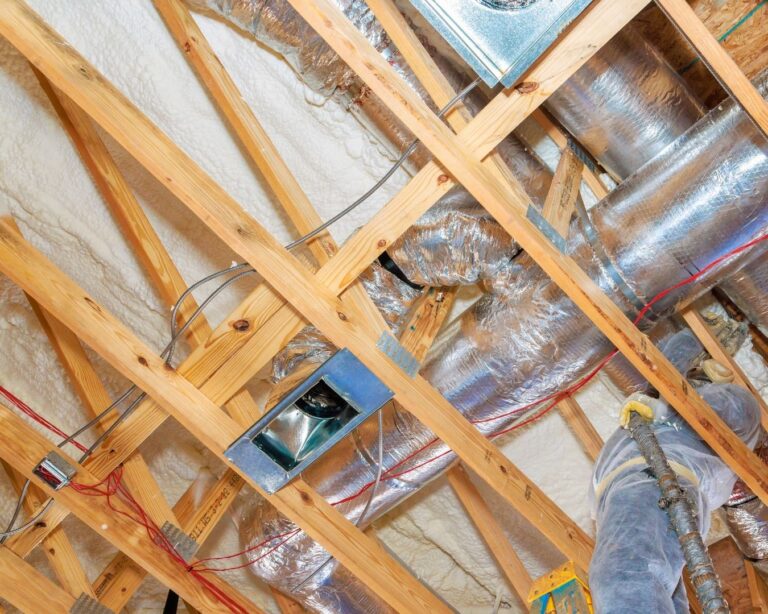 Insulation & EnvelopeLeaky Ducts: How They Pull Attic Air and Dust Into Your HomeThe return side of your duct system runs under suction, so any leak in a return duct, filter grille or air handler cabinet in…
 Insulation & EnvelopeWhere Your Home Leaks Air: Central Texas Air Sealing PrioritiesIn most Central Texas homes, the biggest air leaks aren't windows and doors but hidden openings in the attic and ductwork. Sealing between the…
 Insulation & EnvelopeWhat R-Value Attic Insulation Do You Need in Austin?R-value measures how well insulation resists heat flow: the higher the number, the better it insulates. In Austin, the current building code minimum for…