
 HVAC Systems
 Heating
 Ductwork & Air Flow
 Ventilation
 Filtration
 Dehumidification
 Maintenance
 Mold
Mold Remediation & Restoration
 Pure Maintenance
 Your Home
 Building Science
 Insulation & Envelope
 Health & Safety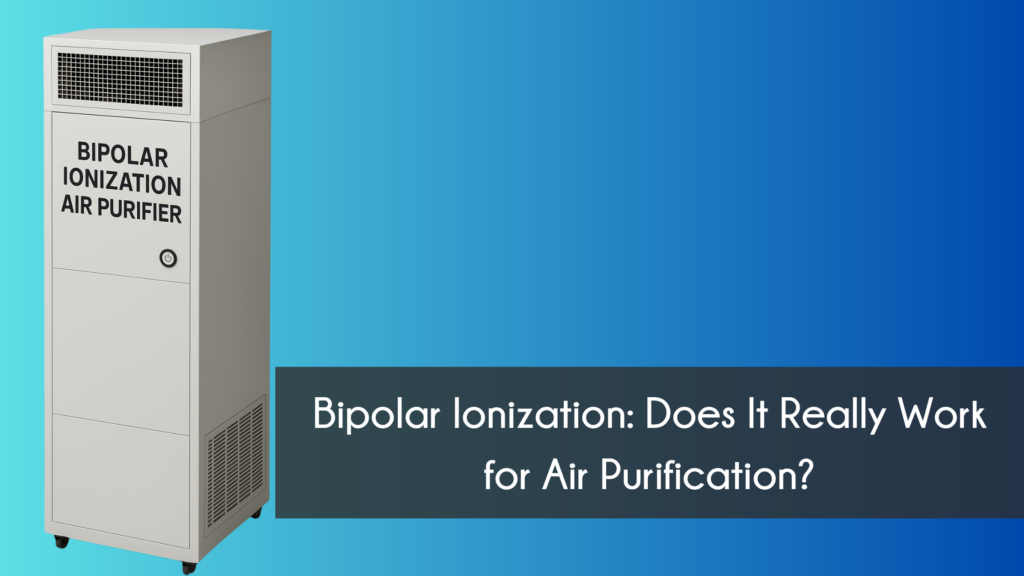
Quick answer: HEPA filtration traps particles, UV-C light limits microbial growth on surfaces like the AC coil, activated carbon soaks up odors and some gases, and bipolar ionization adds ions to the air to help particles clump so your filter can catch them. For most homes, start with good filtration and humidity control, then add other methods for specific problems.
In this guide
How do the main air purification methods compare?
They each solve a different problem, so the useful question isn’t which one is “best” but which one fits your problem. Bipolar ionization gets the most buzz, and it’s easier to judge once you see it next to the familiar options. (Our guide to bipolar needlepoint ionization covers how it works and the research debate in more depth.)
How does HEPA filtration work?
HEPA filtration works like a very fine net: it physically traps particles as air passes through.
- How it works: A dense filter catches particles in its fibers. By the common U.S. definition, a HEPA filter captures at least 99.97% of particles 0.3 microns in size.
- Strengths: Well understood, with measurable performance on dust, pollen, pet dander and other particles. It adds nothing to the air.
- Limits: It doesn’t catch gases or odors. It also restricts airflow too much to sit directly in most home HVAC systems, so it lives in bypass units attached to the ductwork or in portable room purifiers.
- Upkeep: Filters need periodic replacement.
What does a UV-C light do in an HVAC system?
A UV-C light keeps the AC coil and drain pan cleaner by limiting microbial growth on the surfaces it shines on.
- How it works: UV-C light damages the genetic material of microorganisms. In homes it’s usually mounted in the air handler, often up in the attic, and aimed at the evaporator coil (the cold coil that pulls heat and moisture from the air).
- Strengths: Steady, low-effort help for a coil that stays wet through a long Austin cooling season.
- Limits: It doesn’t capture particles or remove gases. Air zips past the lamp too quickly for it to treat airborne contaminants in any meaningful way.
- Upkeep: Bulbs lose output over time and need periodic replacement.
What does activated carbon remove?
Activated carbon removes many odors and some gases that filters and UV-C lights can’t touch.
- How it works: Porous carbon adsorbs (holds on its surface) many odor-causing compounds and some volatile organic compounds (VOCs).
- Strengths: It’s one of the few practical tools aimed at odors and gases rather than particles.
- Limits: Once the carbon is full, it stops working, like a sponge that can’t take another drop. The thin carbon layer in a standard filter holds much less than thicker carbon media.
- Upkeep: Carbon media needs regular replacement.
How does bipolar ionization compare?
Bipolar ionization treats the air as it circulates instead of trapping anything itself, and its real-world results are more debated than the other three.
- How it works: A device in the ductwork or air handler releases positive and negative ions into the airstream. The ions are designed to attach to particles so they clump together and are easier for the filter to catch. Manufacturers also say ions can act on some odors and microorganisms.
- Strengths: It usually needs little maintenance and has little effect on airflow.
- Limits: Some independent studies have questioned its real-world performance and raised concerns about possible byproducts. It also relies on your filter to catch what it clumps.
- What to look for: UL 2998 certification, which verifies no measurable ozone output.
Which air purification method is right for your home?
Name the problem first, then match the method to it:
- Dust, pollen and pet dander: Upgrade to the best filter your system can handle, then consider bypass HEPA filtration.
- Odors, smoke smell or chemical smells: Deal with the source and ventilation first, then look at activated carbon.
- Musty smell from the system or a dirty coil: Check humidity and the condensate drain, then consider a coil UV-C light.
- Whole-home air treatment on top of filtration: Ionization or a combination purifier may be an option; choose a UL 2998 certified product and keep expectations realistic.
Three questions narrow it down. Can your system handle a denser filter without losing airflow? Is indoor humidity under control (40-60%, ideally near 50%)? How much upkeep will you actually keep up with?
In Central Texas, where the AC runs much of the year, getting humidity and filtration right usually does more than any single add-on.
Gold Eagle’s indoor air quality team installs whole-home filtration and air purification, and we’ll help you match the method to the problem, including telling you when an add-on isn’t needed.
What should you do next?
- Name your problem first: dust and dander, odors, a musty system or whole-home treatment on top of filtration.
- Start with the best filter your system can handle, keep indoor humidity in check, and stay on top of maintenance.
- Add HEPA, carbon, UV-C or ionization only where it solves a real problem, and choose UL 2998 certified products.
- Book a Gold Eagle visit if you’d like a straight answer on which option fits your home.
Related guides: Air Purification Systems: Choosing the Right One for Your Home, Bipolar Needlepoint Ionization: What It Is and What to Know and Dust Free Air Purification: Active Gold, LightStick Gold and Bypass HEPA.
About Gold Eagle Services: This guide comes from the team at Gold Eagle Services, a family-run Austin HVAC, indoor air quality and mold remediation company founded in 2017. We’re licensed (TACLA119235 and RCO1783), insured and bonded, and we serve homes across the greater Austin area.
Need help with this in your home? Learn about our indoor air quality solutions, or call 512-489-4653 to schedule a visit.
More in Indoor Air Quality (IAQ)
All 30 guides Indoor Air Quality (IAQ)Do Portable Air Purifiers Help During Austin Allergy Season?A portable HEPA purifier can lower the fine particles floating in one room, such as dust, pet dander and some pollen, if it's sized…
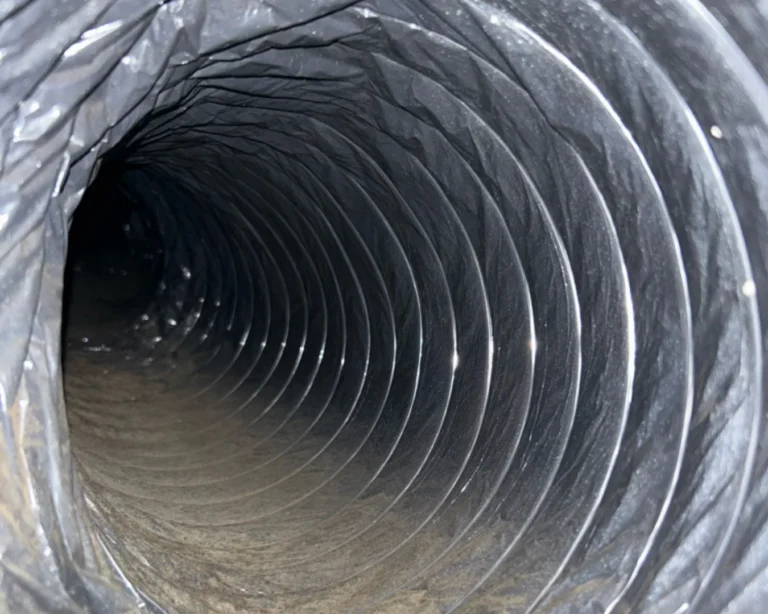 Indoor Air Quality (IAQ)Can a Dirty Air Conditioner Make You Sick?A dirty AC doesn't create germs on its own, but it can recirculate dust and, if the coil, drain pan or ducts stay wet,…
 Indoor Air Quality (IAQ)Moisture From Below: Slab and Pier-and-Beam Homes in Central TexasGround moisture reaches Austin homes two ways: as vapor moving up through concrete slabs, and as humid outdoor air flowing through vented crawlspaces under…