
 HVAC Systems
 Heating
 Ductwork & Air Flow
 Ventilation
 Filtration
 Dehumidification
 Maintenance
 Mold
 Remediation & Restoration
 Pure Maintenance
 Your Home
 Building Science
 Insulation & Envelope
 Health & Safety
 Case Study

Quick answer: The U.S. Department of Energy suggests 68°F while you’re home and awake, and lower while you sleep or are away. Many Austin households settle at 68-70°F. If you have a heat pump, keep nighttime drops small, just a few degrees, so the backup heat strips don’t kick on to catch up in the morning.
In this guide
Is 68 degrees warm enough in an Austin winter?
For most people, yes, with a sweater and socks. The Department of Energy’s 68°F is a starting point for balancing comfort against your bill, not a rule.
Austin winters are mild most days, so the heat often runs only mornings and evenings, and plenty of households settle between 68 and 70. If 68 feels cold even with the heat running normally, suspect cold windows, drafts or thin attic insulation before the thermostat. That’s a different fix.
Should I turn the heat down at night in winter?
Yes with a gas furnace; only a little with a heat pump. The Department of Energy says turning your thermostat back 7-10°F for 8 hours a day can save as much as 10% a year on heating and cooling. That works well with a gas furnace, which reheats the house at the same cost per degree whether the setback was two degrees or ten.
A heat pump plays by different rules. Drop it 8 degrees overnight, and when the morning schedule starts, the thermostat sees a big gap and calls for backup heat, which in most Austin heat pump homes means electric heat strips. Strips turn electricity straight into heat, like a toaster, without the heat pump’s efficiency boost, so one big morning recovery can eat the night’s savings. With a heat pump, a setback of 2-4 degrees is usually the better deal.
Not sure which you have? Step outside while the heat runs on a cool morning. If the outdoor unit is running with its fan spinning, you have a heat pump. If it sits still and you hear burners light in the attic or closet, it’s a gas furnace.
How to tell if you have a heat pump or a furnace has more clues, including what to look for on the thermostat and the equipment labels.
Why shouldn’t I turn a heat pump down much at night?
Because a heat pump is cheapest when it runs long and steady. It moves heat instead of making it. In mild weather it delivers roughly two to three times as much heat as the electricity it uses. It also loses capacity as the temperature drops, so on a 30°F night it may be working hard just to hold the setting. Ask it to climb several degrees on top of that, and the strips step in.
Many newer thermostats have a smart or adaptive recovery setting (the name varies by brand) that starts warming the house early and slowly, on the heat pump alone. If yours has it, turn it on. Aux heat vs. emergency heat explains what the thermostat is telling you when the backup kicks in.
What should I set the thermostat to when I leave for the holidays?
Leave the heat on, set no lower than about 55°F. You’re protecting the water pipes in attics, garages and outside walls, and a Texas cold snap can arrive while you’re at the in-laws’.
If a night is forecast to drop well below freezing, keep the house closer to normal and open the cabinet doors under sinks on outside walls. What to set your thermostat to when you’re away covers longer trips and summer settings too.
Does turning the thermostat way up heat the house faster?
No. A higher number doesn’t make a furnace blow hotter air; it just runs longer and overshoots. With a heat pump, cranking the setting backfires, because a big jump is exactly what calls in the heat strips. Set the temperature you want and let it get there.
Three more settings deserve a look:
- Fan on AUTO: a fan running nonstop in winter pushes air past cool attic ducts and can make vents feel drafty. Fan ON or AUTO explains the tradeoffs.
- Emergency Heat off: this setting runs the house on strips alone, so save it for when the outdoor unit has failed.
- Heat, not Auto, on cold days: Auto can switch to cooling on a sunny 75°F January afternoon, then back to heat at night. If you want that, set the gap between the two settings wide enough that the system isn’t flipping back and forth.
If the heat strips kick on every morning or the house still won’t hold 68, Gold Eagle’s technicians check heat pumps and furnaces across the Austin area; see our heating services.
What should you do next?
- Find out whether you have a heat pump or a gas furnace by watching the outdoor unit on a cool morning.
- With a heat pump, keep night setbacks to 2-4 degrees and turn on smart or adaptive recovery if your thermostat has it.
- Leave the fan on AUTO and Emergency Heat off.
- Before a trip, set the heat no lower than about 55°F, and book a heating tune-up if the system seems to struggle.
Related guides: What Should You Set Your Thermostat to When You’re Away?, Aux Heat vs. Emergency Heat: What Your Heat Pump Thermostat Is Telling You and What Is a Heat Pump’s Balance Point, and Why Does It Matter in Central Texas?.
About Gold Eagle Services: This guide comes from the team at Gold Eagle Services, a family-run Austin HVAC, indoor air quality and mold remediation company founded in 2017. We’re licensed (TACLA119235 and RCO1783), insured and bonded, and we serve homes across the greater Austin area.
Need help with this in your home? Learn about our heating repair and tune-ups, or call 512-489-4653 to schedule a visit.
More in Tips & Tricks
All 33 guides Tips & TricksWhy Does Your Furnace Turn On and Off Every Few Minutes?A furnace that runs a few minutes, shuts off and starts again soon after is short cycling. The usual causes are a furnace that's…
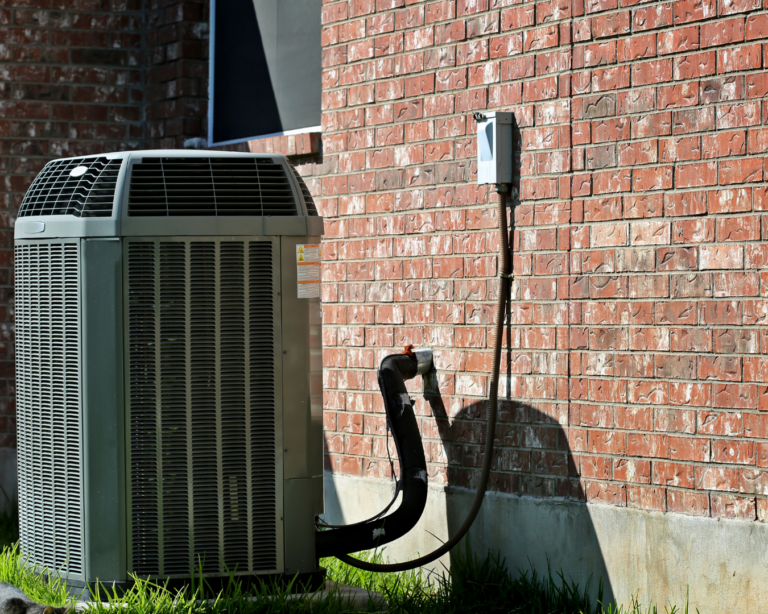 Tips & TricksWhat Are Heat Strips, and Why Do They Raise Your Bill on Cold Nights?Heat strips are electric coils in the air handler that back up a heat pump. They turn power straight into heat, one unit of…
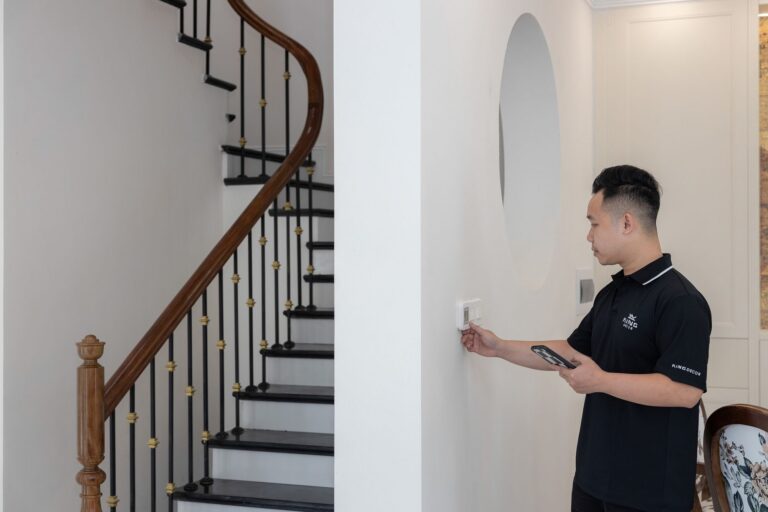 Tips & TricksWhere Should Your Thermostat Be Located?Put a thermostat on an inside wall about 5 feet off the floor, where air moves normally and the temperature matches the rooms you…