
 HVAC Systems
 Heating
 Ductwork & Air Flow
 Ventilation
 Filtration
 Dehumidification
 Maintenance
 Mold
 Remediation & Restoration
 Pure Maintenance
 Your Home
 Building Science
 Insulation & Envelope
 Health & Safety
 Case Study
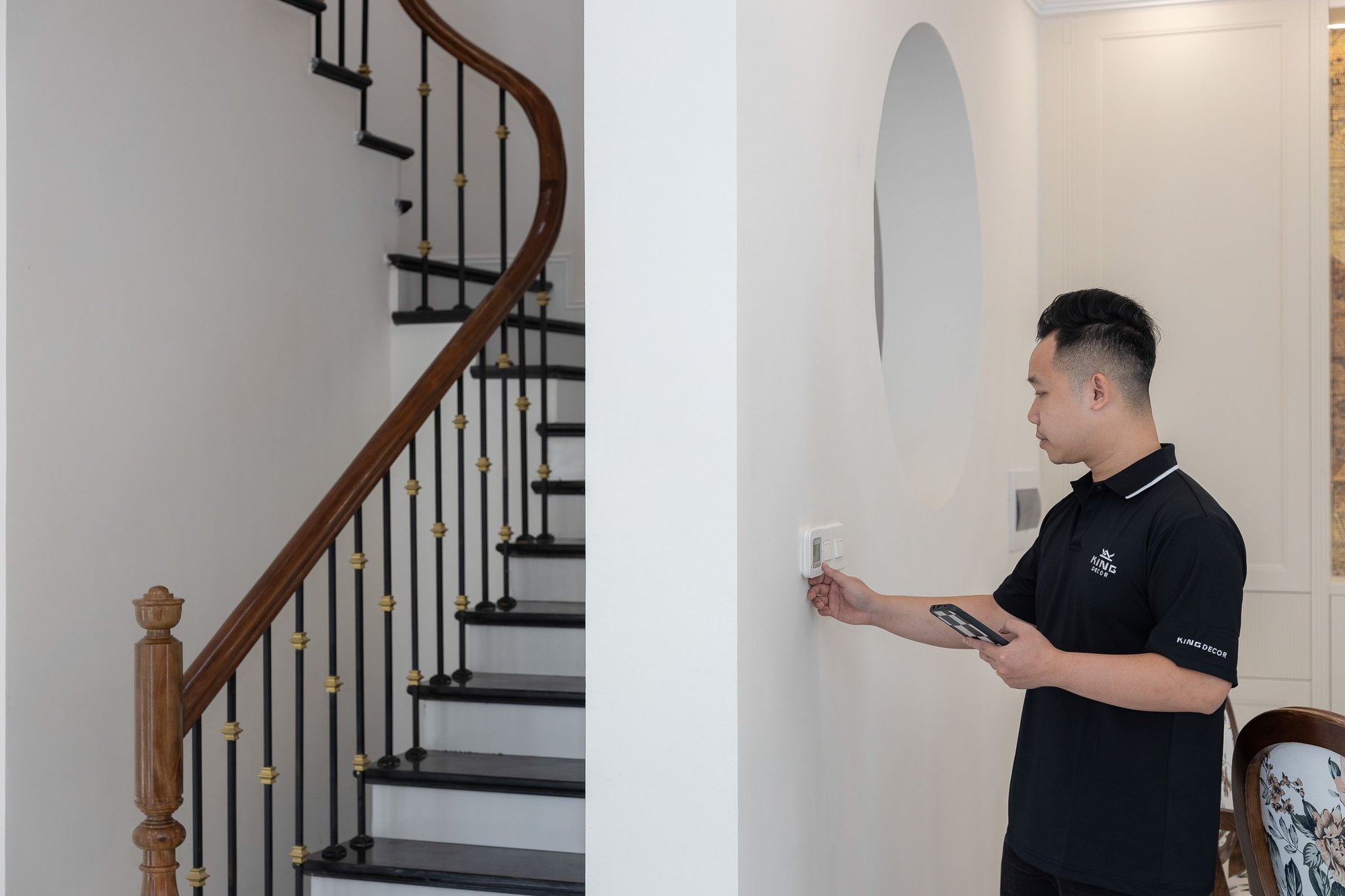
Quick answer: Put a thermostat on an inside wall about 5 feet off the floor, where air moves normally and the temperature matches the rooms you use. Keep it out of direct sun and away from supply vents, outside doors, the kitchen and other heat sources. A thermostat in a bad spot runs the whole house on bad information.
In this guide
Does thermostat location really matter?
Yes, a lot. A thermostat knows only the air right around it. If afternoon sun from a west window lands on it, it thinks the house is hotter than it is and keeps the AC running while everyone else reaches for a sweater. If a supply vent blows on it, it cools off first, shuts the system down early and leaves the rest of the house warm.
Either way, the thermostat is doing its job perfectly on the wrong information.
Where should you not put a thermostat?
Installation guides from thermostat makers such as Honeywell Home (Resideo) call for about 5 feet above the floor on an inside wall with good air circulation, away from drafts, dead-air spots and direct sun. In practice, that rules out:
- Any wall that gets direct sun. In Austin, west-facing walls near windows are the classic offender.
- Spots near or in line with supply registers, the vents that blow air.
- Outside walls, which warm up on summer afternoons and cool down on winter nights.
- Spots behind doors or furniture, or in a dead-air corner.
- Walls next to the kitchen, a lamp, a TV or other heat sources.
- Spots close to an exterior door, including the door to the garage.
Can air from the wall mess up a thermostat reading?
Yes. The thermostat wire comes through a hole in the wall, and in most slab homes it drops down from the attic, so the hollow space inside that wall connects to the attic. In summer, the hole can breathe hot attic air right onto the sensor. Technicians often plug it when they install or check a thermostat, so ask about it if your readings seem off.
How can you tell if your thermostat is reading wrong?
Put an inexpensive thermometer in the room you use most and compare it with the thermostat over a few days. Look for a pattern: the system shutting off early when sun hits the hallway, or readings that jump when a door opens. If one room is always the outlier instead, the cause more likely lies in that room, covered in why one room is hotter than the rest.
Can a thermostat be moved to a better spot?
Yes, but it means running new thermostat wire through the walls and patching the old spot, so it’s a job for a technician. Try the easier fixes first. Many smart thermostats accept remote room sensors that can average several rooms or favor the bedroom at night, as described in whether a smart thermostat is worth it. A window shade or a relocated lamp can also solve it without a service call. If those don’t do it, Gold Eagle’s technicians move thermostats and seal the wall hole behind them in homes across the Austin area; see our AC service.
What should you do next?
- Check whether sun, a supply vent or a lamp reaches the thermostat.
- Compare it with a thermometer in your main room for a few days.
- Shade the window or move the lamp if that’s the cause.
- Book a visit to seal the wall hole or move the thermostat if it still reads wrong.
Related guides: Smart Thermostats: Are They Worth It?, Why Is One Room Hotter Than the Rest of the House? and What Should You Set Your Thermostat to When You’re Away?
About Gold Eagle Services: This guide comes from the team at Gold Eagle Services, a family-run Austin HVAC, indoor air quality and mold remediation company founded in 2017. We’re licensed (TACLA119235 and RCO1783), insured and bonded, and we serve homes across the greater Austin area.
Need help with this in your home? Learn about our air conditioning repair and installation, or call 512-489-4653 to schedule a visit.
Related Gold Eagle service: AC repair in Austin
More in Tips & Tricks
All 33 guides Tips & TricksWhy Does Your Furnace Turn On and Off Every Few Minutes?A furnace that runs a few minutes, shuts off and starts again soon after is short cycling. The usual causes are a furnace that's…
 Tips & TricksWhat Are Heat Strips, and Why Do They Raise Your Bill on Cold Nights?Heat strips are electric coils in the air handler that back up a heat pump. They turn power straight into heat, one unit of…
 Tips & TricksWhat Temperature Should You Set Your Thermostat to in Winter in Austin?The U.S. Department of Energy suggests 68°F while you're home and awake, and lower while you sleep or are away. Many Austin households settle…