
 HVAC Systems
 Heating
 Ductwork & Air Flow
 Ventilation
 Filtration
 Dehumidification
 Maintenance
 Mold
 Remediation & Restoration
 Pure Maintenance
 Your Home
 Building Science
 Insulation & Envelope
 Health & Safety
 Case Study
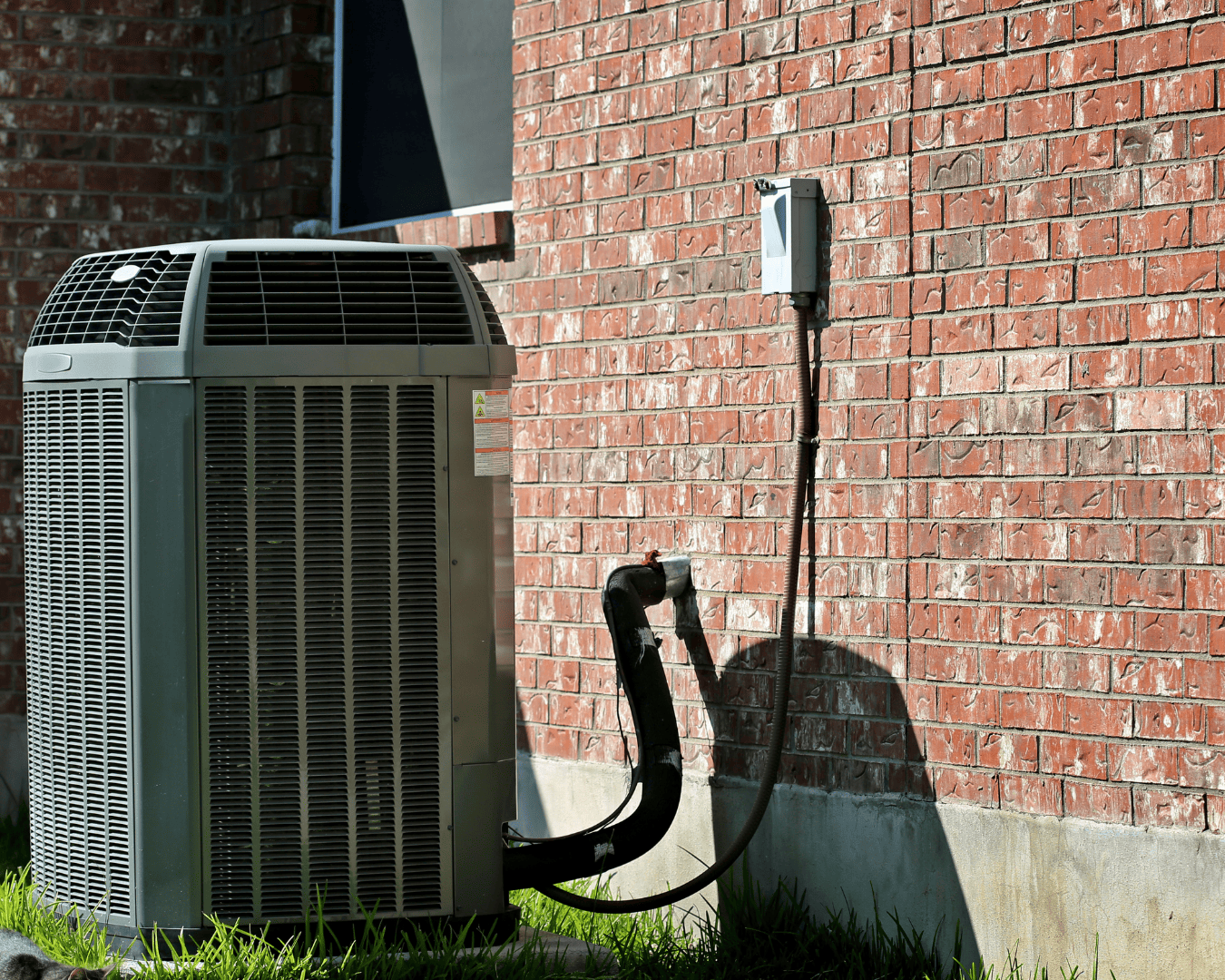
Quick answer: A heat pump’s balance point is the outdoor temperature where its heat output just matches the heat your house loses. Above it, the heat pump handles the load alone; below it, backup heat has to help. In Central Texas most winter hours sit above that point, so backup heat should run only on the coldest nights.
In this guide
What is a heat pump balance point?
It’s the temperature where two lines cross. As the weather cools, a heat pump’s output drops, because the outdoor air holds less heat to move. Meanwhile the house loses heat faster.
At some outdoor temperature, the heat pump’s output equals the house’s heat loss. That’s the balance point. Above it, the heat pump holds your thermostat setting by itself. Below it, the house needs backup heat, usually electric heat strips or a gas furnace.
No single number fits every home. A tight, well-insulated house with a well-matched heat pump has a lower balance point than a leaky house with the same equipment. For many standard heat pumps in average homes it lands somewhere around freezing, give or take several degrees.
Is the balance point the same as the dual fuel switchover point?
Not quite. The balance point above, sometimes called the thermal balance point, is about heat. A dual fuel system (a heat pump paired with a gas furnace) also has a changeover point, where the control hands heating from the heat pump to the furnace. That setting can rest on the thermal balance point, on what gas and electricity cost you, or on both.
The case for dual fuel explains how that changeover is chosen deliberately for each house.
Why does the balance point matter in Central Texas?
Because our winters are mostly mild, with a few hard freezes. A typical Austin winter brings lots of 40s and 50s and only a handful of nights in the 20s. Heat pumps here are usually sized for summer cooling, which often leaves them plenty of heating capacity on the milder days.
In plain terms: the heat pump carries most of the heating season alone, with backup heat pitching in only on the coldest nights. The lower your balance point, the fewer hours of backup heat you pay for.
Heat strips turn electricity into heat one-for-one, like a toaster, so they cost more to run than the heat pump. Heat pumps vs. electric resistance heat lays out the difference.
Why does my heat pump use aux heat on mild days?
Often because of lockout settings you never see. Many thermostats and control boards let the installer set lockouts, which are cutoff temperatures: outdoor temperatures above which the heat strips stay off, or, on some systems, below which the heat pump stays off. These need an outdoor temperature sensor.
Set them wrong and you get aux heat on a 50°F afternoon, or a house that lags on a cold night. If aux heat seems to run all the time, aux heat vs. emergency heat walks through the causes.
How do I lower my heat pump’s balance point?
Work on the house, the equipment, or both. Start with the house, since some of it you can check yourself: cut its heat loss, and the heat pump carries the load down to colder temperatures.
- Air seal the attic floor and other big leaks. Where your home leaks air lists the priorities.
- Bring attic insulation up to current levels.
- Seal and insulate attic ducts so the heat you pay for reaches the rooms.
Or raise the heat pump’s cold-weather output. Variable-speed and cold-climate heat pumps keep more of their heating power as it gets colder. That’s a job for a contractor, and Gold Eagle’s heat pump team installs and services them across the Austin area. Either way, a contractor should size a new system with a Manual J load calculation, a room-by-room tally of heat gain and loss. It’s the only way to know where your balance point will land.
What should I do next?
- Watch the thermostat on a mild afternoon. If “Aux” shows up in the 50s, the cutoff settings may need a look.
- On a cool day, look in the attic (with a flashlight, stepping only on joists or walkways) for gaps in insulation and loose or torn ducts.
- Ask for a Manual J load calculation if you’re replacing the system.
- Book a visit to have the heat strip and heat pump lockout temperatures checked.
Related guides: Why a Bigger Furnace Isn’t Better: The Case for Dual Fuel, Aux Heat vs. Emergency Heat: What Your Heat Pump Thermostat Is Telling You and Heat Pumps vs. Electric Resistance Heat for Central Texas Homes.
About Gold Eagle Services: This guide comes from the team at Gold Eagle Services, a family-run Austin HVAC, indoor air quality and mold remediation company founded in 2017. We’re licensed (TACLA119235 and RCO1783), insured and bonded, and we serve homes across the greater Austin area.
Need help with this in your home? Learn about our heat pump repair and installation, or call 512-489-4653 to schedule a visit.
Related Gold Eagle service: Heating service
More in Heating
All 52 guides HeatingWhat Is Heat Pump Defrost Mode, and Is the Steam Normal?Yes, the steam is normal. When frost builds on the outdoor coil in cold, damp weather, a heat pump switches into defrost for a…
 HeatingWhat Are Heat Strips, and Why Do They Raise Your Bill on Cold Nights?Heat strips are electric coils in the air handler that back up a heat pump. They turn power straight into heat, one unit of…
 HeatingWhat Temperature Should You Set Your Thermostat to in Winter in Austin?The U.S. Department of Energy suggests 68°F while you're home and awake, and lower while you sleep or are away. Many Austin households settle…