
 HVAC Systems
 Heating
 Ductwork & Air Flow
 Ventilation
 Filtration
 Dehumidification
 Maintenance
 Mold
 Remediation & Restoration
 Pure Maintenance
 Your Home
 Building Science
 Insulation & Envelope
 Health & Safety
Quick answer: Turn the heat on and look outside. If the outdoor unit runs while the house is heating, you have a heat pump. If it sits quiet and the indoor unit has a gas pipe and a vent pipe, you have a gas furnace. An “Em Heat” or “Aux” setting on the thermostat is another strong hint of a heat pump.
In this guide
Should my outdoor unit run when the heat is on?
Only with a heat pump. That’s the quickest test. Set the thermostat to Heat a few degrees above room temperature and wait several minutes. A heat pump’s outdoor unit hums and its fan spins, because that’s where it gathers heat.
A plain air conditioner sits idle all winter while the furnace does the heating alone. On a cold, damp day you might even catch a heat pump in defrost (a few minutes of melting ice off its coil), with steam rolling off the top. That’s normal, not smoke.
How can I tell by looking at the indoor unit?
Look, but don’t open anything. The indoor unit usually lives in the attic, a hall closet or the garage.
- A gas furnace has a black or yellow gas pipe with a shutoff valve running into it, plus a vent pipe: metal on standard furnaces, white plastic on high-efficiency ones.
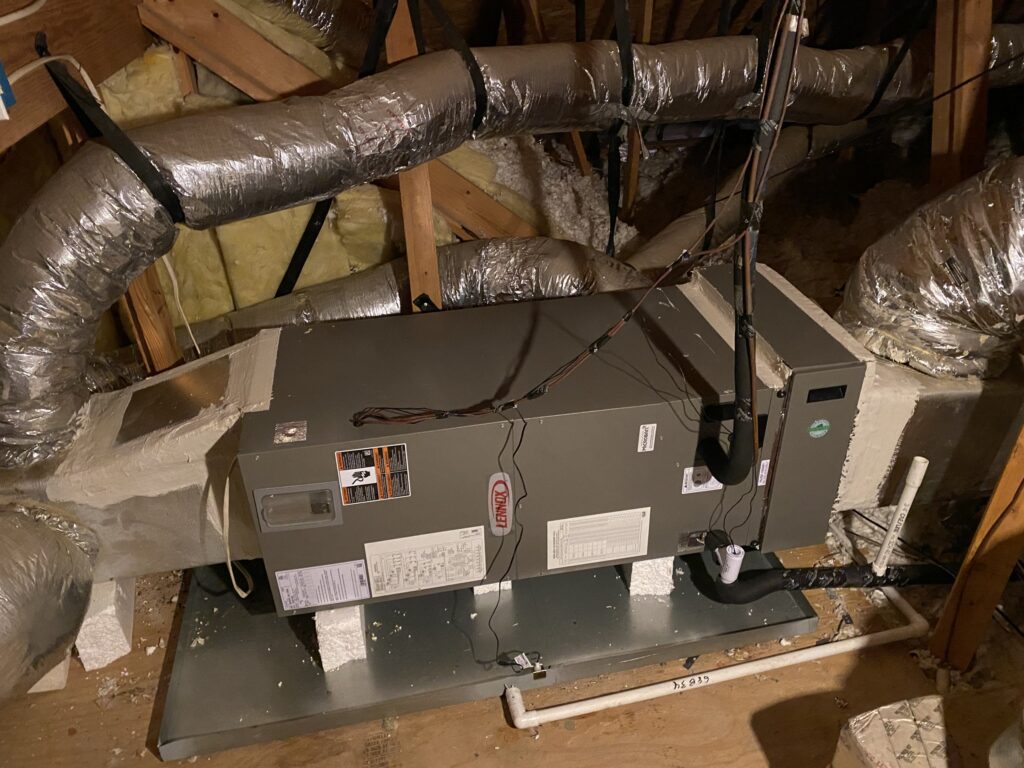
- An air handler (an all-electric cabinet with a fan and coil) has no gas pipe and no vent. It has copper refrigerant lines, a drain line, a thick electrical cable and ductwork. Air handlers pair with heat pumps, or with an AC plus electric heat strips (coils that glow hot, like a toaster’s).
If you go into the attic, walk only on the plywood decking or the wood joists.
Can my thermostat tell me if I have a heat pump?
Often, yes. Settings like “Em Heat,” “Emergency Heat” or an “Aux” indicator mean the thermostat is set up for a heat pump with backup heat. A thermostat with only Heat, Cool and Off could run either, since many models tuck the heat pump settings into the installer menu. Aux heat vs. emergency heat explains what those settings do.
Does the label on my unit say heat pump?
Often, yes, on the outdoor unit. Check the data plate, the rating label on the side of the outdoor unit; many heat pumps say “heat pump” right there or on the cabinet. If yours doesn’t, search the model number on the manufacturer’s website.
The same trick works indoors. The indoor unit’s label is usually on the side or near the front panel.
What if I have a heat pump and a furnace?
Then you probably have dual fuel: a heat pump outside, and a gas furnace that takes over when it gets very cold. You’ll see the outdoor unit running in heat mode and a gas pipe and vent at the indoor unit. The case for dual fuel explains how the two share the work.
Why does it matter which one I have?
Because the advice is different. Heat pump owners should understand defrost, aux heat and emergency heat. Gas furnace owners need carbon monoxide alarms, a yearly safety check of the burners and venting, and a plan for what to do if they ever smell gas: don’t flip switches, leave the house first, then call 911 and the gas company from outside.
Knowing your system also helps you describe a problem when you call. Gold Eagle’s technicians service heat pumps, furnaces and dual fuel systems across the Austin area, and can confirm which one you have during a heating tune-up. If you’re weighing a change down the road, heat pump vs. gas furnace vs. dual fuel compares the options for Central Texas.
What should you do next?
- On the next cool day, set the thermostat to Heat and watch whether the outdoor unit runs.
- Look at the indoor unit for a gas pipe and a vent pipe, without opening anything.
- Test your carbon monoxide alarms if you have a gas furnace.
- Write down which system you have, and book a heating check before cold weather.
Related guides: Heat Pump vs. Gas Furnace vs. Dual Fuel in Central Texas, Aux Heat vs. Emergency Heat: What Your Heat Pump Thermostat Is Telling You and The Different Types of HVAC Systems Explained.
About Gold Eagle Services: This guide comes from the team at Gold Eagle Services, a family-run Austin HVAC, indoor air quality and mold remediation company founded in 2017. We’re licensed (TACLA119235 and RCO1783), insured and bonded, and we serve homes across the greater Austin area.
Need help with this in your home? Learn about our heater repair and tune-ups, or call 512-489-4653 to schedule a visit.
More in Tips & Tricks
All 26 guides Tips & TricksWhy Does a Room Smell Like Sewer? Dry Drain Traps and Your AC DrainA sewer smell in one room is most often a dry drain trap: the water seal in a little-used sink, shower or floor drain…
 Tips & TricksDoes Your Kitchen Range Hood Really Matter for Indoor Air?Yes. Cooking is one of the biggest daily sources of moisture, grease, smoke and odors in a home, and gas burners add combustion gases…
 Tips & TricksShould You Run Ceiling Fans in Winter, and Which Direction?Yes. In winter, run a ceiling fan on low, turning clockwise as you look up at it. That gentle updraft pushes warm air from…