
 HVAC Systems
 Heating
 Ductwork & Air Flow
 Ventilation
 Filtration
 Dehumidification
 Maintenance
 Mold
Mold Remediation & Restoration
 Pure Maintenance
 Your Home
 Building Science
 Insulation & Envelope
 Health & Safety
Quick answer: Allergy season in Austin rarely takes a break: cedar pollen peaks in winter, oak and grass in spring, ragweed in fall, and mold spores show up whenever it’s warm and damp. That pollen follows you inside through doors, windows, clothes and leaky ducts, so closed windows and a good, well-fitted HVAC filter help keep more of it out of your indoor air.
In this guide
Why are allergies so bad in Austin right now?
Because something is almost always blooming. Central Texas has a long growing season and a lineup of heavy pollen producers that take turns: mountain cedar in the winter, oak and grasses in spring, ragweed in the fall, and mold spores through much of the year.
If this week feels worse than usual, you’re not imagining it: pollen counts can jump fast on a dry, windy day. Whether your symptoms come from pollen or something else, and how to treat them, is a question for your doctor. We’ll stick to the house.
What pollen and allergens are common in Austin?
The usual suspects are cedar, oak, grasses, ragweed and mold spores. Here’s roughly when each one shows up:
- Mountain cedar (Ashe juniper): usually December through February, the season locals call cedar fever.
- Oak: spring, when the new leaves come in and cars and patios get a yellow-green coat.
- Grasses: spring into early summer, as lawns and roadsides go to seed.
- Ragweed: fall, once the heat finally breaks.
- Mold spores: much of the year, especially after rain and in humid weather.
How does pollen get inside your home?
Mostly through open windows and doors, on clothes, shoes and pets, and through your HVAC system. If the filter is thin, dirty or loose in its slot, pollen slips past it. Leaky return ducts in the attic can also pull in unfiltered attic air.
Once pollen is inside, it settles on floors and furniture, and every walk across the rug stirs it back up.
Why do allergy mornings feel worse in Austin?
Pollen tends to run highest early in the day, roughly 6am to 10am, which is why many Austinites say mornings are the rough part. Before you throw the windows open on a nice morning, check our live Austin air quality and pollen index to see today’s conditions.
How can you reduce allergens indoors?
Start with five easy wins:
- Keep windows and doors closed during peak pollen times and on dry, windy days.
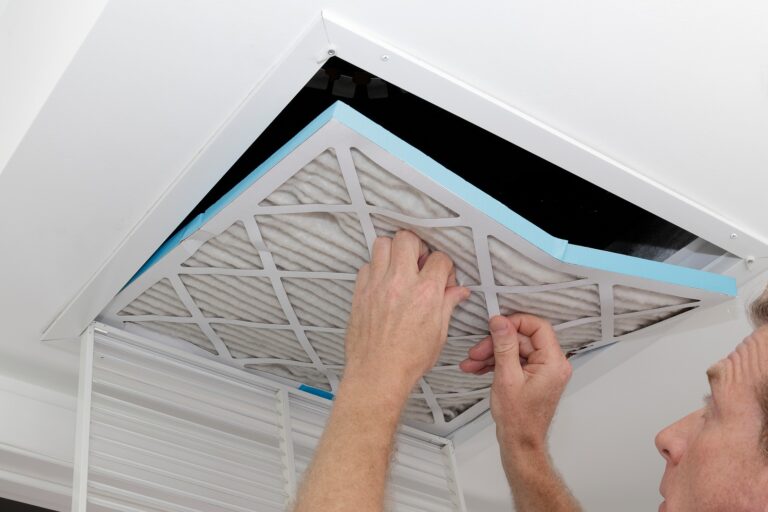
- Change HVAC filters regularly. Check monthly during heavy pollen seasons and replace the filter when it looks gray or dusty.
- Run your HVAC fan in the cooler months so more indoor air passes through the filter. In summer, leave it on AUTO, since a fan left ON can blow moisture off the wet coil back into the house.
- Make sure the filter fits. A gap around the edges lets air go around it instead of through it.
- Bring in professional air quality help, like better filtration, duct cleaning or a whole-home air purifier, if the basics aren’t enough.
When should you get a professional air quality check?
When you’ve done the basics and the house still seems dusty or stuffy. A technician can check filter fit, return leaks and airflow, and tell you which fixes are worth it. Gold Eagle does these air quality checks in homes across Austin.
What should you do next?
- Check today’s pollen levels before you open the windows.
- Pull your filter: make sure it fits without gaps, and replace it if it looks gray or dusty.
- Keep windows and doors closed on dry, windy days.
- If the house still seems dusty or stuffy, book an air quality check with Gold Eagle or call 512-489-4653.
Related guides: Cedar Fever: What Austin Residents Need to Know, What Are MERV Ratings, and How Do They Affect IAQ? and Indoor Air Quality Buyer’s Guide: Protect Your Nest in Austin.
About Gold Eagle Services: This guide comes from the team at Gold Eagle Services, a family-run Austin HVAC, indoor air quality and mold remediation company founded in 2017. We’re licensed (TACLA119235 and RCO1783), insured and bonded, and we serve homes across the greater Austin area.
Need help with this in your home? Learn about our indoor air quality solutions, or call 512-489-4653 to schedule a visit.
More in Filtration
All 8 guides FiltrationDo Portable Air Purifiers Help During Austin Allergy Season?A portable HEPA purifier can lower the fine particles floating in one room, such as dust, pet dander and some pollen, if it's sized…
 FiltrationShould You Run Your HVAC Fan on ON or AUTO?For most Austin homes, AUTO is the better fan setting in cooling season. On AUTO, water on the cold AC coil drains away after…
 FiltrationHow Often Should You Change Your AC Filter in Central Texas?Check a standard 1-inch filter every month and change it when it looks gray and dusty, which in a Central Texas summer often means…