
 HVAC Systems
 Heating
 Ductwork & Air Flow
 Ventilation
 Filtration
 Dehumidification
 Maintenance
 Mold
 Remediation & Restoration
 Your Home
 Building Science
 Insulation & Envelope
 Health & Safety
 Case Study

Quick answer: In your first week in a new-to-you home, find the air handler and outdoor unit, put in a fresh filter of the right size, learn the thermostat, check the AC drain line and make sure CO alarms work if anything runs on gas. Then find the system’s age and book a tune-up before a full Austin summer.
In this guide
- Where is the air handler, and why find it on day one?
- What size air filter does the house take?
- What thermostat setting and humidity should you aim for?
- Where does the AC drain line go?
- Do you need carbon monoxide alarms?
- How can you tell how old the HVAC system is?
- Should you get the ducts cleaned before you move in?
- What should you do next?
Where is the air handler, and why find it on day one?
Because everything else on this list starts there. The air handler is the indoor half of your system: the cabinet with the blower, the cooling coil and, in many homes, a gas furnace or electric heat strips. In Central Texas it’s usually in the attic, sometimes in a hallway closet or the garage.
While you’re finding it, note a few things:
- The service switch. There’s usually a light-switch-style disconnect on or near the unit, plus a breaker in the electrical panel. Know both.
- The outdoor unit. Check that it’s level, has a couple of feet of clear space around it and isn’t buried in shrubs.
- The attic path. If the unit is up a pull-down ladder, look for a solid walkway and a light. A technician will need both, and so will you when you change a filter at the unit.
What size air filter does the house take?
The size is printed on the edge of the filter that’s in there now, something like 16x25x1. Filters sit either in a return grille in a ceiling or wall, or in a slot at the air handler. Some homes have more than one return, and each one needs a filter, so look around before you buy.
Put in a new one on day one. You have no idea when the last owner changed it. Write the date on the frame, check it monthly and plan on changing a standard 1-inch filter every one to three months, sooner with pets or during a remodel. A pleated filter in the MERV 8 to 11 range suits most home systems.
What thermostat setting and humidity should you aim for?
Aim for about 78°F in summer and indoor humidity near 50%. First, read what’s on the wall: the modes, the fan setting and any schedule the last owner left programmed. If the system is a heat pump, learn what “aux heat” and “emergency heat” mean before the first cold snap, because emergency heat left on by mistake can make for a painful electric bill.
The 78°F figure is the Department of Energy’s suggested summer starting point. Fan on AUTO usually removes more moisture than fan on ON.
Pick up an inexpensive digital hygrometer (a small humidity gauge) at the hardware store. Indoor humidity in the 40-60% range is the target, and around 50% is a good summer goal in Austin. A house that sits at 60-65% with the AC running is telling you something about the equipment, the ducts or the house itself.
Where does the AC drain line go?
Every AC pulls water out of the air, and that water drains away through a small PVC pipe called the condensate line. Find where yours ends: often outside near the foundation, sometimes into a plumbing drain. On a hot afternoon with the AC running, it should drip steadily.
If the air handler is in the attic, look under it for a secondary drain pan and a small float switch that shuts the AC off if water backs up. A pan with standing water, rust or old water stains on the ceiling below means the drain has clogged before. Our guide on how to clear a clogged AC drain line shows what homeowners can safely do.
Do you need carbon monoxide alarms?
Yes, if the home has a gas furnace, gas water heater, gas range, gas dryer, fireplace or an attached garage. CO has no smell, and an alarm is the only way you’ll know it’s there. Put one on each sleeping level and near bedrooms, and follow the maker’s directions for placement. Test every smoke and CO alarm and replace any that are past their expiration date, which is printed on the back.
Our guide on where CO detectors go in a home with a gas furnace covers placement in more detail.
How can you tell how old the HVAC system is?
Look at the data plate (the metal label with the model and serial numbers) on the outdoor unit and the air handler. The manufacture date is often printed on it or coded into the serial number, and a technician can decode it quickly. Central Texas ACs commonly last around 10-15 years, because they work hard for most of the year. A system in that range isn’t doomed, but it’s worth knowing before you budget for the house.
Then look for a history:
- Service stickers on the air handler or outdoor unit with dates
- Receipts or records from the seller
- The HVAC section of your home inspection report
- The refrigerant type on the data plate. R-22, which is no longer produced, marks an older system, and refrigerant repairs get harder and costlier.
If there’s no record at all, assume it hasn’t been serviced lately and book a Gold Eagle tune-up. A technician checks refrigerant charge, electrical parts, the coil, the blower and the drain, and gives you a straight, no-pressure read on what you bought.
Should you get the ducts cleaned before you move in?
Not automatically. Duct cleaning makes sense when there’s a reason: dust and debris you can see inside the supply vents, construction or renovation dust, signs of pests, heavy odors left by the previous owners or a history of water damage. In those cases, the week before the furniture arrives is the easiest time to do it.
Most Austin homes have a fiberglass ductboard plenum in the attic with flex duct running to each room. While you’re up there, look for flex runs that are crushed, kinked, disconnected or lying in the insulation with tears. Those are repair items, and they matter more for comfort than any cleaning. If you do need cleaning, here’s what our air duct cleaning service includes.
What should you do next?
- This week: find the air handler and shutoffs, change the filter, test smoke and CO alarms, and find the drain line.
- This month: get a hygrometer, learn the thermostat and look over the attic ducts.
- Before the first full summer or winter: book a Gold Eagle tune-up and start a simple service record for the house.
Related guides: What’s Included in an HVAC Tune-Up?, How Long Does an AC Last in Central Texas? and Aux Heat vs. Emergency Heat: What Your Heat Pump Thermostat Is Telling You.
About Gold Eagle Services: This guide comes from the team at Gold Eagle Services, a family-run Austin HVAC, indoor air quality and mold remediation company founded in 2017. We’re licensed (TACLA119235 and RCO1783), insured and bonded, and we serve homes across the greater Austin area.
Need help with this in your home? Learn about our maintenance plans, or call 512-489-4653 to schedule a visit.
Related Gold Eagle service: Indoor air quality services
More in Health & Safety
All 25 guides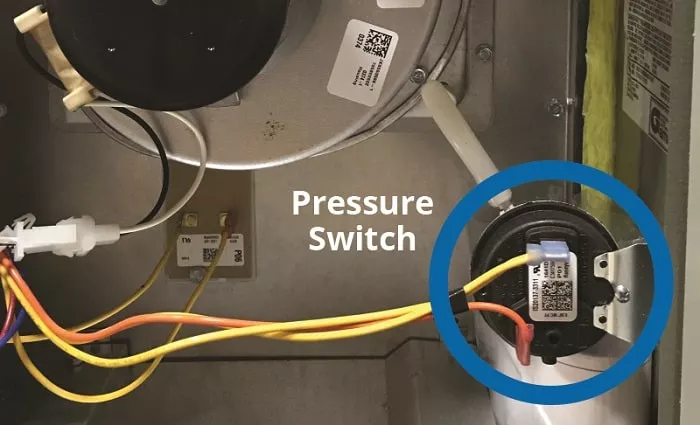 Health & SafetyWhat Is a Furnace Pressure Switch, and Why Won’t the Furnace Start?A pressure switch proves the furnace's exhaust is venting safely before the burners can light. If the small inducer motor runs but the burners…
 Health & SafetyWhat Is a Furnace Limit Switch, and Why Does It Shut Off the Heat?A limit switch is a heat sensor that shuts off a furnace's burners if the furnace gets too hot. It usually trips because airflow…
 Health & SafetyWhat Is a Furnace Flame Sensor, and Why Does a Dirty One Shut Off the Heat?A flame sensor is a thin metal rod in the burner flame that tells the furnace's control board the gas really lit. When residue…