
 HVAC Systems
 Heating
 Ductwork & Air Flow
 Ventilation
 Filtration
 Dehumidification
 Maintenance
 Mold
 Remediation & Restoration
 Your Home
 Building Science
 Insulation & Envelope
 Health & Safety
 Case Study
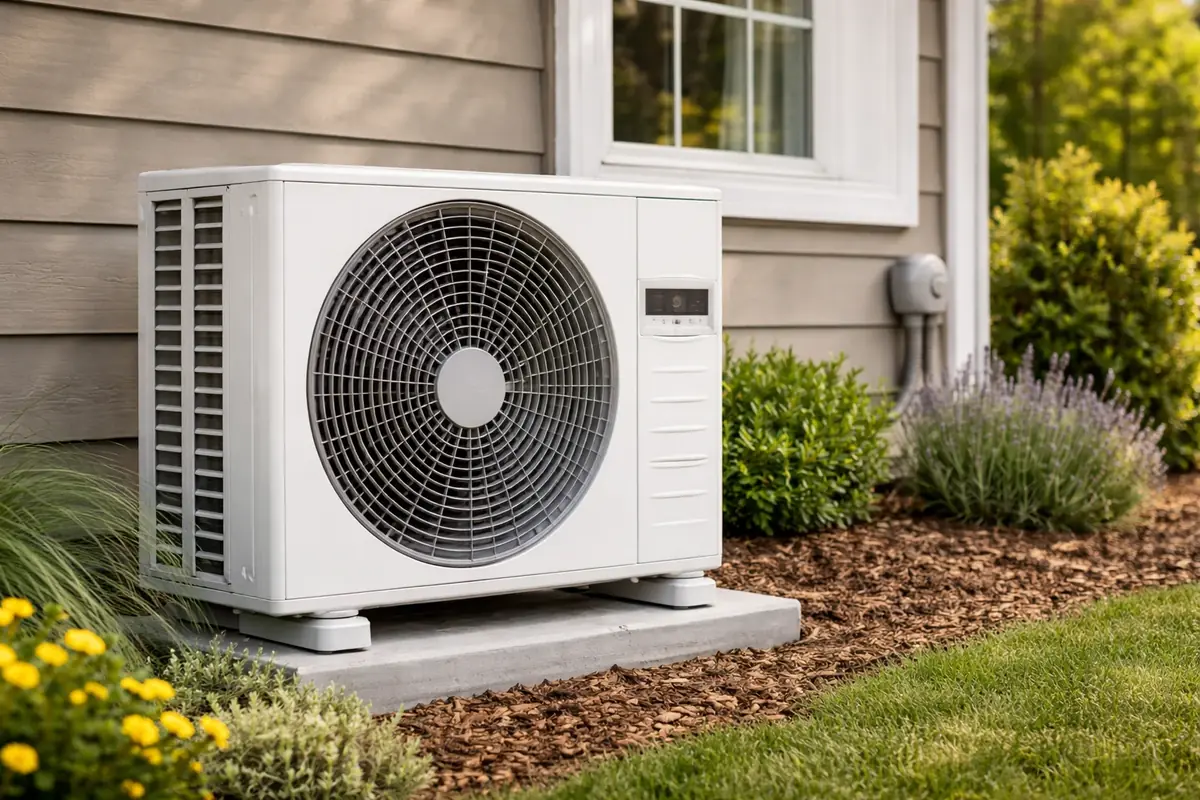
Quick answer: Most heat pumps in Central Texas last roughly 10 to 15 years. They work year-round here, cooling through a long, hot summer and heating in winter, so they log more hours than an AC-only system. Good sizing, clean airflow and yearly maintenance push a system toward the long end of that range.
In this guide
How long does a heat pump last in Central Texas?
Roughly 10 to 15 years is typical, with some well-kept systems going longer and some rough installs failing sooner. The outdoor unit, which holds the compressor, is usually what decides when the system is done. Indoor air handlers can outlast it, but they’re normally replaced together so the parts match.
That range is similar to what we see for air conditioners. How long an AC lasts in Central Texas covers the cooling side in more detail.
Why do heat pumps work so hard in Central Texas?
Because in Central Texas they rarely get a season off. An air conditioner in a gas-heated home sits idle most of the winter. A heat pump cools from spring well into fall, which here is less a season than a five-month endurance event, then turns around and heats on winter nights. That adds up to a lot of compressor hours and a lot of starts.
The indoor side has its own challenge. Most air handlers here live in the attic, where summer temperatures can climb well past 130°F. That heat is hard on motors, capacitors (the parts that give motors their starting kick), wiring and control boards, even when the system is off.
The good news: our winters are mild. Heat pumps have their hardest time in long stretches of deep cold, and Central Texas only sees that occasionally, like the February 2021 freeze.
What shortens a heat pump’s life?
Most early failures trace back to the same few problems:
- Wrong size. An oversized unit short cycles, turning on and off every few minutes, and an undersized one runs nonstop. Both add wear.
- Poor airflow. Dirty filters, crushed flex duct, undersized returns and dirty coils make the compressor work harder in both modes.
- Refrigerant problems. A system that’s undercharged from a leak, or was charged wrong at install, runs hot and strains the compressor.
- Skipped maintenance. Dirty outdoor coils and weak capacitors quietly cost years.
- A tough spot for the outdoor unit. Tight clearance, lawn clippings, dryer vents blowing on it, or a dog that treats it as a fire hydrant all take a toll.
- Electrical stress. Power surges and loose connections can damage compressors and boards.
How can you help your heat pump last longer?
Protect its airflow and have it checked twice a year. Because a heat pump runs in both seasons, a spring and fall visit fits it better than a once-a-year check. What maintenance a heat pump needs lists what’s involved.
Homeowner-friendly habits:
- Change the filter on schedule, more often during heavy summer use.
- Keep plants, fences and debris a couple of feet back from the outdoor unit.
- Rinse the outdoor coil gently with a garden hose, with the power off at the outdoor disconnect, never with a pressure washer.
- Leave the thermostat on normal heat, not emergency heat (heat strips only), unless the outdoor unit has failed.
- Call when something changes, like new noises, longer run times or ice that won’t clear, rather than waiting for it to quit.
Gold Eagle’s technicians service and repair heat pumps across the Austin area, and if you’d rather not keep track of it, our Home Maintenance Plan covers the regular visits.
What are the signs a heat pump is near the end?
Age plus trouble is the real signal. A single repair on a 12-year-old system isn’t a death sentence, but a pattern is worth noticing:
- Repairs are getting more frequent or more expensive.
- It runs longer to keep the house comfortable, and bills creep up with no other explanation.
- Rooms are less even than they used to be, or it leans on heat strips more in winter.
- It uses R-22, the older refrigerant that’s no longer produced, so recharging it is increasingly hard.
- The compressor or outdoor coil has failed on an older unit.
Repair or replace walks through how to weigh a big repair against a new system.
When should you plan to replace a heat pump?
Somewhere past the 10-year mark, it’s smart to plan instead of waiting for a July failure. Replacing on your schedule means time to size the new system properly, look at the ductwork, and compare a standard heat pump with a variable-speed model or dual fuel, instead of rushing a decision during a heat wave.
To see what a new heat pump would cost for your home, use Build Your System.
What should you do next?
- Find the install date on the outdoor unit’s label or your paperwork.
- Check the filter today and set a reminder to change it on schedule, more often in summer.
- Walk out to the outdoor unit and clear anything within a couple of feet of it.
- Book a spring and fall tune-up with Gold Eagle, and mention any new noises or longer run times.
Related guides: How Long Does an AC Last in Central Texas?, What Maintenance Does a Heat Pump Need? and Repair or Replace Your HVAC System? How to Decide.
Related reading: What Drives the Cost of a New Heat Pump in Austin?.
About Gold Eagle Services: This guide comes from the team at Gold Eagle Services, a family-run Austin HVAC, indoor air quality and mold remediation company founded in 2017. We’re licensed (TACLA119235 and RCO1783), insured and bonded, and we serve homes across the greater Austin area.
Need help with this in your home? Learn about our heat pump repair and replacement, or call 512-489-4653 to schedule a visit. Also see our page on heat pump maintenance in Austin.
Related Gold Eagle service: AC repair in Austin
More in Maintenance
All 27 guides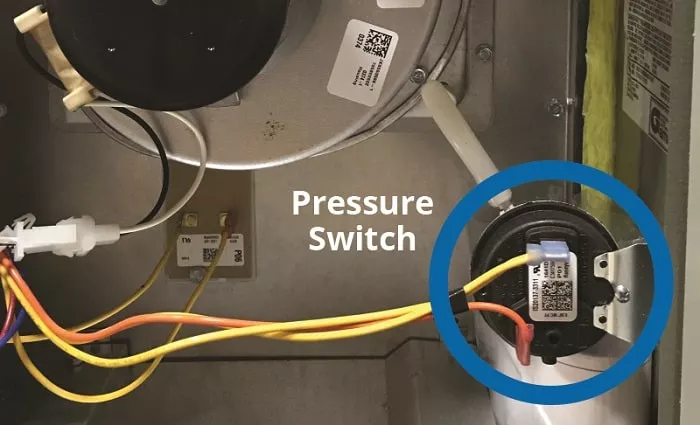 MaintenanceWhat Is a Furnace Pressure Switch, and Why Won’t the Furnace Start?A pressure switch proves the furnace's exhaust is venting safely before the burners can light. If the small inducer motor runs but the burners…
 MaintenanceWhat Is a Furnace Limit Switch, and Why Does It Shut Off the Heat?A limit switch is a heat sensor that shuts off a furnace's burners if the furnace gets too hot. It usually trips because airflow…
 MaintenanceWhy Does the Furnace Blower Keep Running After the Heat Shuts Off?A short run is normal. Most furnaces keep the blower going for about one to three minutes after the burners shut off to pull…