
 HVAC Systems
 Heating
 Ductwork & Air Flow
 Ventilation
 Filtration
 Dehumidification
 Maintenance
 Mold
 Remediation & Restoration
 Pure Maintenance
 Your Home
 Building Science
 Insulation & Envelope
 Health & Safety
 Case Study
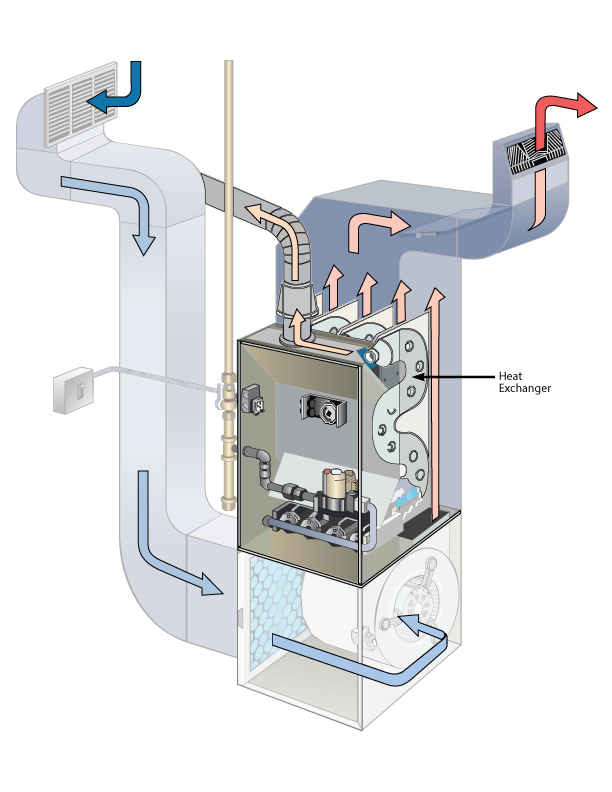
Quick answer: A condensing furnace has a second heat exchanger that pulls so much heat from its exhaust that the water vapor in it condenses. That’s how it reaches 90% AFUE or higher. The trade-offs are plastic vent pipes and a condensate drain, which in an attic has to be protected from freezing.
In this guide
What is a condensing furnace and how does it work?
A condensing furnace is a high-efficiency gas furnace that wrings a second round of heat out of its exhaust. Burning natural gas makes heat, carbon dioxide and water vapor, and in a standard furnace that hot exhaust goes straight up a metal flue, taking some heat with it. A condensing furnace first sends it through a second heat exchanger.
There the exhaust cools until its water vapor turns to liquid, and that change releases more heat into the air headed for your rooms. The exhaust leaves the furnace cool enough to vent through plastic pipe.
How can you tell if you have a condensing furnace?
Look at the pipes and the label:
- White or gray plastic vent pipes instead of a metal flue. Many models have two: one brings in combustion air from outside and one carries exhaust out.
- A drain line and trap (a U-shaped bend that holds water) coming off the furnace, sometimes with a small condensate pump.
- A rating of 90% AFUE or higher on the label.
A furnace with a metal flue running up through the roof is a standard, non-condensing model, usually around 80% AFUE.
Where does the water from a condensing furnace go?
Through a trap and drain line to a plumbing drain, the outside or a condensate pump. The water is mildly acidic (slightly corrosive), which is why the drain parts are plastic. When the trap clogs or the line cracks, the furnace can stop firing or leak. Why there is water around a furnace in winter covers the usual causes, and why a furnace blows cold air lists a clogged condensate drain among them.
Can a condensing furnace freeze up in an Austin attic?
Yes, in a hard freeze. Most condensing furnaces around Austin sit in vented attics, and on those nights the attic can drop close to the outdoor temperature. A frozen drain line or trap can back water up and shut the furnace down just when you need it most. Installers protect those lines with insulation, careful routing and sometimes heat tape (a plug-in heating cable).
The other common trouble spot is the vent pipe ends outside. Check that leaves or wasp nests aren’t blocking them. On attic furnaces they often exit through the roof, so look only from the ground, and don’t take anything apart.
Is a condensing furnace worth it in Austin?
Sometimes. A condensing furnace saves the most gas where furnaces run for months on end. Central Texas heating seasons are short, so the savings shrink, and the extra venting and drain work in an attic adds complexity.
Many Austin homes with gas use a standard 80% furnace, and others skip the choice with a heat pump or dual fuel. Heat pump vs. gas furnace vs. dual fuel compares them. For options and pricing on your home, try Build Your System.
Whichever you have, the yearly heating check matters. ENERGY STAR’s checklist includes the condensate drain along with the burners and heat exchanger. Gold Eagle’s technicians do heating tune-ups on gas furnaces across the Austin area, condensate drain included.
What should you do next?
- Check your furnace’s vent pipes and label to see whether it’s a condensing model.
- Check that leaves or wasp nests aren’t blocking the outdoor vent pipe ends if it is. Look from the ground only.
- Make sure the attic condensate drain line is insulated before a hard freeze.
- Book a yearly heating check that includes the condensate drain.
Related guides: Why Is There Water Around My Furnace in Winter?, Heat Pump vs. Gas Furnace vs. Dual Fuel in Central Texas and What’s Included in an HVAC Tune-Up?
About Gold Eagle Services: This guide comes from the team at Gold Eagle Services, a family-run Austin HVAC, indoor air quality and mold remediation company founded in 2017. We’re licensed (TACLA119235 and RCO1783), insured and bonded, and we serve homes across the greater Austin area.
Need help with this in your home? Learn about our heater repair and tune-ups, or call 512-489-4653 to schedule a visit.
More in Heating
All 44 guides HeatingIs It Safe to Use a Fireplace While the Heat Is Running?Yes, with some care. Open the damper before lighting the fire and keep it open until the ashes are cool, use a screen and…
 HeatingIs It Safe to Run a Generator During a Winter Power Outage?Yes, if the generator runs outdoors only, at least 20 feet from doors, windows and vents, and never in a garage, even with the…
 HeatingWhat Does AFUE Mean on a Furnace?AFUE stands for Annual Fuel Utilization Efficiency: the share of a furnace's fuel that becomes heat for your home over a typical year. An…