
 HVAC Systems
 Heating
 Ductwork & Air Flow
 Ventilation
 Filtration
 Dehumidification
 Maintenance
 Mold
 Remediation & Restoration
 Pure Maintenance
 Your Home
 Building Science
 Insulation & Envelope
 Health & Safety
 Case Study
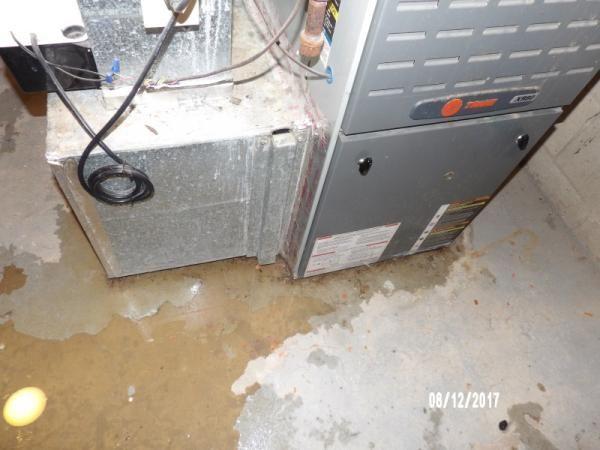
Quick answer: Water around a furnace in winter usually comes from a high-efficiency furnace, which makes water (condensate) and drains it through a trap and line that can clog, crack or freeze. The AC coil’s drain pan beside the furnace or a nearby water heater can also leak. If water keeps coming, turn the heat off and call.
In this guide
Why is my furnace leaking water?
Most likely it’s a high-efficiency furnace, and those are built to make water. A furnace rated around 90% AFUE or higher (AFUE is the share of the fuel’s heat that reaches your house) pulls so much heat from its exhaust that the water vapor in it turns back to liquid. That water, called condensate, runs through a trap (a U-shaped bend that holds water) and a small drain line to a plumbing drain, a condensate pump or outside.
To see which kind you have, look at the vent pipes. High-efficiency furnaces vent through white plastic pipes. Standard furnaces vent through a metal pipe and don’t normally make water inside the cabinet.
What makes a furnace drain leak?
Four problems cause most furnace drain leaks:
- A clogged trap or drain line.
- A drain hose that has slipped off or cracked.
- A condensate pump (a small box that pumps the water away) that has come unplugged or has a stuck float.
- A drain line that runs outside or through the attic and freezes in a hard freeze.
A clogged drain can also shut a high-efficiency furnace down, so water and no heat often show up together.
Could the water be coming from the AC instead?
Less likely in winter, but possible. In most Austin homes the AC’s indoor coil is bolted to the furnace, on top in a closet or at one end in an attic, with its own drain pan and line. While the furnace heats, the coil stays dry and makes no water.
Some systems send the furnace water into the same drain as the coil, though. A line that half-clogged in September can finally overflow in December. How to clear a clogged condensate drain line shows how those lines work, and why an AC leaks water covers the summer side.
Could it be my water heater?
Check it next, because gas water heaters often share the furnace’s closet or garage. Water around its base, or dripping from the pipe on its relief valve (the safety valve on the side or top), is a plumbing problem, not a furnace one.
What should I do if my furnace is leaking water?
- Turn the heat off at the thermostat.
- If water is near wiring, turn off the breaker, or the service switch by the furnace (it looks like a light switch), but only if you can reach it without standing in water.
- Check that the condensate pump is plugged in.
- Mop up, put down towels, and note where the water seems to start.
- Check the ceiling below if the furnace is in the attic. A stain there needs quick attention.
Don’t just keep mopping. Water left in a closet floor, attic insulation or drywall can lead to mold, so dry things out fast. The first 48 hours after a water leak covers what to do. Then have a technician find the source and fix it, so the furnace keeps running through the next freeze. Gold Eagle fixes furnace drain leaks across the Austin area; book a visit online.
Related guides: How Do You Clear a Clogged AC Condensate Drain Line?, Why Is My AC Freezing Up or Leaking Water? and What to Do in the First 48 Hours After a Water Leak.
About Gold Eagle Services: This guide comes from the team at Gold Eagle Services, a family-run Austin HVAC, indoor air quality and mold remediation company founded in 2017. We’re licensed (TACLA119235 and RCO1783), insured and bonded, and we serve homes across the greater Austin area.
Need help with this in your home? Learn about our heater repair and tune-ups, or call 512-489-4653 to schedule a visit.
More in Maintenance
All 17 guides MaintenanceWhy Does a Room Smell Like Sewer? Dry Drain Traps and Your AC DrainA sewer smell in one room is most often a dry drain trap: the water seal in a little-used sink, shower or floor drain…
 MaintenanceWhat Should You Do With Your Heat Pump During and After a Texas Freeze?During a Texas freeze, leave a heat pump running in normal Heat mode, uncovered, and let its defrost cycle handle frost. If the power…
 MaintenanceWhy Do Your Ducts Pop or Bang When the Heat Comes On?Ducts that pop or tick when the heat comes on are usually metal parts warming up: the furnace cabinet and heat exchanger, the metal…