
 HVAC Systems
 Heating
 Ductwork & Air Flow
 Ventilation
 Filtration
 Dehumidification
 Maintenance
 Mold
 Remediation & Restoration
 Pure Maintenance
 Your Home
 Building Science
 Insulation & Envelope
 Health & Safety

Quick answer: Get the people and pets who handle heat worst somewhere cool first, then try a few safe checks: thermostat set to Cool, a clean filter, and one reset of a tripped breaker. If the AC still isn’t cooling, turn it off and call for service. The CDC advises against relying on fans alone in extreme heat.
In this guide
Who is most at risk when the AC goes out?
The CDC lists older adults, infants and young children, and people with chronic medical conditions among those at highest risk in extreme heat. Pets feel it too. If anyone in the house fits that list, move them first, then troubleshoot.
A relative’s house, a library, a shopping center or a movie theater all work. In Austin, city recreation centers and public library branches serve as cooling centers during their regular hours, so check the hours before you go.
When is it a medical emergency instead of an AC problem?
The moment someone seems seriously unwell from the heat. The CDC treats heat stroke as a medical emergency, so if a person is confused, passes out or has a very high body temperature, call 911 first and deal with the AC later. While you wait, move them somewhere cooler.
For milder heat symptoms, such as heavy sweating, dizziness or cramps, get to a cooler place, sip water and follow the CDC’s heat-safety guidance or call a doctor or nurse line. An HVAC company can fix the house; it can’t tell you whether someone needs care.
What can you check before calling for AC service?
Five quick checks, all safe for a homeowner, solve a surprising share of “no cooling” calls:
- Thermostat: set to Cool, set below the room temperature, with fresh batteries if it uses them.
- Filter: a clogged one can choke airflow enough to stop cooling.
- Breakers: most systems have one for the indoor unit and one for the outdoor unit. Reset a tripped breaker once. If it trips again, leave it off and call.
- Ice on the refrigerant lines or indoor coil: switch the thermostat to Off with the fan On so it can thaw. Why an AC freezes up explains what causes it.
- Water in the secondary drain pan: the pan under an attic air handler has a float switch that shuts the system off to prevent a ceiling leak.
Leave the panels closed, and never touch wiring or refrigerant lines. Those carry high voltage and high pressure, and they are a job for a licensed tech.
If the checks don’t bring the cold air back, Gold Eagle’s licensed technicians handle AC repair across the Austin area; call 512-489-4653 or schedule online.
How can you keep the house cooler while you wait?
Keep heat out and stop making more of it inside:
- Close blinds and curtains, especially on west-facing windows in the afternoon.
- Skip the oven, the dryer and the dishwasher’s heat-dry setting.
- Use fans for air movement, but don’t make them your main cooling method in extreme heat, as the CDC cautions.
- Spend time in the coolest room, usually downstairs and on the north or east side.
- Run a window unit or portable AC in one room to bridge the gap.
Why do so many ACs quit during the hottest week of summer?
Because heat finds weak parts. Capacitors and motors hate heat, dirty coils push operating pressures up, and a system running nonstop for days gets no rest. On a 105°F day the outdoor unit has to dump the house’s heat into air that is already scorching.
Running all afternoon is not always a failure, though. A system that runs all afternoon and holds the upper 70s on a 105°F day may be doing exactly what it was sized to do. Why a bigger AC isn’t better explains why systems are sized that way.
What should you do next?
- Move anyone at high risk, and pets, somewhere cool first.
- Set the thermostat to Cool, check the filter and reset a tripped breaker once.
- Set the thermostat to Off with the fan On if you see ice, so it can thaw.
- Turn it off and book a Gold Eagle repair visit or call 512-489-4653 if it still isn’t cooling.
Related guides: Why Is My AC Freezing Up or Leaking Water?, Why a Bigger AC Isn’t Better in Texas Heat and Smart HVAC Design: Manual J, D & S Explained.
About Gold Eagle Services: This guide comes from the team at Gold Eagle Services, a family-run Austin HVAC, indoor air quality and mold remediation company founded in 2017. We’re licensed (TACLA119235 and RCO1783), insured and bonded, and we serve homes across the greater Austin area.
Need help with this in your home? Learn about our air conditioning repair and installation, or call 512-489-4653 to schedule a visit.
Related Gold Eagle service: AC repair in Austin
More in Health & Safety
All 15 guides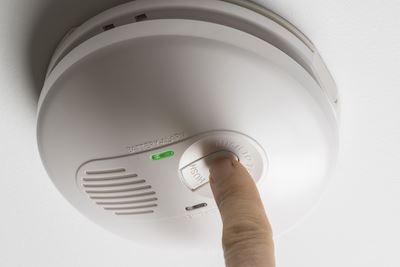 Health & SafetyWhy Is Your Carbon Monoxide Alarm Beeping or Chirping?Four loud beeps and a pause, repeating, usually means the alarm has detected carbon monoxide: get everyone outside and call 911. A single chirp…
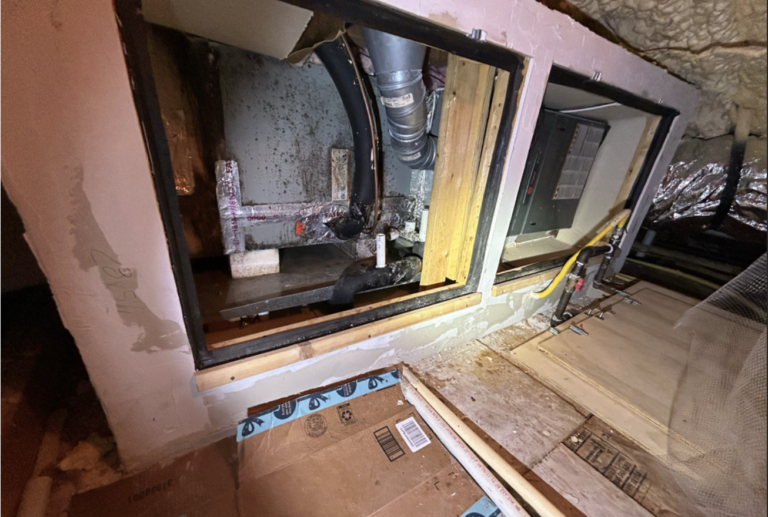 Health & SafetyWhat Should You Do If You Smell Rotten Eggs Near Your Furnace or Water Heater?A rotten egg or sulfur smell near a furnace or water heater can mean a gas leak. Get everyone out right away, and don't…
 Health & SafetyAre Space Heaters Safe to Use Alongside Central Heat?Yes, if you follow the CPSC's basics: keep an electric space heater at least 3 feet from anything that can burn, plug it straight…