
 HVAC Systems
 Heating
 Ductwork & Air Flow
 Ventilation
 Filtration
 Dehumidification
 Maintenance
 Mold
Mold Remediation & Restoration
 Pure Maintenance
 Your Home
 Building Science
 Insulation & Envelope
 Health & Safety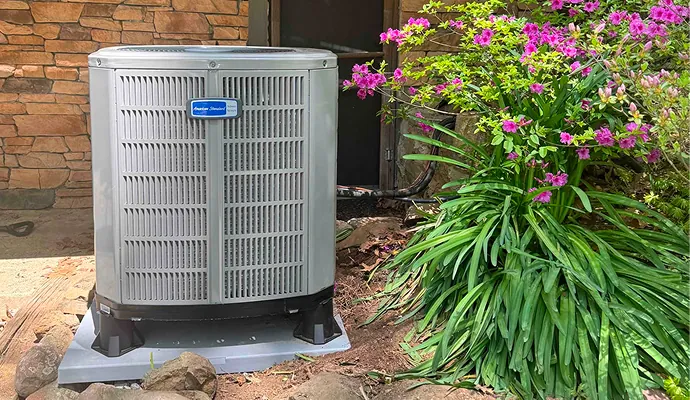
Quick answer: Most of the noise comes from the compressor and the outdoor fan running at full speed. A variable-speed (inverter) system ramps both down and spends most of the day running slow, so it hums instead of roaring. Sound is rated in decibels, and every 10 dB lower sounds roughly half as loud.
In this guide
Why does your neighbor’s AC sound like a jet?
A traditional single-stage AC has one speed: all the way on. When the thermostat calls, the compressor and the big outdoor fan kick on at full power, run until the house is cool, then shut off. Repeat all afternoon. In an Austin August that’s a lot of takeoffs.
Age adds to it. Worn fan motor bearings, loose panels, a bent fan blade or a tired compressor can turn a normal hum into a racket. If yours has gotten louder lately, why your HVAC system is making noise covers what the different sounds usually mean.
How does a variable-speed system stay quiet?
An inverter-driven compressor can speed up and slow down in small steps instead of flipping between off and full blast. Most of the time it only needs a fraction of its full capacity, so it runs slowly for long stretches and the outdoor fan spins slower with it. Slow and steady is quieter.
Those long, low-speed runs also help with comfort. Temperatures stay more even, and the indoor coil has more time to pull water out of the air, which matters in a humid climate.
How is AC noise measured?
Manufacturers publish sound ratings in decibels (dBA). The scale is logarithmic, so small numbers matter: a unit rated 10 dB lower sounds roughly half as loud to most people. When you compare models, look at the rating at low speed as well as full speed, since a variable-speed unit spends most of its life on the low end.
What else makes a quiet install?
- Placement. Keep the outdoor unit away from bedroom windows and the patio when you can, while still leaving the airflow clearance it needs.
- A solid, level pad. A unit that rocks or sits on settled ground vibrates more.
- Compressor sound blankets. Many higher-end units include an insulated jacket around the compressor.
- Isolation where the lines enter the house. Refrigerant lines that touch framing can carry vibration indoors.
Where does GE’s connected equipment fit in?
GE’s HVAC line includes variable-speed options, and its connected systems add app-based monitoring that can spot issues early. We explain the lineup in GE HVAC systems: AC, heat pump and ductless options. Whatever the brand, the quiet comes from the same idea: equipment that runs as slow as it can and only as hard as it has to.
If you’re weighing an upgrade, Build Your System lets you compare options for your home.
What should you do next?
- Stand by your outdoor unit while it runs and note any rattle, grinding or buzz that’s new.
- Check that the unit sits level on its pad and that nothing is leaning against it.
- When comparing new systems, ask for the low-speed sound rating in dBA, not just full speed.
- Book a visit if your AC has gotten louder lately.
Related guides: Why Is My HVAC System Making Noise?, Why a Bigger AC Isn’t Better in Texas Heat and How Much Clearance Does an Outdoor AC or Heat Pump Unit Need?
About Gold Eagle Services: This guide comes from the team at Gold Eagle Services, a family-run Austin HVAC, indoor air quality and mold remediation company founded in 2017. We’re licensed (TACLA119235 and RCO1783), insured and bonded, and we serve homes across the greater Austin area.
Need help with this in your home? Learn about our home maintenance plans, or call 512-489-4653 to schedule a visit.
More in Make HVAC Sexy Again
All 3 guides Make HVAC Sexy AgainWhat Does a Low-Humidity House Feel Like on a Sticky Austin Day?It feels crisp instead of clammy. At the same thermostat setting, a house held near 50% relative humidity feels cooler and fresher than one…
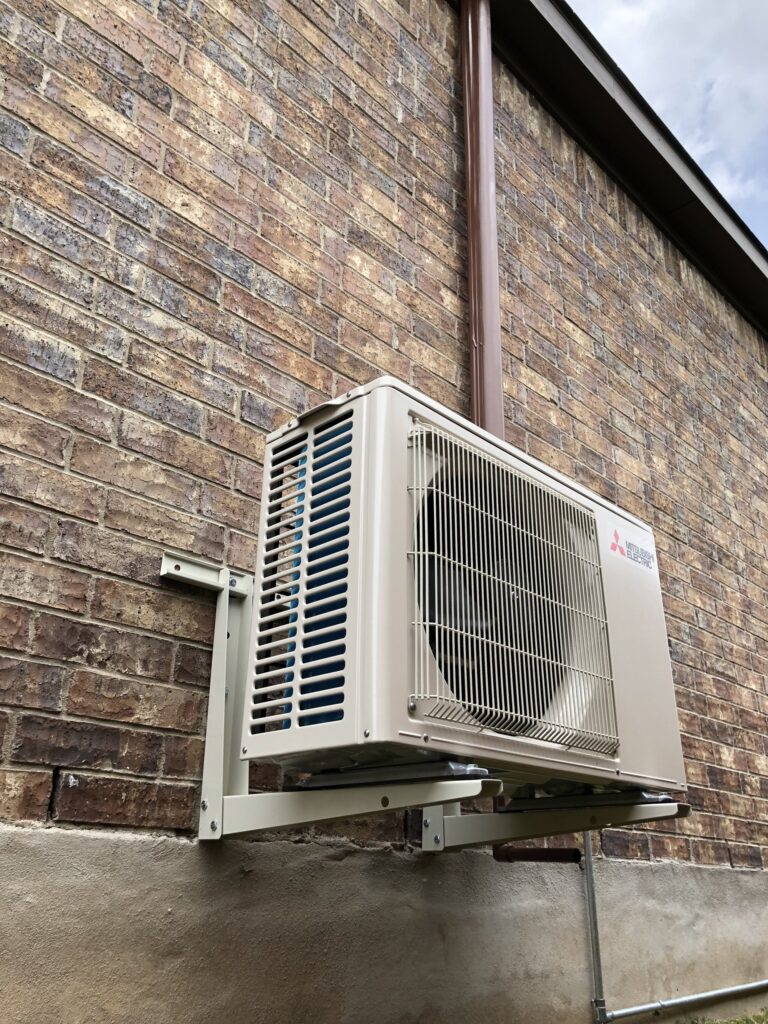 Make HVAC Sexy AgainCan a Mini-Split Look Good? Line-Set Covers vs Exposed LinesYes. A clean ductless install hides the copper lines, drain and wire inside a paintable line-set cover that runs straight and tight to the…