
 HVAC Systems
 Heating
 Ductwork & Air Flow
 Ventilation
 Filtration
 Dehumidification
 Maintenance
 Mold
Mold Remediation & Restoration
 Pure Maintenance
 Your Home
 Building Science
 Insulation & Envelope
 Health & Safety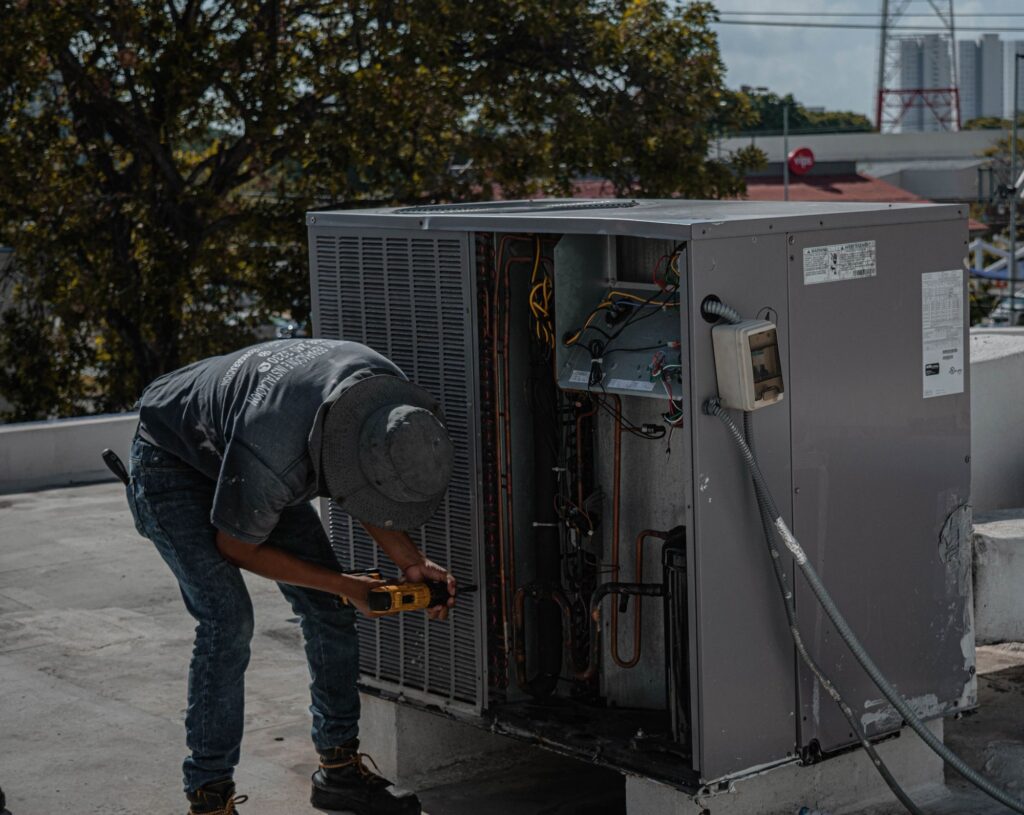
Quick answer: A typical central HVAC system has a thermostat, a furnace or heat pump, an outdoor unit with a compressor and condenser coil, an indoor evaporator coil, a blower, ductwork, a condensate drain and an air filter. Knowing each part’s job helps you spot problems early and keep the system efficient.
In this guide
- What does the thermostat do?
- What is the indoor unit: a furnace or an air handler?
- What does the outdoor unit do?
- What does the evaporator coil do?
- What is the condensate drain line?
- What does the condenser coil do?
- What does the blower do?
- How does ductwork move air around the house?
- Why does the air filter matter so much?
- What other HVAC components should you know?
- Why does knowing the parts matter?
- What should you do next?
Most of your heating and cooling system hides in the attic, a hall closet or a metal box beside the house, so it’s easy to think of it as one mysterious machine. It’s really a team of parts, each with one job.
You don’t need to be a technician to follow along. Knowing the basics helps you describe a problem clearly, understand what a technician recommends and make better calls on maintenance and upgrades. Here’s the tour of a typical Central Texas setup.
What does the thermostat do?
It runs the show. The thermostat decides when every other part turns on and off.
- How it works: It reads the indoor temperature and tells the system when to heat or cool.
- Modern options: Programmable and smart thermostats let you set schedules, track energy use and adjust settings from your phone. Some can also show or control indoor humidity.
- Impact on comfort: A thermostat that holds a steady temperature avoids big hot-and-cold swings, and smart scheduling can cut energy use while nobody’s home.
What is the indoor unit: a furnace or an air handler?
The indoor unit is a furnace if you have gas heat, or an air handler if you have a heat pump or electric heat. Either way it houses the blower, and in Austin-area homes it usually lives in the attic, a closet or the garage.
- How it works: A gas furnace burns natural gas or propane to make heat, and the blower pushes it through the ducts. An air handler with electric heat strips uses electric coils that glow hot, like a toaster, instead. In a heat pump system, those strips are the backup heat.
- Stages available: Furnaces come in single-stage (on or off), two-stage (low and high) and modulating models that adjust output in small steps. Two-stage and modulating models, usually paired with a variable-speed blower, give more even comfort and better efficiency.
- Safety: Gas furnaces must be vented properly so combustion gases, including carbon monoxide, go safely outside. Have the burners, heat exchanger and venting inspected every year, and keep working carbon monoxide alarms in the house.
What does the outdoor unit do?
In summer, it dumps the heat from inside your house outdoors. Depending on your system, that outdoor unit is either a central air conditioner or a heat pump.
- How it works: Refrigerant soaks up heat indoors, carries it outside and releases it through the outdoor unit. A heat pump can run the process in reverse to heat the house in winter, which is why heat pumps are so popular given Central Texas’s mild winters.
- Stages available: Like furnaces, these units can be single-stage, two-stage or variable-speed. Variable-speed units generally offer the highest efficiency and the best humidity control. Efficiency is shown as a SEER2 rating, the standard for new equipment since January 1, 2023.
- Comfort: A healthy cooling system removes moisture as well as heat. The EPA recommends keeping indoor humidity below 60%, ideally between 30% and 50%, to help limit mold growth. In a sticky Austin summer, your air conditioner does most of that work.
What does the evaporator coil do?
It cools and dries the air. The evaporator coil sits on top of or inside the furnace or air handler, and it’s where the refrigerant picks up your home’s heat.
- How it works: Warm indoor air passes over the cold coil, which absorbs heat and condenses moisture out of the air, the same way a glass of iced tea sweats on the porch. The cooler, drier air then heads back through the ducts.
- Air quality: Because the coil is cold and wet all cooling season, dust that slips past the filter sticks to it, and a dirty, damp coil can grow mold and bacteria. A clean coil protects airflow, efficiency and the air moving through your home.
What is the condensate drain line?
It carries away the water your AC pulls out of the air. It’s a small pipe, usually white PVC, that runs from the indoor unit to outside or to a plumbing drain.
- How it works: The water the evaporator coil pulls out of the air drips into a pan and runs out through a drain line. In a Texas summer, a system can remove a surprising amount of water every day.
- Why it matters: Drain lines clog with algae and debris. A clogged line can back up, trip a safety switch that shuts the system off, or overflow into the attic and down through your ceiling. Flushing the drain is a standard part of maintenance.
What does the condenser coil do?
It releases the heat your system picked up indoors. The condenser coil is the finned metal that wraps around the outdoor unit.
- How it works: The compressor pressurizes the refrigerant, and a fan pulls air across the condenser coil so the heat can escape outdoors.
- Performance: A coil packed with dirt, grass clippings, leaves or cottonwood fluff makes the system work harder, which costs efficiency and adds wear. Keep a couple of feet of clear space around the unit and have the coil cleaned during maintenance so it can keep up on 100-degree days.
What does the blower do?
It moves the air. The blower pushes cooled or heated air through the ductwork to every room.
- Types available: Blower motors can be single-speed, multi-speed or variable-speed. Variable-speed blowers can run slower for longer, which keeps temperatures steadier and improves dehumidification.
- Air quality: Since the blower pulls air through your filter, longer, gentler run times give the filter more chances to catch particles. A dirty blower wheel does the opposite: less airflow, lower efficiency.
How does ductwork move air around the house?
Ductwork carries cooled or heated air to each room. In most Central Texas homes, a box of fiberglass ductboard (the plenum) sits on the indoor unit, and round flex ducts run from it through an attic that bakes all summer.
- How it works: Supply ducts carry cooled or heated air into rooms, and return ducts bring air back to the system to be filtered and conditioned again.
- Performance: Leaky or poorly insulated ducts waste energy, and a leak on the return side can pull hot, dusty attic air straight into the system. Inspections, proper sealing, good insulation and cleaning when needed keep airflow efficient.
Why does the air filter matter so much?
The filter protects both the equipment and your indoor air, and it’s the one part most homeowners can handle themselves.
- How it works: The filter traps dust, pollen, pet dander and other particles before they reach the blower, coil and ductwork.
- Air quality: A clean filter keeps air moving freely and stops buildup inside the system. Higher-grade filters or whole-home filtration catch more particles, but they need to be matched to your system so they don’t choke the airflow.
What other HVAC components should you know?
Whole-home dehumidifiers
A whole-home dehumidifier is add-on equipment that pulls extra moisture out of the air and holds indoor humidity in range. Around here the problem is almost always too much moisture, not too little. Controlling humidity protects your home’s materials and discourages mold growth.
UV lights and air purifiers
Installed in the ductwork or near the coil, these are designed to reduce growth on system surfaces and cut airborne particles. How well they work depends on the product and how it’s installed and maintained.
Expansion valve
The expansion valve is a small metering device that controls how much refrigerant flows into the evaporator coil, like a faucet that adjusts itself, so the system cools efficiently as conditions change.
Why does knowing the parts matter?
Knowing the parts helps you catch problems early and make better decisions. You notice when something’s off, schedule maintenance before it becomes a repair and weigh upgrades with real information. A neglected filter, dirty coil, clogged drain or tired blower doesn’t just hurt efficiency. It also affects comfort, humidity and the air circulating through your home every day.
When one of these parts acts up, Gold Eagle’s technicians repair and maintain every piece on this list. If your furnace, heat pump or air handler needs attention, see our furnace and heat pump repair services.
What should you do next?
- Find your indoor unit, your outdoor unit and the spot where your air filter lives.
- Check the filter regularly and replace it when it looks dirty.
- Keep a couple of feet of clear space around the outdoor unit, and watch for water in the drain pan.
- Book yearly maintenance with Gold Eagle or call 512-489-4653 so the coils get cleaned, the drain gets flushed and any gas furnace gets inspected.
Related guides: The Different Types of HVAC Systems Explained, Why Is My HVAC System Making Noise? Troubleshooting Guide and Smart HVAC Design: Manual J, D & S Explained.
About Gold Eagle Services: This guide comes from the team at Gold Eagle Services, a family-run Austin HVAC, indoor air quality and mold remediation company founded in 2017. We’re licensed (TACLA119235 and RCO1783), insured and bonded, and we serve homes across the greater Austin area.
Need help with this in your home? Learn about our air conditioning repair and installation, or call 512-489-4653 to schedule a visit.
Related Gold Eagle service: AC repair in Austin
More in Air Conditioning
All 37 guides Air ConditioningWhat Should You Set Your Thermostat to When You’re Away?In summer, raise the thermostat a few degrees instead of turning the AC off, generally no higher than the mid 80s, so the house…
 Air ConditioningHow Cold Should the Air From Your AC Vents Be?Air from your supply vents is usually about 15 to 20°F cooler than the air going into the return, a difference called the temperature…
 Air ConditioningWhy Is One Room Hotter Than the Rest of the House?One room runs hotter when it gains more heat than its air supply can carry away. Usual causes: afternoon sun on west or south…