
 HVAC Systems
 Heating
 Ductwork & Air Flow
 Ventilation
 Filtration
 Dehumidification
 Maintenance
 Mold
Mold Remediation & Restoration
 Pure Maintenance
 Your Home
 Building Science
 Insulation & Envelope
 Health & Safety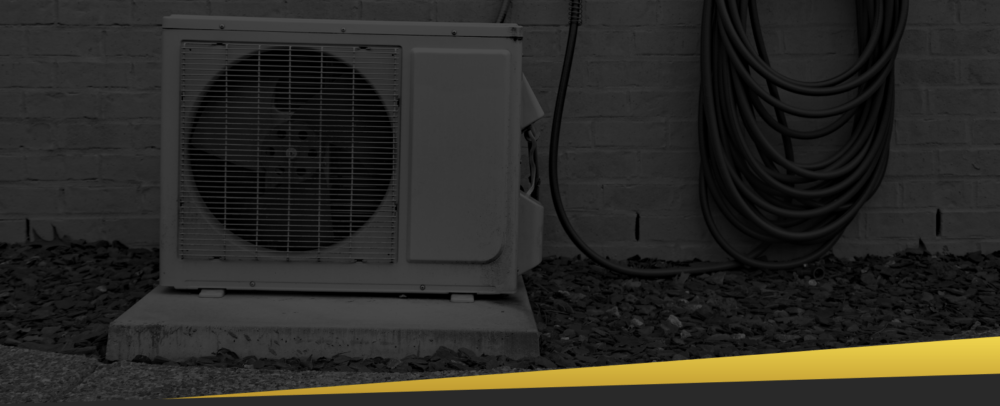
Quick answer: Yes. Turn off the power at the outdoor disconnect or the breaker, then rinse the coil gently with a garden hose on a soft spray, working from the top down. Skip the pressure washer, keep water off the electrical panel, and leave anything behind the unit’s panels to a technician.
In this guide
Why rinse the outdoor AC unit at all?
The outdoor coil is where your house dumps its heat, and a coat of dust and debris gets in the way. The fan pulls grass clippings, cottonwood fluff, dog hair and plain Texas dust into the fins. A dirty coil runs hotter and less efficiently, and on a 104°F afternoon the unit has little margin to spare.
How do you hose off an AC unit safely?
Cut the power first, then rinse gently. Six steps:
- Turn the system off at the thermostat.
- Cut power at the disconnect, the small box on the wall near the unit (pull the block or flip the switch), or at the breaker. Skip this and the fan can start on its own.
- Pick leaves and sticks out of the top grille and the base by hand. Wear gloves: the fins are thin and sharp.
- Set a garden hose to a gentle shower. Spray straight into the fins, not at an angle, from the top of the coil down.
- Keep water off the electrical panel, usually a small cover on one corner where the wires come in.
- Let it drip dry for a bit, then restore power. Many units wait a few minutes before restarting, so don’t worry if it’s not instant.
Can you pressure wash an AC unit or use coil cleaner?
Don’t pressure wash it. Even a modest pressure washer can fold the aluminum fins flat, and flattened fins block airflow worse than the dirt did.
For coil cleaner, use only a product labeled for outdoor condenser coils and follow the label, since harsh cleaners can corrode the coil. A few bent fins can be combed straight with an inexpensive fin comb; a whole crushed section is a technician job.
Is it OK to spray the AC while it’s running?
No. The fan is spinning and the electrical parts are live, so turn it off first every time. Some people mist a running unit on hot days, hoping to help it keep up. Much of Central Texas has hard water, though, and repeated spraying can leave a mineral crust on the fins that’s harder to remove than dust.
How often should you rinse the outdoor unit?
Check it once a month during cooling season, and rinse when you see a gray layer on the fins or debris packed against them. Good times are right after mowing season, cottonwood season or construction next door.
Keep plants and fencing about 2 feet back so the unit can breathe. It isn’t a planter.
What should you leave to a technician?
Leave anything that means opening the unit. Pulling the top fan to clean the coil from the inside out, electrical parts, and anything involving refrigerant belong with a licensed pro.
Call if you notice oily spots on the refrigerant lines or fittings, ice on the lines in summer, or a fan that doesn’t spin when the unit hums. A professional tune-up includes a deeper coil cleaning; here’s what a tune-up covers. Regular care is one of the things that affects how long an AC lasts in Central Texas.
When it’s time for the work inside the unit, Gold Eagle handles it as part of our AC repair and tune-ups.
What should you do next?
- Look at the outdoor coil this month and note any gray layer or packed debris.
- Cut the power, then rinse it gently from the top down with a garden hose.
- Trim plants and fencing back about 2 feet.
- Book a tune-up with Gold Eagle or call 512-489-4653 for a deeper coil cleaning.
Related guides: What’s Included in an HVAC Tune-Up?, How Long Does an AC Last in Central Texas? and The True Cost of Neglecting HVAC Maintenance.
About Gold Eagle Services: This guide comes from the team at Gold Eagle Services, a family-run Austin HVAC, indoor air quality and mold remediation company founded in 2017. We’re licensed (TACLA119235 and RCO1783), insured and bonded, and we serve homes across the greater Austin area.
Need help with this in your home? Learn about our home maintenance plans, or call 512-489-4653 to schedule a visit.
More in Maintenance
All 15 guides MaintenanceWhy Is There Water Around My Furnace in Winter?Water around a furnace in winter usually comes from a high-efficiency furnace, which makes water (condensate) and drains it through a trap and line…
 MaintenanceWhy Do Your Ducts Pop or Bang When the Heat Comes On?Ducts that pop or tick when the heat comes on are usually metal parts warming up: the furnace cabinet and heat exchanger, the metal…
 MaintenancePre-Winter HVAC Checklist for Central Texas HomesIn Austin, get your heater ready in early to mid October: change the filter, test-run the heat, clear the outdoor unit, test smoke and…