
 HVAC Systems
 Heating
 Ductwork & Air Flow
 Ventilation
 Filtration
 Dehumidification
 Maintenance
 Mold
 Remediation & Restoration
 Pure Maintenance
 Your Home
 Building Science
 Insulation & Envelope
 Health & Safety
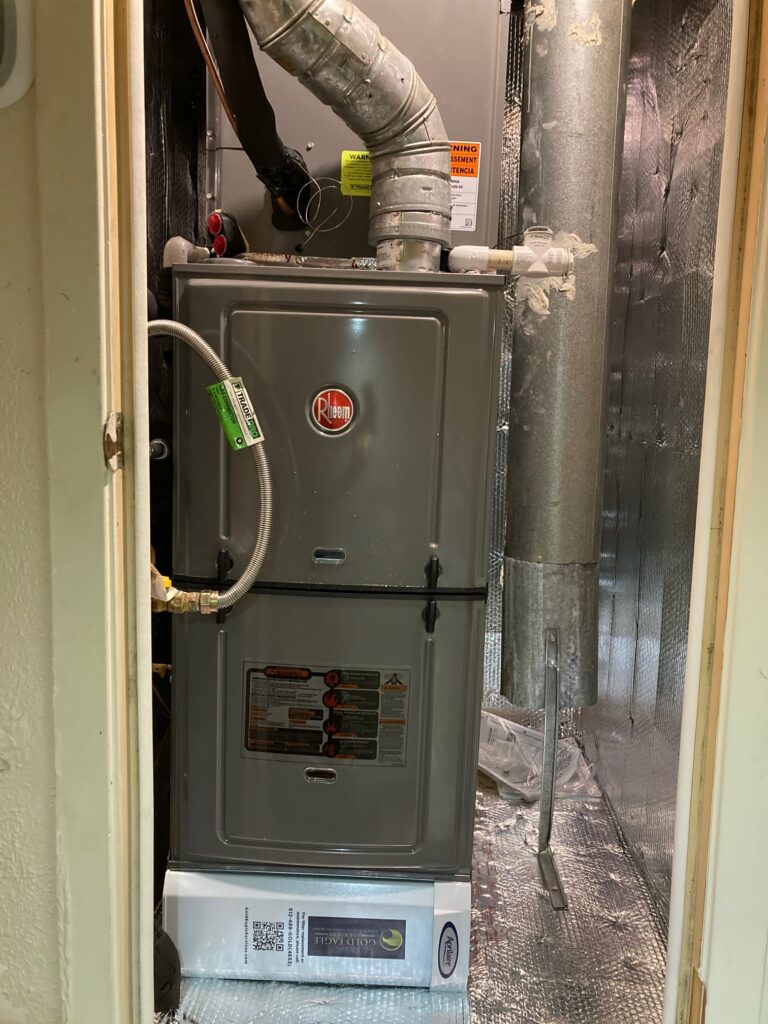
Quick answer: A gas furnace burns natural gas or propane to heat a metal heat exchanger. A fan pushes house air across the outside of it and out to your rooms, while the exhaust gases stay inside it and leave through a vent pipe. The air gets hot but never touches the flame. Around Austin, the furnace usually sits in the attic.
In this guide
What happens when a gas furnace turns on?
A modern furnace runs the same five-step startup checklist every time, which is why heat takes a minute or so to arrive:
- The inducer fan starts. This small fan clears the heat exchanger (the sealed metal chamber the flame heats) and gets exhaust moving up the vent.
- A pressure switch checks the vent. If the vent is blocked, the furnace stops here.
- The ignitor heats up. Most furnaces use a hot surface ignitor that glows orange like a toaster element.
- The gas valve opens and the burners light. A flame sensor must confirm the flame within seconds, or the gas shuts off.
- The blower (the main fan) starts once the heat exchanger warms up, usually within a minute, so you don’t get a blast of cold air.
When the thermostat is satisfied, the burners shut off and the blower runs a little longer to pull out the last of the heat.
A furnace that lights and then quits after a few seconds is failing one of those checks, as covered in why a furnace turns on and then shuts off.
Where does furnace exhaust go?
Up and out through the vent pipe. Standard furnaces use a metal flue (exhaust pipe) that runs up through the roof.
High-efficiency furnaces, called condensing furnaces, wring so much heat from the exhaust that it cools enough to vent through white plastic pipe. That cooling also turns water vapor into water that has to drain away, which is why water can show up around a furnace in winter.
Where is the furnace in an Austin house?
Usually in the attic, lying on its side. Most gas furnaces around Austin are horizontal units on an attic platform, with the AC’s indoor coil attached to the outlet and a ductboard plenum (a box of stiff fiberglass board) feeding the round flex ducts. Some stand upright in a hall closet or the garage.
Because the furnace and AC share one blower, the furnace’s fan also moves your cool air all summer.
Does a gas furnace need electricity?
Yes. The inducer, ignitor, controls and blower all run on electricity, so a gas furnace won’t heat during a power outage. When power returns, give the system a few minutes; restarting your system after an outage walks through the sequence.
Is a gas furnace safe?
Yes, when its safety switches work and it gets a yearly inspection. The pressure switch, flame sensor, high limit switch (shuts off if it overheats) and flame rollout switch (shuts off if flames escape the burner area) each shut the burners off when something is wrong.
The CPSC recommends a professional inspect fuel-burning heating systems, including furnaces, flues and vents, every year. ENERGY STAR’s checklist has the technician check gas connections, gas pressure, how cleanly the burners burn and the heat exchanger. Gold Eagle’s technicians handle that yearly furnace inspection around Austin.
If you ever smell gas, leave the house first, then call 911 and your gas company from outside. Every home with a gas furnace also needs carbon monoxide alarms. Where CO alarms should go covers placement. Leave anything involving gas, burners or wiring to a licensed technician. Changing the filter and testing alarms are the safe DIY jobs.
What should you do next?
- Test your carbon monoxide alarms, and make sure one covers the living space closest to the furnace.
- Count how many seconds the furnace runs if it lights and then shuts off, and share that when you call.
- Give the system a few minutes after a power outage before expecting heat.
- Book a yearly furnace inspection before the first cold snap.
Related guides: Heat Pump vs. Gas Furnace vs. Dual Fuel in Central Texas, Why Is My Furnace Blowing Cold Air? and Where Should CO Detectors Go in a Home With a Gas Furnace?
About Gold Eagle Services: This guide comes from the team at Gold Eagle Services, a family-run Austin HVAC, indoor air quality and mold remediation company founded in 2017. We’re licensed (TACLA119235 and RCO1783), insured and bonded, and we serve homes across the greater Austin area.
Need help with this in your home? Learn about our heater repair and tune-ups, or call 512-489-4653 to schedule a visit.
More in Heating
All 34 guides HeatingHow Does a Heat Pump Work?A heat pump moves heat instead of making it. In summer it pulls heat out of your house and dumps it outdoors, like a…
 HeatingWhat Should You Do With Your Heat Pump During and After a Texas Freeze?During a Texas freeze, leave a heat pump running in normal Heat mode, uncovered, and let its defrost cycle handle frost. If the power…
 HeatingWhy Is Water Dripping From Your Heat Pump in Winter?Water running out of an outdoor heat pump in winter is usually melted frost from a defrost cycle, and it's normal. What matters is…