
 HVAC Systems
 Heating
 Ductwork & Air Flow
 Ventilation
 Filtration
 Dehumidification
 Maintenance
 Mold
Mold Remediation & Restoration
 Pure Maintenance
 Your Home
 Building Science
 Insulation & Envelope
 Health & Safety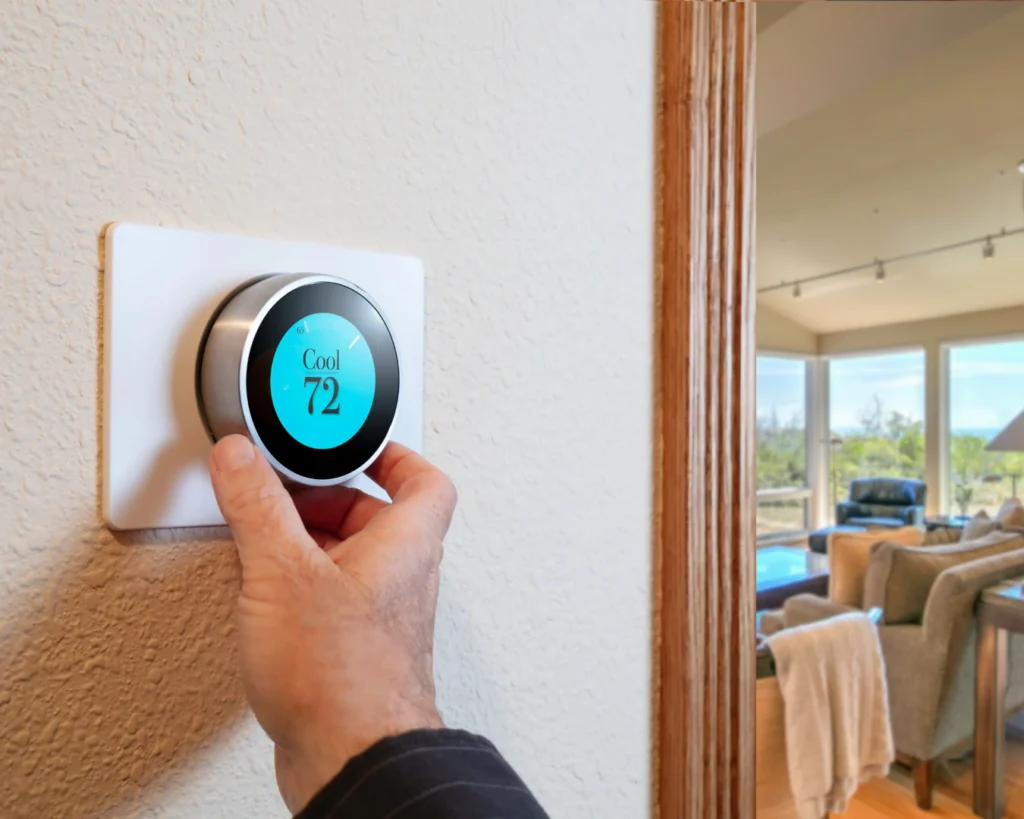
Quick answer: For most Austin homes, AUTO is the better setting in cooling season. On AUTO, water on the cold AC coil drains away after each cycle; on ON, the blower keeps blowing across the wet coil and puts some of that moisture back into the house. ON or circulate makes more sense in drier months.
In this guide
What’s the difference between ON and AUTO?
AUTO runs the blower only while the system is actively cooling or heating. ON runs it all the time, including the stretches between cycles when the compressor or heat is off and the blower is just moving air around. Some thermostats also have a circulate mode that runs the fan for a set number of minutes each hour.
Why can fan ON make an Austin house more humid?
Because the coil is wet. While your AC cools, water condenses on the evaporator coil and drips into the drain pan. When the compressor shuts off, that coil is still dripping. With the fan on AUTO, the water drains away. With the fan on ON, air keeps flowing across the wet coil and picks a good share of that moisture back up.
Research from the Florida Solar Energy Center on homes in hot, humid climates found continuous fan operation can noticeably reduce how much moisture an AC removes. Central Texas summers are in the same league, with July dew points often in the 70s. The result is a house that reads 76°F on the thermostat and still feels clammy.
There’s an attic angle too. In most Austin homes the ducts run through an attic that can reach 130°F or more in August. When the blower runs with no cooling happening, air still moves through those hot ducts, and any leaks in the return side pull attic air in.
Does running the fan all the time cost more?
Yes. The blower motor uses electricity every hour it runs. Newer variable-speed (ECM) blower motors use much less than older motors, but ON still means thousands of extra run hours a year, plus the humidity your AC then has to remove again.
When does ON or circulate make sense?
It makes sense when humidity isn’t the concern. A few good cases:
- Mild, dry weather. On crisp fall or winter days, circulating air can even out temperatures between rooms without a moisture penalty.
- Extra filtration. Your HVAC filter only cleans air while the blower runs. During cedar season in January, running the fan more with a good filter pulls more air through it. See cedar fever and MERV ratings for the filter side.
- Systems designed around it. Some fresh-air and whole-home dehumidifier setups call for the blower to run on a schedule. That should be set up by the installer, not guessed at. Our guide to ventilation in tight newer homes explains why.
What should you set it to?
AUTO from roughly April through October, and whenever indoor humidity is running high. A cheap digital hygrometer will tell you quickly: if your relative humidity creeps toward 60 percent with the fan on ON and settles back down on AUTO, you have your answer. If it stays high even on AUTO, the cause is somewhere else, and balancing indoor humidity is the place to start.
Related guides: Fresh Air in a Tight House: Ventilation Options for Newer Austin Homes, Why a Bigger AC Isn’t Better in Texas Heat and Balancing Indoor Humidity for Summer Comfort.
About Gold Eagle Services: This guide comes from the team at Gold Eagle Services, a family-run Austin HVAC, indoor air quality and mold remediation company founded in 2017. We’re licensed (TACLA119235 and RCO1783), insured and bonded, and we serve homes across the greater Austin area.
Need help with this in your home? Learn about our humidity control and indoor air quality solutions, or call 512-489-4653 to schedule a visit.
More in Filtration
All 8 guides FiltrationDo Portable Air Purifiers Help During Austin Allergy Season?What a portable HEPA air purifier can and can't remove from the air in one room during Austin allergy season, and how to size…
 FiltrationHow Often Should You Change Your AC Filter in Central Texas?In Central Texas, check a standard 1-inch AC filter every month and plan on changing it every 1 to 3 months, sooner in peak…
 FiltrationIndoor Air Quality Buyer’s Guide for Austin HomesThe most common indoor air quality problems in Austin homes are pollen, dust, pet dander, VOCs, high humidity and mold. Fixing them usually means…