
 HVAC Systems
 Heating
 Ductwork & Air Flow
 Ventilation
 Filtration
 Dehumidification
 Maintenance
 Mold
 Remediation & Restoration
 Pure Maintenance
 Your Home
 Building Science
 Insulation & Envelope
 Health & Safety
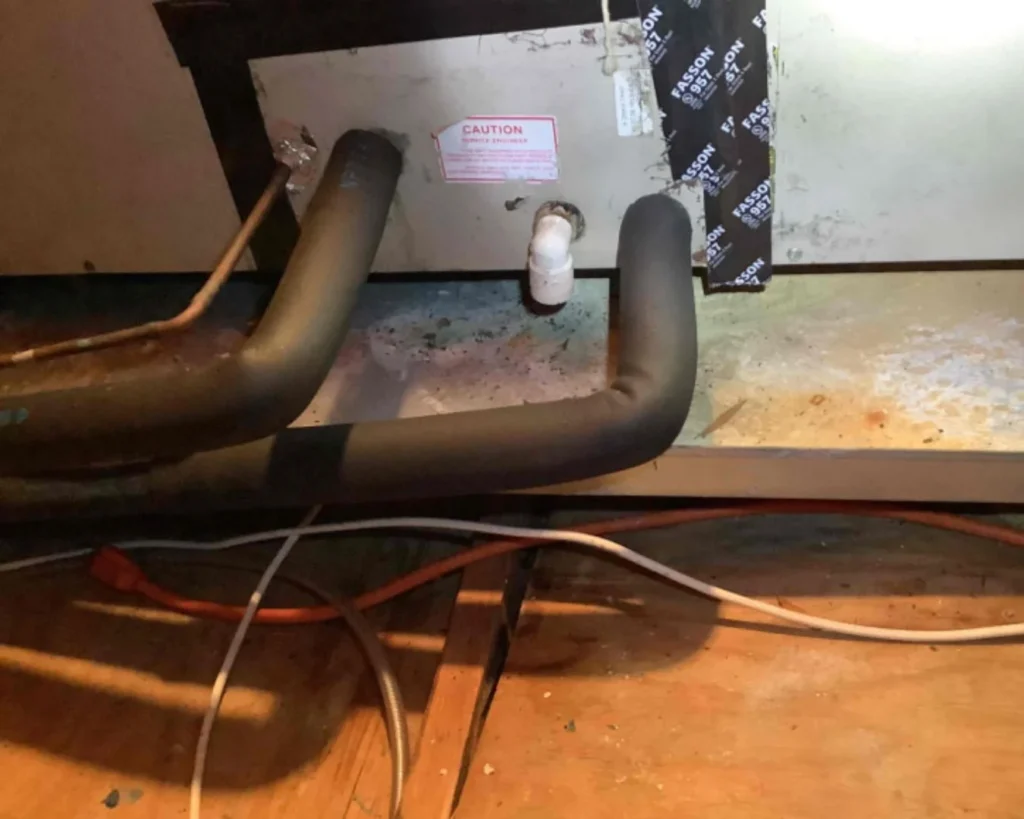
Quick answer: Turn the AC off, open the cleanout near the indoor unit, flush the line with a cup of distilled white vinegar or warm water, and check that water drains out the far end. A wet/dry vacuum on the outdoor end often frees a stubborn clog. If the pan keeps filling or the AC keeps quitting, call a tech.
In this guide
- How do you know your AC drain line is clogged?
- Why do AC drain lines clog so often in Central Texas?
- How do you clear the drain line, step by step?
- What should you avoid when clearing an AC drain?
- How do you keep the drain line from clogging again?
- When does a clogged drain need a technician?
- What should you do next?
How do you know your AC drain line is clogged?
The most common sign in Austin homes is water dripping from a pipe above a window or under the eaves. That’s usually the emergency drain from the secondary pan under an attic air handler, and it’s placed there on purpose to get your attention.
Other signs to look for:
- Water sitting in the secondary pan, or around a closet or garage unit.
- The AC shuts off and won’t restart, because a float switch (a small safety sensor in the pan or line) sensed high water.
- A musty smell near the indoor unit, or a new stain on the ceiling below the attic unit.
Why is my AC freezing up or leaking water? covers the other causes of water where it shouldn’t be.
Why do AC drain lines clog so often in Central Texas?
Because they carry a lot of water through a warm, dark pipe for months at a time. On a humid July day your AC can pull gallons of water out of the air, and that steady trickle plus a little dust grows a slimy biofilm (a film of bacteria and gunk) that eventually plugs the line. Attic heat speeds it along.
How do you clear the drain line, step by step?
- Turn the system off at the thermostat, and switch off the air handler’s breaker if you’ll be working right next to it.
- Find the cleanout, usually a capped or plugged T-fitting on the PVC drain line near the indoor unit.
- Pour in about a cup of distilled white vinegar, or warm tap water if your owner’s manual calls for that. Let it sit about 30 minutes, then flush with water.
- Go outside to where the line ends, often near the outdoor unit or the foundation. Hold a wet/dry vacuum hose tightly over the end, wrap it with a rag for a seal, and run it for a minute. A clump of slime in the canister means you found your culprit.
- If the secondary pan held water, empty it and let the float switch drop back down.
- Turn the AC back on. On a humid day the line should start dripping outside within a little while.
What should you avoid when clearing an AC drain?
- Never mix bleach and vinegar or other cleaners. Together they release toxic chlorine gas.
- Skip boiling water. It can soften PVC joints.
- Never bypass the float switch to get the AC running again. It’s the part keeping water out of your ceiling.
- Leave the panels closed and the wiring alone.
- Step only on joists or decking in the attic, and go early in the morning. On an August afternoon an Austin attic can top 130°F.
How do you keep the drain line from clogging again?
Flush it with a cup of vinegar or water about once a month during cooling season, if your manufacturer allows it. Change filters on schedule so less dust reaches the coil and pan.
A professional tune-up includes clearing the drain, and some homeowners add a coil UV light to slow growth in the pan. See how to keep mold out of your HVAC system.
When does a clogged drain need a technician?
When the clog comes back within days, the vacuum doesn’t clear it, or water has already reached drywall. Repeat clogs often point to a sagging line in the attic, a failed condensate pump, a cracked pan, or a frozen coil sending extra water down the drain.
When it gets to that point, Gold Eagle’s technicians can find what keeps clogging the line and fix it; see our AC services or schedule online.
If a ceiling or wall got wet, dry it quickly: the EPA notes that materials dried within 24 to 48 hours usually won’t grow mold.
What should you do next?
- Check the pipe above a window or under the eaves for dripping, and the secondary pan for standing water.
- Flush the drain line with a cup of vinegar or water about once a month in cooling season, if your manufacturer allows.
- Change your filter on schedule so less dust reaches the coil and pan.
- Book a Gold Eagle tune-up, which includes clearing the drain.
Related guides: Why Is My AC Freezing Up or Leaking Water?, Can Your HVAC System Grow Mold? How to Prevent It and What’s Included in an HVAC Tune-Up?.
About Gold Eagle Services: This guide comes from the team at Gold Eagle Services, a family-run Austin HVAC, indoor air quality and mold remediation company founded in 2017. We’re licensed (TACLA119235 and RCO1783), insured and bonded, and we serve homes across the greater Austin area.
Need help with this in your home? Learn about our air conditioning repair and installation, or call 512-489-4653 to schedule a visit.
Related Gold Eagle service: Home maintenance plan
More in Maintenance
All 15 guides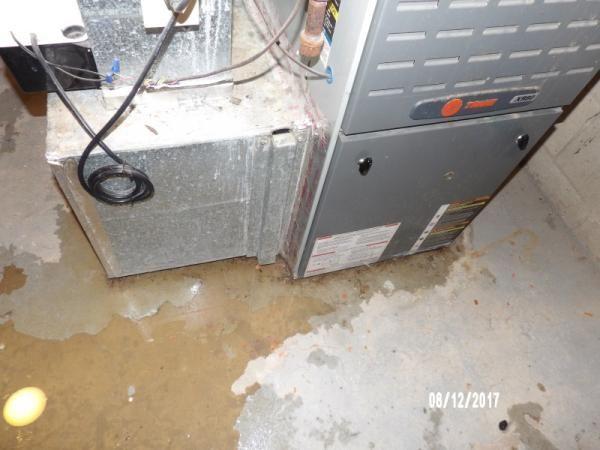 MaintenanceWhy Is There Water Around My Furnace in Winter?Water around a furnace in winter usually comes from a high-efficiency furnace, which makes water (condensate) and drains it through a trap and line…
 MaintenanceWhy Do Your Ducts Pop or Bang When the Heat Comes On?Ducts that pop or tick when the heat comes on are usually metal parts warming up: the furnace cabinet and heat exchanger, the metal…
 MaintenancePre-Winter HVAC Checklist for Central Texas HomesIn Austin, get your heater ready in early to mid October: change the filter, test-run the heat, clear the outdoor unit, test smoke and…