
 HVAC Systems
 Heating
 Ductwork & Air Flow
 Ventilation
 Filtration
 Dehumidification
 Maintenance
 Mold
 Remediation & Restoration
 Pure Maintenance
 Your Home
 Building Science
 Insulation & Envelope
 Health & Safety
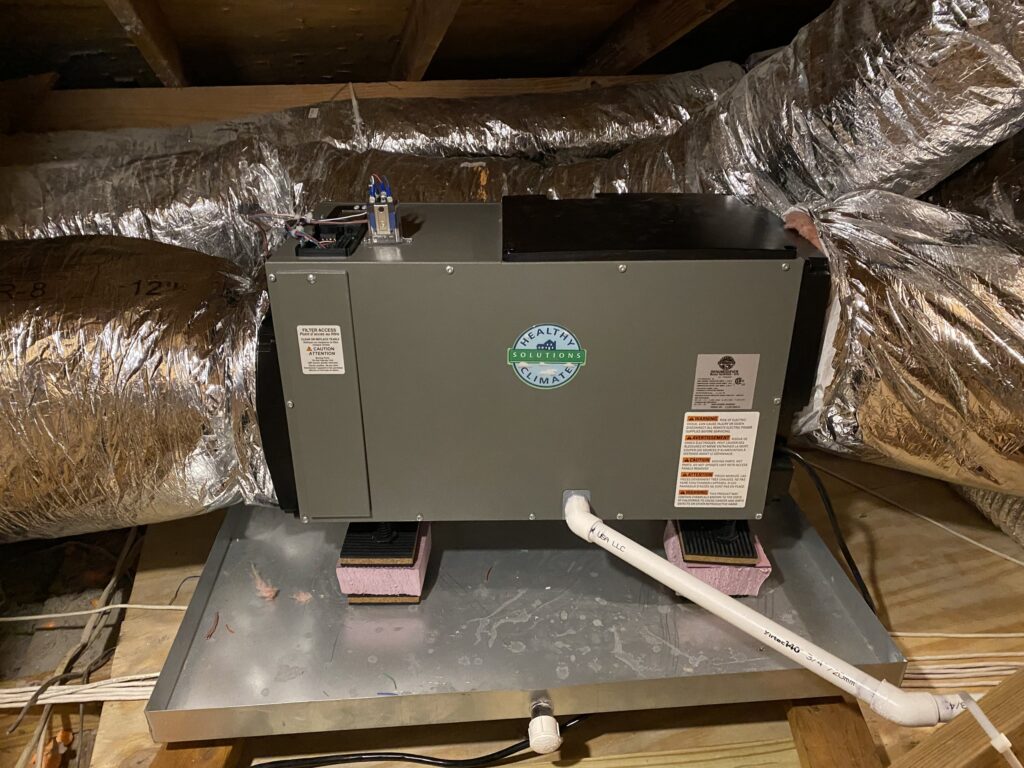
Quick answer: Mold gets most of the attention, but dust, pollen, volatile organic compounds (VOCs) and fine particles also affect the air in your home. The practical tools are good filtration, fresh-air ventilation, stopping pollutants at the source, keeping humidity in check and steady routine maintenance, and they work best when you treat the house as one connected system.
In this guide
- What else affects indoor air besides mold?
- What are the most common indoor pollutants besides mold?
- Which air filter should you use for dust, pollen and smoke?
- How do ventilation and source control help?
- Why does humidity matter for indoor air quality?
- What routine upkeep protects your indoor air?
- What does it mean to treat your home as a system?
- The bottom line
What else affects indoor air besides mold?
Plenty. Mold dominates the indoor air conversation, and in a humid climate like Central Texas that’s fair. But it’s only one of many things floating around in the air you breathe at home. The EPA notes that levels of some pollutants can be two to five times higher indoors than outdoors, and a house that stays closed up with the AC running most of the year tends to hang on to whatever gets made inside it.
Here’s a walk through the most common pollutants beyond mold, the tools that help manage them and the everyday upkeep that keeps those tools working.
What are the most common indoor pollutants besides mold?
- Dust and dust mites: A mix of fibers, skin flakes, soil tracked in from outside and debris from inside the walls and attic. Dust mites thrive when indoor humidity stays high.
- Pollen: Central Texas has pollen in the air for much of the year, from cedar season in winter onward, and it comes inside on clothes, pets and through leaks in the house and ductwork.
- VOCs: Gases released by paints, finishes, adhesives, new furniture and flooring, cleaning products, air fresheners and hobby supplies. That “new stuff” smell is part of it.
- Fine particles: Smoke from cooking, candles, fireplaces and wildfires, plus other very small particles that can stay airborne for a long time.
Which air filter should you use for dust, pollen and smoke?
The one with the highest MERV rating your system can handle without choking its airflow. Your HVAC filter is the main tool for catching airborne particles, and filters are rated on the MERV scale (Minimum Efficiency Reporting Value), which reflects how well they capture particles of different sizes. As a general guide:
- MERV 8 filters capture larger particles like dust and lint.
- MERV 11 filters capture more of the smaller particles, such as much of the pollen in the air.
- MERV 13 filters capture a higher share of fine particles, including some smoke particles.
- MERV 16 filters are among the most efficient HVAC filters, approaching the performance of HEPA filtration.
The catch: higher efficiency usually means more resistance to airflow. Not every system can take a high-MERV filter without changes like a bigger filter cabinet or duct modifications. A filter that’s too restrictive cuts airflow, and that hurts comfort, efficiency and humidity removal. Picking a filter is a balance between your air quality goals and what your system can handle, and an HVAC professional can help you find it.
Also worth knowing: standard filters are built for particles, not gases. VOCs and odors call for other strategies, such as activated carbon media, ventilation and source control.
How do ventilation and source control help?
Ventilation dilutes what builds up inside, and source control keeps it from getting into the air to begin with. Ventilation can be as simple as running your bathroom and kitchen exhaust fans, or it can be a whole-home system such as an energy recovery ventilator (ERV), which swaps stale indoor air for fresh outdoor air while limiting the heat and humidity that come in with it. In a humid climate, bring fresh air in thoughtfully so it doesn’t push indoor humidity too high. Nobody needs more of a July afternoon indoors.
Source control is the cheapest fix there is. Choose low-VOC paints, finishes and furniture when you can, air out new items before bringing them inside, keep paints and chemicals in the garage or a shed instead of the living space, and use a range hood that vents outdoors when you cook.
Why does humidity matter for indoor air quality?
Because it ties most of these problems together. When indoor humidity stays high, dust mites and mold have an easier time, and some materials can release more VOCs. Many building science resources suggest keeping indoor relative humidity roughly between 40% and 60%, ideally toward the lower end in summer. A correctly sized AC that runs long enough to pull out moisture, plus a whole-home dehumidifier where needed, can keep you in that range.
What routine upkeep protects your indoor air?
Small, regular tasks do more than big projects. A house isn’t static, and a lot of good indoor air quality, and mold prevention, comes from steady maintenance. The main tasks:
- Check your HVAC filter monthly and replace it as the manufacturer recommends, often every one to three months depending on the filter and your household.
- Have your HVAC system serviced regularly, including cleaning the coils and checking the condensate drain line and pan.
- Clean gutters and downspouts and make sure water drains away from the foundation.
- Check under sinks, around water heaters and near appliances for slow leaks.
- Look in the attic, and the crawl space if you have one, for signs of dampness, pests or damaged ductwork.
- Service dehumidifiers and ventilation equipment so they keep working as designed.
Skip these and small problems stack up. A clogged gutter overflows and water pools by the foundation. A dirty filter cuts airflow and leaves the house feeling clammy. A slow drip under a sink goes unnoticed for months and soaks the cabinet and floor. Any of these can lead to mold growth that’s costly to remediate.
What does it mean to treat your home as a system?
It means the parts of the house affect each other, so you fix causes instead of chasing symptoms. That’s the core idea of building science: the building is one integrated system, not a pile of separate problems. Proper grading and drainage keep the slab and foundation dry. A well-sealed envelope and sealed ductwork limit how much hot, humid attic and outdoor air gets pulled inside. An HVAC system that manages both temperature and humidity keeps indoor conditions steady. Regular maintenance keeps small issues small.
When those pieces support each other, the house resists moisture problems better and tends to be more comfortable, efficient and durable.
The bottom line
Good indoor air goes beyond mold. Dust, pollen, VOCs and fine particles all play a part, and no single product handles them all. What works is a combination: the right filter for your system, sensible ventilation, fewer pollutants at the source, balanced humidity and steady upkeep. Start with the basics, like checking the filter and fixing leaks, then look at whole-home upgrades if you still have concerns. An indoor air quality professional can help you sort out which steps make sense for your home.
Related guides: How Indoor Moisture Affects Your Home’s Air, Decon7 (D7): A Targeted Tool for Indoor Air Quality and How to Improve Indoor Air Quality with Your HVAC System.
About Gold Eagle Services: This guide comes from the team at Gold Eagle Services, a family-run Austin HVAC, indoor air quality and mold remediation company founded in 2017. We’re licensed (TACLA119235 and RCO1783), insured and bonded, and we serve homes across the greater Austin area.
Need help with this in your home? Learn about our indoor air quality solutions, or call 512-489-4653 to schedule a visit.
Related Gold Eagle service: HVAC mold remediation
More in Indoor Air Quality (IAQ)
All 32 guides Indoor Air Quality (IAQ)Musty Smell, Dust or Sticky Air: Who Should You Call?Stop any water first: a plumber handles leaks and sewer smells, a roofer handles roof leaks. Call an HVAC company for humidity, weak airflow,…
 Indoor Air Quality (IAQ)Does Your Kitchen Range Hood Really Matter for Indoor Air?Yes. Cooking is one of the biggest daily sources of moisture, grease, smoke and odors in a home, and gas burners add combustion gases…
 Indoor Air Quality (IAQ)Do Portable Air Purifiers Help During Austin Allergy Season?A portable HEPA purifier can lower the fine particles floating in one room, such as dust, pet dander and some pollen, if it's sized…