
 HVAC Systems
 Heating
 Ductwork & Air Flow
 Ventilation
 Filtration
 Dehumidification
 Maintenance
 Mold
Mold Remediation & Restoration
 Pure Maintenance
 Your Home
 Building Science
 Insulation & Envelope
 Health & Safety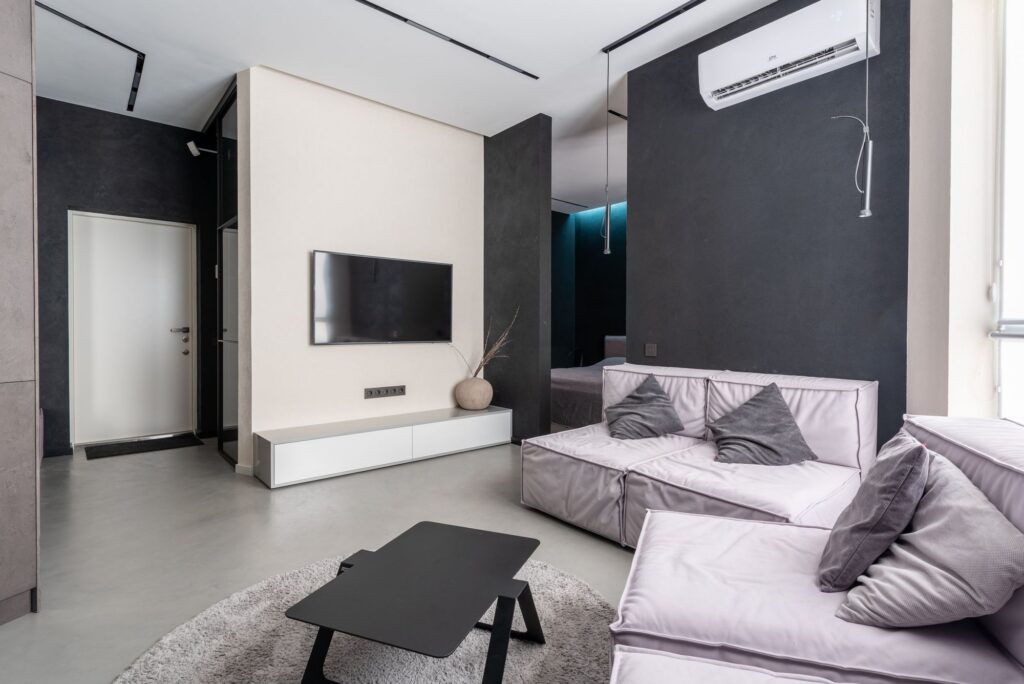
Quick answer: A multi-head mini-split is a ductless system that connects one outdoor unit to two or more indoor units, each with its own temperature control. It heats and cools several rooms without ductwork, and it works well for additions, converted spaces and rooms your central system can’t keep up with.
In this guide
You may also hear it called a multi-zone mini-split. Picture one outdoor unit running a small team of indoor units. Instead of pushing air through ducts in the attic, the system runs refrigerant lines straight to each room, and each indoor unit handles its own space at its own setting. The bonus room can sit at 72°F while the guest room nobody’s using coasts at 80°F.
What are the parts of a multi-head mini-split?
- Outdoor unit: Holds the compressor, which pumps refrigerant to every indoor unit. It sits outside on a pad or a wall bracket.
- Indoor units (air handlers or “heads”): One per room or zone. Each has its own controls, so every space gets the setting it needs.
- Refrigerant and drain lines: Small insulated copper lines connect the outdoor unit to each indoor unit. Each indoor unit also has a condensate drain line, because in cooling mode it pulls water out of the air.
How does a multi-head mini-split work?
It works like a central heat pump without the ducts. Refrigerant carries heat between the indoor units and the outdoor unit. A heat pump doesn’t make heat; it moves it, out of your rooms in summer and into them in winter.
What happens in cooling and heating mode?
- Cooling mode: Each indoor unit absorbs heat from the room, and the outdoor unit releases it outside. The indoor coil also wrings moisture out of the air, which matters a lot in a Central Texas summer.
- Heating mode: The process runs in reverse. The outdoor unit pulls heat from outside air, even on a chilly January morning, and delivers it indoors.
Each indoor unit runs on its own schedule and setting. They all share one outdoor unit, though, so that unit has to be sized and matched to the whole group. On most home systems, the heads also share one mode: they all cool or all heat at the same time.
What are the benefits of a multi-head mini-split?
Are multi-head mini-splits energy efficient?
They can be. Most use an inverter-driven compressor, one that speeds up and slows down to match the need, like cruise control, instead of slamming on and off.
With no ductwork, no energy leaks out through loose or poorly insulated ducts, a real loss when those ducts sit in an Austin attic that bakes past 130°F in August. Cooling only the rooms you use can cut energy use too. When you compare models, look at SEER2 (the cooling efficiency rating) and HSPF2 (the heating one). Since January 1, 2023, new systems have been rated under these updated, tougher test standards.
Can each room have its own temperature?
Yes, and that’s the main draw. You can keep bedrooms cooler at night and hold the living room at a different setting. The person who runs hot and the person who’s always cold can finally stop fighting over one thermostat.
Do mini-splits save space?
Yes. With no bulky ductwork to fit in, you have more choices. Indoor units can mount high on a wall, sit low on the floor, or go in the ceiling as cassettes or concealed ducted units if you’d rather not see them.
Are mini-splits quiet?
Generally, yes. The compressor lives outside, away from living space, so the indoor units run quietly enough for bedrooms and home offices.
Is installation easier than adding ductwork?
Usually. Each indoor unit typically needs only a small hole through the wall for its lines, so there’s far less cutting into walls and ceilings than a new duct run. Time and complexity depend on how many indoor units you add and how the lines are routed.
Do mini-splits filter the air?
Yes, lightly. Each indoor unit has its own washable filter that catches dust and other airborne particles, and some models offer upgraded filters. No ducts in that room also means no dirty or leaky ducts to worry about there.
A mini-split is only as clean as its upkeep. Rinse the filters regularly, and have a pro clean the indoor coil, blower wheel and drain line from time to time. In our humid climate, dust and moisture build up fast inside a neglected unit.
When does a multi-head mini-split make sense?
It fits best in four common situations:
- Homes without ductwork: Older homes or spaces that were never ducted get efficient heating and cooling without major construction.
- Additions and renovations: A new room, a finished garage or a converted attic gets its own comfort without stretching your existing ductwork past its design.
- Hard-to-cool rooms: Upstairs bedrooms, bonus rooms over the garage and sunrooms stay comfortable in July when your central system can’t keep up.
- Home offices and workshops: Spaces you use on a different schedule than the rest of the house run only when you’re in them.
Is a multi-head mini-split right for your home?
It depends on your layout, how many rooms you want to serve and how each indoor unit is sized. Bigger isn’t better here: an oversized unit cools a room fast, then shuts off before it removes enough humidity, and you end up cool but clammy.
A qualified HVAC pro should run a load calculation for each room (the math of how much heat that room gains on a hot day) and recommend the right mix of outdoor and indoor units for your home and the way you live in it.
Gold Eagle installs and services ductless mini-splits across the Austin area, and we’re glad to run those room-by-room numbers for your house.
What should you do next?
- List the rooms that run too hot or too cold, or that you use on a different schedule.
- If you already have a mini-split, rinse the indoor unit filters on a regular schedule.
- Ask any contractor to calculate each room’s load before recommending unit sizes.
- Book a visit or call 512-489-4653 to talk through the right mix of indoor and outdoor units with Gold Eagle.
Related guides: Enhancing Home Comfort with Mini Splits: A Smart Pairing with Your Main HVAC System, Exploring Different Types of Mini-Split Systems: Finding the Perfect Fit for Your Central Texas Home and Why Mitsubishi Electric Is a Leader in Mini-Split Design, Efficiency and Style.
About Gold Eagle Services: This guide comes from the team at Gold Eagle Services, a family-run Austin HVAC, indoor air quality and mold remediation company founded in 2017. We’re licensed (TACLA119235 and RCO1783), insured and bonded, and we serve homes across the greater Austin area.
Need help with this in your home? Learn about our air conditioning repair and installation, or call 512-489-4653 to schedule a visit.
Related Gold Eagle service: Ductless mini-split repair
More in Air Conditioning
All 37 guides Air ConditioningWhat Should You Set Your Thermostat to When You’re Away?In summer, raise the thermostat a few degrees instead of turning the AC off, generally no higher than the mid 80s, so the house…
 Air ConditioningHow Cold Should the Air From Your AC Vents Be?Air from your supply vents is usually about 15 to 20°F cooler than the air going into the return, a difference called the temperature…
 Air ConditioningWhy Is One Room Hotter Than the Rest of the House?One room runs hotter when it gains more heat than its air supply can carry away. Usual causes: afternoon sun on west or south…