Skip to content

Mold Found During a Home Inspection? Austin Buyers & Sellers

Home inspection notes like "possible microbial growth at air handler" or "musty odor at registers" are common in Austin. Here's what buyers and sellers should do next, how Texas mold paperwork works, and how the HVAC side of the work can fit a closing timeline.

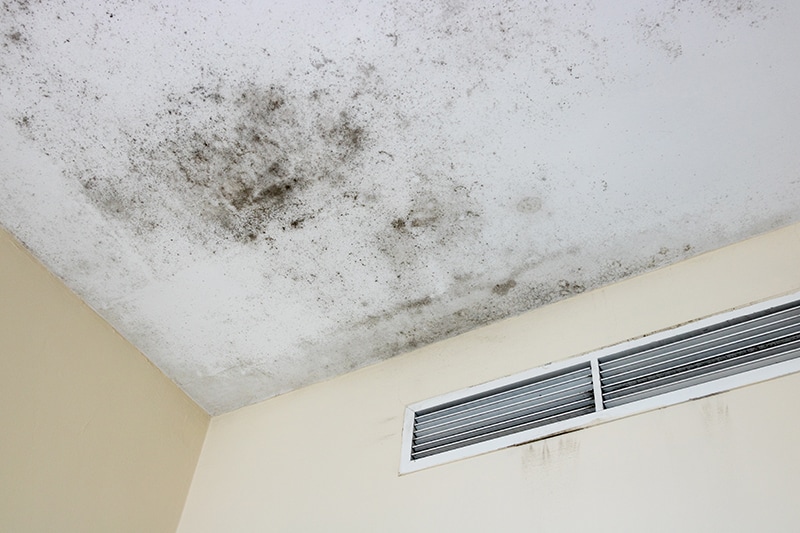
Dark spots spread across a pale ceiling beside a beige wall, above a long rectangular air vent with horizontal slats.

Why Mold Shows Up So Often in Austin Home Inspections

Central Texas homes have long, humid cooling seasons, and most have air handlers and ducts in hot attics. That combination leads to sweating ducts, condensation around the indoor coil, clogged drain lines and high indoor humidity. Inspectors often note musty odors, stains near supply registers, dark spots on vents or water around the HVAC equipment. Homes that sat vacant with the AC off or set high during a listing can also develop problems quickly.

What to Do When the Inspection Finds Mold

An inspection note is a starting point, not a diagnosis. Practical next steps:

  1. Find the moisture source. Mold is a symptom. The cause might be an AC drain problem, a roof or plumbing leak, or humidity the system isn’t controlling.
  2. Get an independent assessment. A licensed mold assessor can document the problem and write a remediation protocol. In Texas, the assessor can’t also be the remediation company on the same project.
  3. Get scopes and a timeline. A licensed mold remediation contractor quotes the remediation, and we quote the HVAC scope from the protocol, so both sides can negotiate from real numbers. We can refer you to independent assessors and remediation contractors if you need them.

Texas Mold Paperwork: The Certificate of Mold Damage Remediation (CMDR)

Texas law creates a paper trail for regulated mold remediation. After a regulated project passes the post-remediation assessment, the licensed mold remediation contractor issues the Certificate of Mold Damage Remediation (CMDR), and the property owner must receive it within 10 days. The certificate includes a statement from a licensed mold assessor that the mold contamination identified for the project has been remediated as outlined in the protocol. The CMDR comes from the remediation contractor, not from Gold Eagle; we provide documentation of the HVAC work we performed.

If the owner later sells the property, Texas Occupations Code Section 1958.154 requires the seller to give the buyer a copy of each certificate of mold damage remediation issued for the property during the five years before the sale.

For any mold-related work, regulated or not, it’s smart to keep the inspection report, any mold assessment and lab results, the protocol, invoices describing repairs, any CMDR and records of HVAC repairs, including our documentation of the HVAC work.

This is general information, not legal advice. Talk to your real estate agent or a real estate attorney about disclosure questions, your seller’s disclosure notice and how repairs fit into your contract.

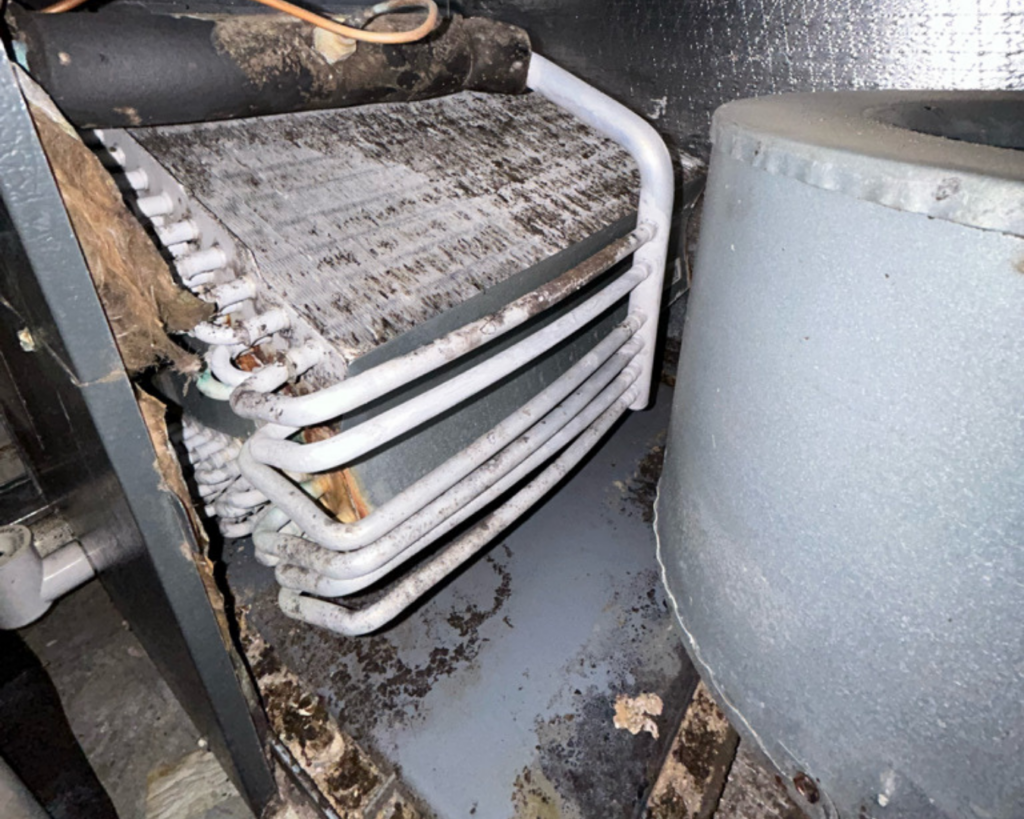
An opened HVAC unit shows dark speckling across its exposed evaporator coil, with white refrigerant lines looping over the metal fins.

Fitting HVAC Restoration Into a Closing Timeline

Timing is often the biggest pressure in a sale. Much of what inspectors flag is in the HVAC system: the coil, drain pan, air handler cabinet and ducts. Because we’re an HVAC contractor that also holds a mold remediation license, we can quote and complete that HVAC scope alongside the licensed mold remediation contractor who handles the rest of the project.

  • Send us the inspection report and any assessor's protocol
  • We quote the HVAC scope and coordinate timing with the remediation contractor
  • Allow time for the independent assessor's clearance and the remediation contractor's CMDR
  • Keep the CMDR and our HVAC documentation for the buyer, lender or future sale
Call 512-489-4653

Tips for Sellers and Buyers

Sellers: Before listing, have the HVAC system serviced, including the coil, drain pan and condensate line; check attic ducts for sweating or disconnected runs; and keep the AC running and humidity controlled while the home is vacant. Deal with stains and odors by finding the cause, not by painting over them.

Buyers: Ask what caused the problem and whether it has been fixed, whether a licensed assessor was involved, whether there are before-and-after lab results, and whether any certificates of mold damage remediation were issued in the last five years. Ask what was done to the HVAC system and for documentation of that work.

Related HVAC Restoration Services

Related pages:

Frequently Asked Questions

Have the HVAC system evaluated and, if mold is suspected, get an independent, licensed mold assessment. A licensed mold remediation contractor handles the remediation, and we quote the HVAC work from the assessor's protocol.

Learn More From Our Resource Center

Want to understand your options before you call? Our homeowner guides on mold and home sales are written by our team for Central Texas homes.

Browse all homeowner guides in the Gold Eagle Resource Center

Mold on Your Inspection Report? Call Gold Eagle.

Call 512-489-4653

Questions About Mold in Your HVAC? Let's Talk.

Tell us what you need, and our team will get back to you as soon as possible. No pressure, no obligation. Just honest advice and fast service.

Contact Us
This field is for validation purposes and should be left unchanged.
Name(Required)
Same-day service
BookTextCall 512-489-4653Call