
Skip to content

Carrier Global

Carrier, Bryant, Payne and the ICP brands: who makes what, what actually differs under the cabinet, and how they hold up in Central Texas.

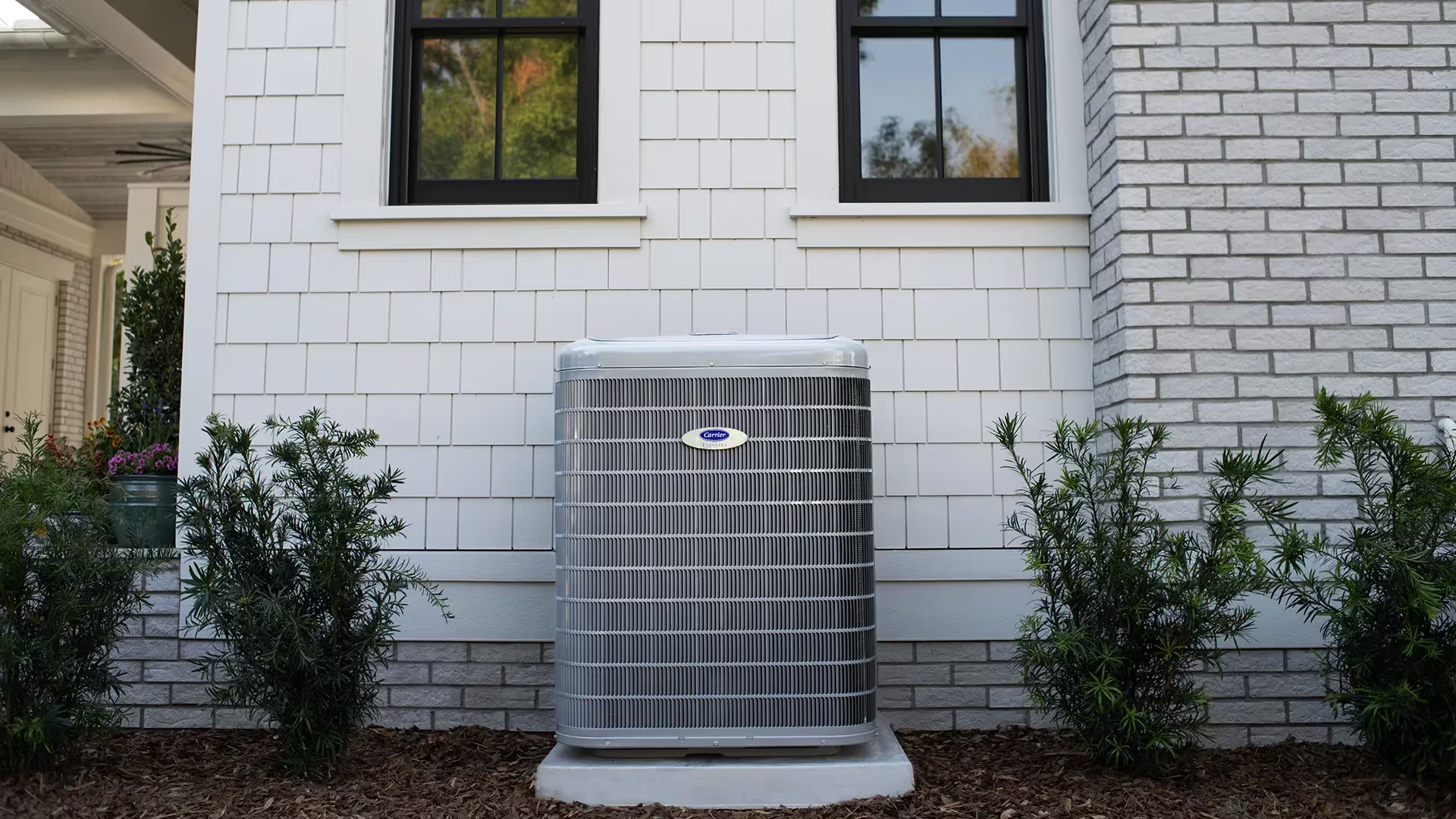
A dark gray Carrier Infinity air conditioner stands among shrubs beside a white-sided home with upper-floor windows.

Who makes Carrier? The Carrier family tree

Carrier Global Corporation, an independent, publicly traded company since United Technologies spun it off in April 2020. Carrier runs one of the biggest families of residential brands in North America, which is why so many of the different names on outdoor units around Austin are really cousins.

Parent companyCarrier Global
Carrier brands You are here
  • Carrier
  • Bryant
  • Payne
  • Toshiba
  • Heil
  • Tempstar
  • Comfortmaker
  • Arcoaire
  • Airquest
  • Day & Night
  • KeepRite
Brands under one parent often share factories, parts and engineering, but differ in dealer network, warranty and features.
GroupBrandsWhat to know
Carrier core brandsCarrier, Bryant, PayneShared engineering and many shared parts, sold through separate dealer networks.
International Comfort Products (ICP)Heil, Tempstar, Comfortmaker, Arcoaire, Airquest, Day & Night, KeepRiteA Carrier subsidiary based in Lewisburg, Tennessee. See our ICP brands page.
Other Carrier brandsToshiba, ViessmannToshiba ductless and heat pump products and Viessmann heat pumps, both more common outside Central Texas.

Bryant dates to 1904, when Charles Bryant started the company in Cleveland; Carrier bought it in 1955 and moved its headquarters to Indianapolis. Carrier lists Payne as founded in 1914. Bryant, Day & Night and Payne merged long before any of them joined Carrier, which is why Day & Night turns up in both histories.

Bryant vs Carrier vs Payne: what is actually different?

Think of these three as one company wearing three different jackets. The compressors, coils and control boards inside comparable models come from the same company and the same engineering, and parts suppliers routinely cross-reference them. What changes is mostly outside the box:

  • Dealer network. Each brand has its own dealers and its own distributor relationships. A Bryant dealer usually cannot sell you a Carrier, and the other way around.
  • Product ladder. Carrier and Bryant carry the deepest lineups, from basic single-stage units up to fully variable-speed (inverter) systems with communicating thermostats. Payne is the value brand with a simpler, shorter lineup.
  • Warranty and cabinet styling. Warranty terms and what counts as “registered” can differ by brand and model, and so can the cabinet, grille and badge. Read the actual warranty certificate for the model you are quoted.

Carrier sells its lower-GWP refrigerant as “Puron Advance,” which is R-454B. Since January 1, 2025, new residential split systems built for the U.S. market must use a refrigerant with a global warming potential under 700, so most new Carrier-family equipment runs R-454B instead of the older R-410A.

Fun fact: air conditioning was invented to fix humidity, not heat

Willis Carrier built his famous 1902 system for a printing plant in Brooklyn where humid air was warping paper and smearing ink. The goal was controlling moisture, and cooling came along for the ride. He patented his “Apparatus for Treating Air” in 1906 and co-founded Carrier Engineering Corporation in 1915.

Willis Carrier would have understood Austin. On a muggy June afternoon, how much moisture your system pulls out of the air matters about as much as the number on the thermostat.

How does Carrier equipment handle Central Texas heat, humidity and freezes?

  • Long cooling seasons. Austin systems run hard for months. A variable-speed Carrier or Bryant runs long and slow, which usually means steadier temperatures and better moisture removal than a single-stage unit that blasts on and off.
  • Humidity. Oversizing is the most common reason a good brand feels clammy: the unit cools fast and shuts off before it pulls the moisture out. A correctly sized Payne will beat an oversized top-of-the-line Carrier.
  • Attic air handlers and furnaces. Most Austin homes have the indoor unit in a hot attic. A clean drain line, a working float switch and a sound secondary pan protect your ceiling whether the badge says Carrier, Bryant or Payne.
  • Freezes. During Winter Storm Uri, Camp Mabry recorded 7°F on February 16, 2021. Heat pumps still work in that kind of cold, but with less capacity, so backup heat or a dual fuel setup matters. Read can a heat pump keep up with a Texas freeze.

Does Gold Eagle work on Carrier, Bryant and Payne?

Yes, the whole family: Carrier, Bryant, Payne and the ICP brands, installed, serviced and repaired across Central Texas. Since the three core brands share compressors, coils and control boards, what we find on a Bryant applies to its Carrier or Payne cousin too. If your system is struggling, start with AC repair or heating service.

Shopping for a replacement? Use our Build Your Own System tool to compare options side by side, and keep whatever you choose running well with our Home Maintenance Plan. Curious how Carrier stacks up against its rivals? See Trane, Lennox and Daikin.

Common Questions About Carrier Global

Is Bryant the same as Carrier?
Bryant is owned by Carrier and shares its engineering and many parts. The differences are mainly the dealer network, model names, cabinet styling and warranty details.

Who makes Payne air conditioners?
Payne is a Carrier brand. It is positioned as the value line, with a simpler lineup built on Carrier engineering.

Are Heil and Tempstar made by Carrier?
Yes. Heil and Tempstar belong to International Comfort Products (ICP), which Carrier owns. They are sister brands to Comfortmaker, Arcoaire, Airquest, Day & Night and KeepRite.

What refrigerant do new Carrier systems use?
New Carrier residential equipment uses Puron Advance, which is R-454B, replacing the older R-410A (Puron).

Same-day service
BookTextCall 512-489-4653Call