
The Invisible Swarm: How Does an Air Filter Catch Dust?
Meet the Invisible Swarm, a villain made of dust, pollen and pet fur, and learn why specks sparkle in sunbeams and how a home air filter catches them.
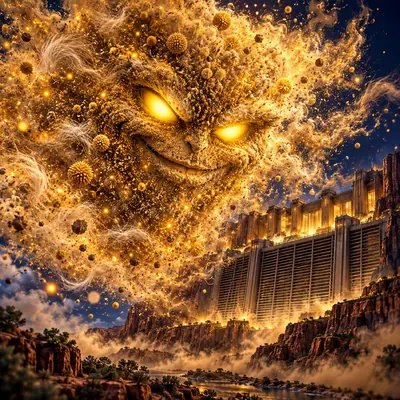
Villain facts
| Name | The Invisible Swarm |
|---|---|
| Side | Villain |
| Lair | The Hollow Hall, a giant return duct: an endless silver tunnel inside Dust Mesa, with a crooked, dusty filter wall at the end |
| Powers and tricks | Too Small to See, You Can’t Punch Dust, Hitchhike (riding in on shoes and pets), The Back Door (leaky ducts that skip the filter), Filter Smother and Round and Round |
| Henchmen | The Dust Bunnies (hopping fluff rabbits) |
| Sidekick | Cedar Fever (see below) |
| Weakness | Being caught and kept still. “No! Not STILL! We must FLOAT!” |
| Catchphrase | “You can’t punch dust!” |
Where did the Invisible Swarm come from?
From the Wing Force files.
One spring, in an old house on a street of live oaks, three things went wrong at once. A duct in the attic slipped loose and started pulling in attic dust. The front door kept getting left open while the oak trees painted every car yellow with pollen. And the air filter was gray and stuffed full.
The specks had nowhere to go. They floated. They drifted. They waited.
Then, one afternoon, a sunbeam lit them all at once. Every speck saw every other speck, and together they had one giant thought: “We are not small. We are MANY.”
The Swarm always says “we,” never “I.” He is a billion specks with one voice, and he loves a sunbeam like a rock star loves a spotlight. His plan was the Great Gust. Read his comic: see how the Wing Force caught him in Wing Force #2: The Invisible Swarm.
What is the Invisible Swarm, really?
The Invisible Swarm is everything tiny that floats in a home’s air: dust, lint, pollen, pet fur and more. Most of it is too small to see, until a beam of sunlight hits it.
Why the sparkle? Light bounces off each speck and some of it heads straight into your eyes. Scientists call this light scattering. The specks are always there; the sunbeam just turns on the spotlight.
Household dust is a mix: tiny fibers from clothes, carpets and blankets, dirt tracked in on shoes, pollen blown through doors, bits of pet fur, and even flakes of skin we all shed every day (yes, really). It’s not a single thing. It’s a swarm.
Here’s how a home fights back. A central heating and air system pulls room air in through the big return grille. Before the air reaches the machine, it passes through an air filter, a pleated sheet that works like a net. Specks get stuck in the fibers; air keeps going.
How to stop the Swarm sneaking around the filter
The filter only works if the Swarm can’t sneak around it. In the comic, the heroes SWAP in a fresh filter and make it SNUG:
- Right size, snug fit. Gaps around the edges let air skip the net.
- Arrow the right way. Filters have an arrow that points toward the machine.
- Changed on schedule. A full filter catches less and squeezes the air (that’s when Staticus shows up).
- No back doors. A leaky return duct in the attic can pull in dusty attic air that never touches the filter. Technicians seal those leaks.
One catch: smells are gases, not specks, so a regular filter can’t grab them. Kitchen and bathroom fans and fresh air move those out.
And why “You can’t punch dust”? Because swatting, flapping or dry-dusting just tosses specks back into the air. A damp cloth and a vacuum actually catch them.
The Swarm’s sidekick: Cedar Fever
A towering walking cedar tree guards the mouth of the Hollow Hall. He never grins and never says much (“…Cedar season.”), but every winter he shakes huge orange clouds of pollen into the wind for the Swarm.
The real science: “cedar fever” is what Central Texans call cedar pollen season, when a tree called Ashe juniper releases enormous clouds of pollen, usually from December through February. It is pollinated by wind, not bees, so it makes huge amounts of pollen, sometimes so thick it looks like orange smoke drifting over the hills, and cold fronts carry it for miles. Every part of the country has its own pollen season (oaks and pines in spring, grasses in summer, ragweed in fall); this is the Texas winter version. Pollen grains are big enough for a good air filter to catch, so filters can fill up faster during pollen season.
Your mission: Sunbeam Spotter
- Find a sunbeam in your home. See the sparkly specks? That’s the Swarm showing off.
- Close outside doors behind you, especially on windy days.
- Help a grown-up vacuum (pick up the toys first so the vacuum can do its job).
- Hold the flashlight while a grown-up checks the filter’s date and arrow.
- Notice a strong new smell? Tell a grown-up.